Tidal Energy Generation
Geography: Americas · North America · Canada
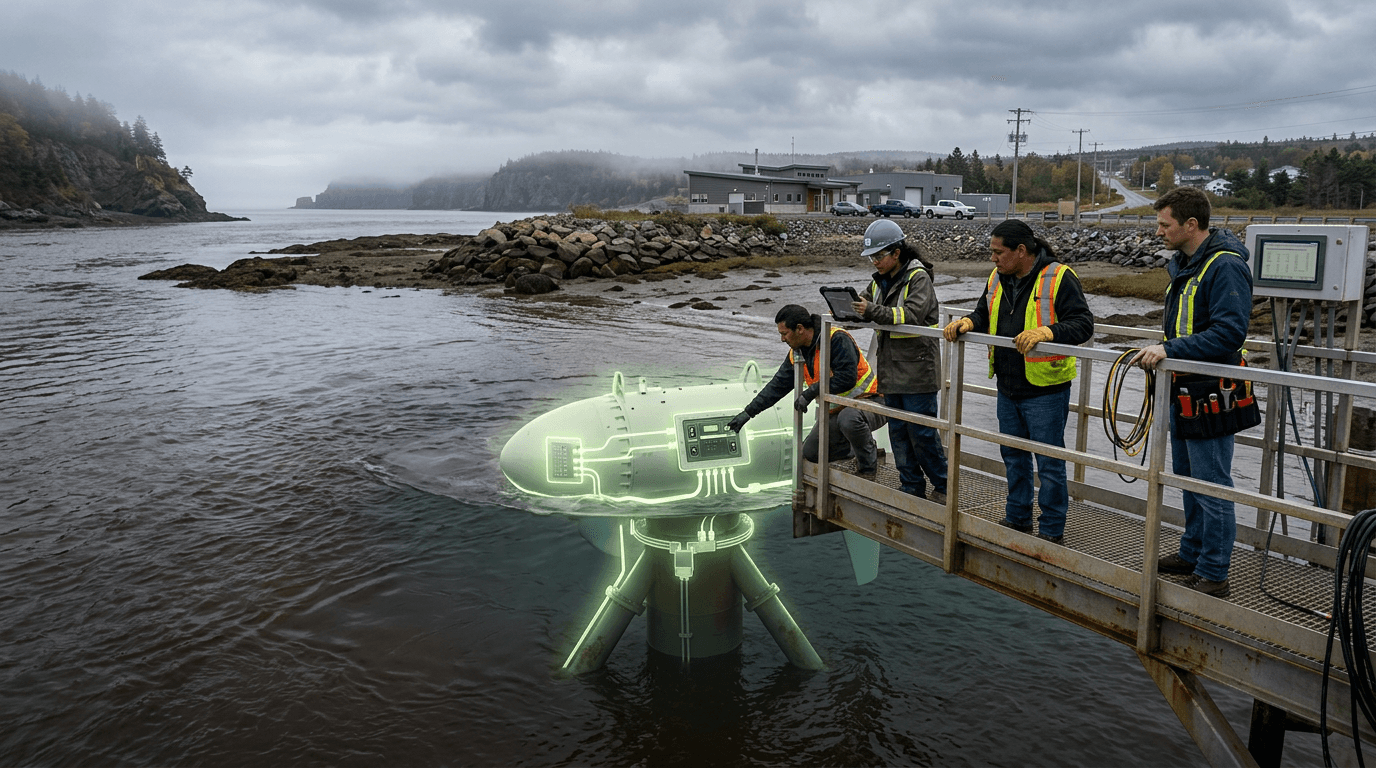
The Bay of Fundy in Nova Scotia experiences the highest tides on Earth — up to 16.3 meters — and hosts the Fundy Ocean Research Centre for Energy (FORCE), the world's leading tidal energy demonstration facility. Multiple tidal turbine designs from companies worldwide are being tested at the site, which has berths for grid-connected tidal devices. The predictability of tidal energy (tides follow precise astronomical cycles) gives it an advantage over intermittent renewables like wind and solar.
Tidal energy matters because it represents one of the few truly predictable renewable energy sources. Unlike wind and solar, tidal generation can be forecast with near-perfect accuracy years in advance, making it ideal for baseload planning. The Bay of Fundy alone has estimated potential capacity of several gigawatts, and the technology developed there is exportable to tidal sites worldwide — an estimated 500 GW of global tidal resource.
Canada's strategic position in tidal energy is defined by natural advantage. The Bay of Fundy's extreme tides provide a unique testing environment that attracts global technology developers. If tidal energy technology matures to cost-competitiveness, Canada will have both the natural resource and the accumulated expertise to be a global leader. The challenge is that tidal turbines face extreme engineering demands — the same powerful tides that generate energy also impose enormous structural loads and maintenance challenges.
Research this in Signals
Signals turns a topic into a sourced research record you can inspect and rerun. Your first scan is free, and this one starts with Tidal Energy Generation already loaded, so edit it or scan as is.