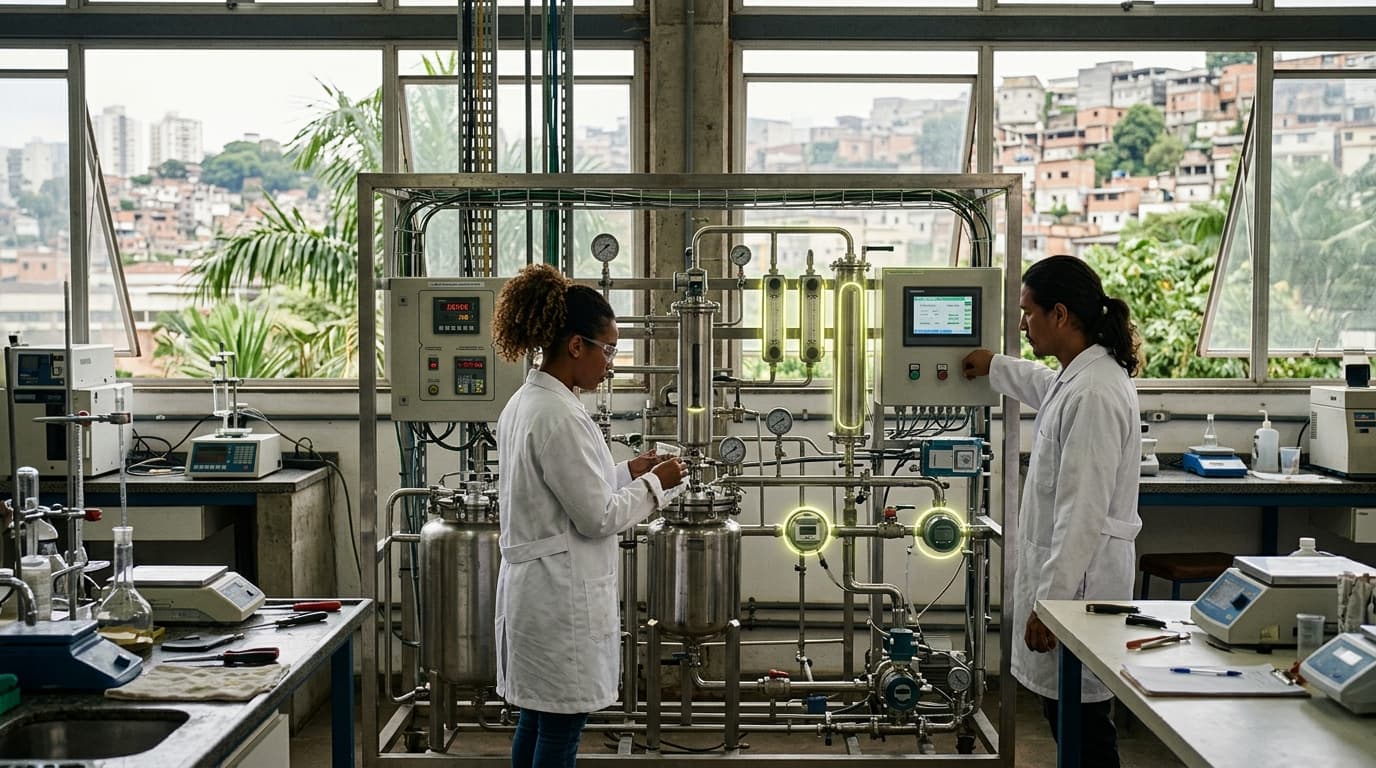
Sugarcane Ethanol (First-Generation Biofuel)
Geography: Americas · South America · Brazil
Brazil's Proálcool program (launched 1975) created the world's first and largest commercial biofuel industry. Sugarcane ethanol produces 8-10 units of energy for every unit of fossil energy used in production — far better than corn ethanol (1.3:1) and competitive with many renewable electricity sources.
The industry processes roughly 600 million tons of sugarcane annually, producing both ethanol and sugar. Bagasse (the fibrous residue) is burned for cogeneration, making sugar mills energy-positive — they export electricity to the grid.
Flex-fuel vehicles, introduced in 2003, allow drivers to choose between gasoline and ethanol at the pump based on price. Over 70% of new cars sold in Brazil are flex-fuel. The technology package — sugarcane breeding, industrial fermentation, flex-fuel engines — took 50 years to mature and represents a complete energy system, not a single technology.
Research this in Signals
Signals turns a topic into a sourced research record you can inspect and rerun. Your first scan is free, and this one starts with Sugarcane Ethanol (First-Generation Biofuel) already loaded, so edit it or scan as is.