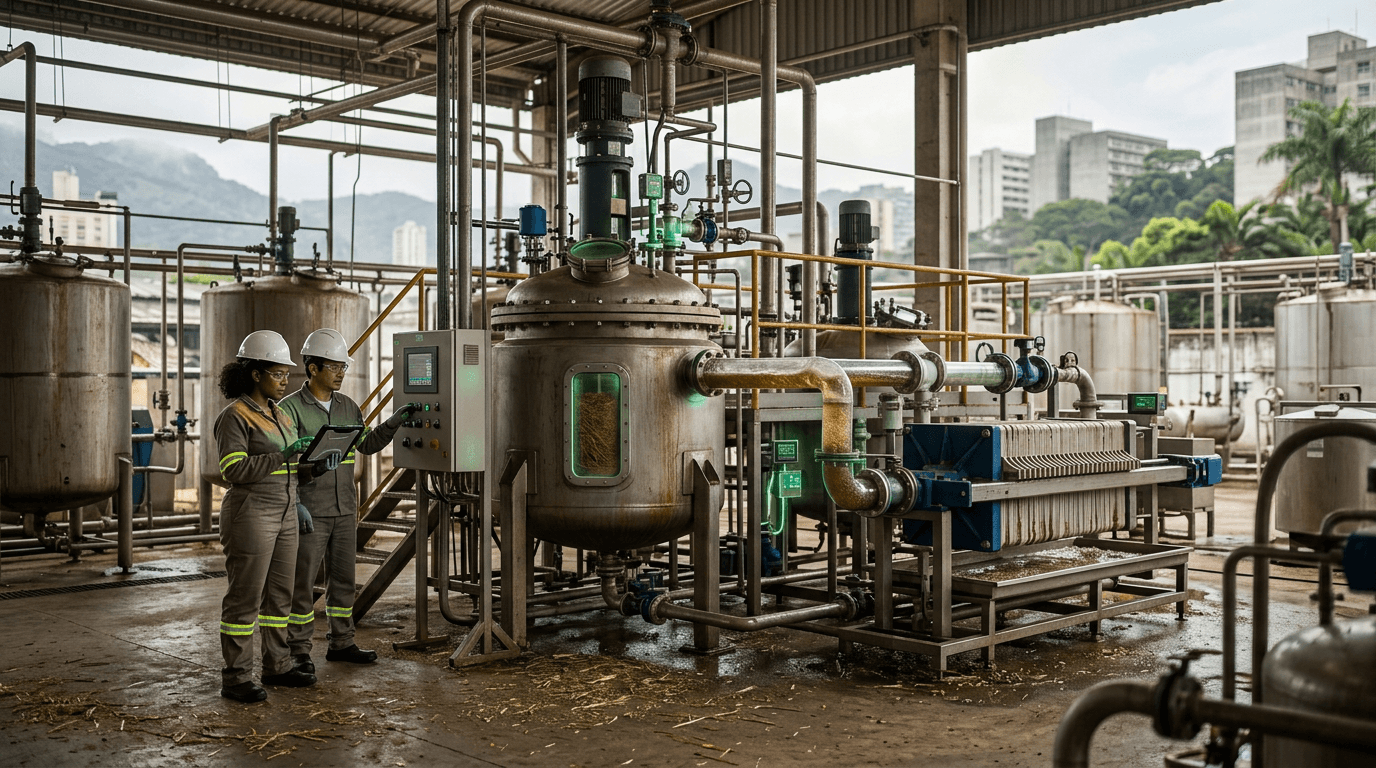
Second-Generation Cellulosic Ethanol
Geography: Americas · South America · Brazil
Second-generation (2G) ethanol uses enzymes to break down cellulose and hemicellulose in sugarcane bagasse and straw into fermentable sugars. This converts agricultural waste into fuel without requiring additional land or feedstock.
Raízen operates one of the world's largest cellulosic ethanol plants in Piracicaba (São Paulo), with capacity for 30+ million liters per year. The technology roughly doubles the ethanol yield per hectare of sugarcane by using both the juice (1G) and the fiber (2G).
The economics are improving but not yet competitive with first-generation ethanol at current oil prices. The strategic value is in volume: Brazil produces roughly 600 million tons of sugarcane annually, generating massive amounts of bagasse and straw. If 2G conversion scales, Brazil could significantly increase ethanol output without planting a single additional hectare.
Research this in Signals
Signals turns a topic into a sourced research record you can inspect and rerun. Your first scan is free, and this one starts with Second-Generation Cellulosic Ethanol already loaded, so edit it or scan as is.