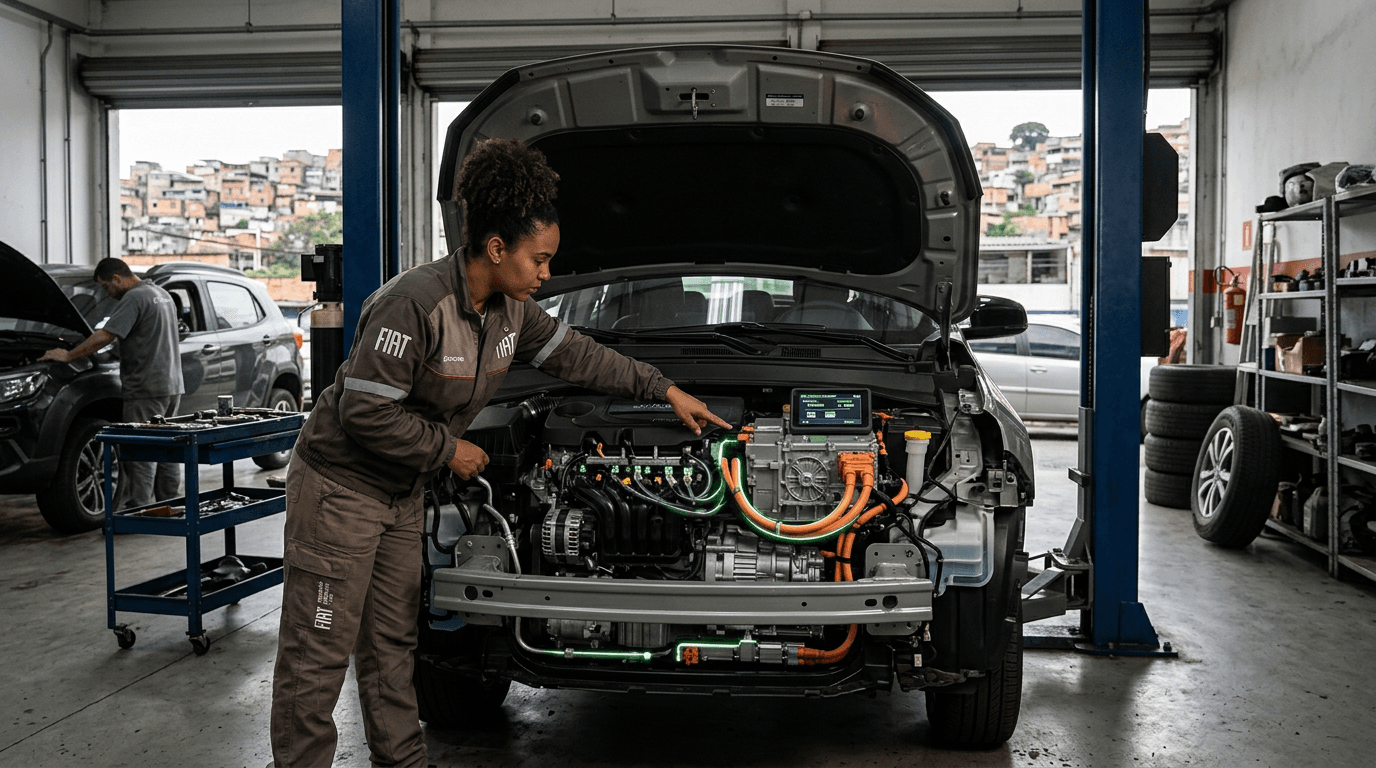
Flex-Fuel Plug-in Hybrid Drivetrain
Geography: Americas · South America · Brazil
BYD launched the Song Pro in October 2025 with a 1.5 DM-i flex-fuel plug-in hybrid engine co-developed by Chinese and Brazilian engineers — the first vehicle in the world combining BYD's plug-in hybrid technology with flex-fuel capability for ethanol/gasoline switching. Stellantis had already launched a flex-fuel hybrid Fiat in 2024, and Toyota is testing flex-fuel hydrogen combustion engines in Brazil.
The technology is uniquely Brazilian in concept: rather than choosing between battery-electric and biofuel pathways (as Europe and China do), Brazil is pursuing a 'technology-neutral' approach where ethanol, electricity, and hydrogen coexist. A flex-fuel hybrid running on sugarcane ethanol and grid electricity (65% hydropower) achieves lifecycle emissions competitive with or better than pure battery-electric vehicles running on fossil-heavy grids.
The strategic implication is that Brazil's decarbonization pathway for transport may bypass the full BEV transition that Europe and China are pursuing. With 50 years of ethanol infrastructure, flex-fuel expertise, and cheap renewable electricity, the flex-hybrid drivetrain lets Brazil leverage all three energy sources simultaneously. BYD's investment signals that even China's EV champion sees ethanol-electric hybrids as a viable global technology, not just a Brazilian curiosity.
Research this in Signals
Signals turns a topic into a sourced research record you can inspect and rerun. Your first scan is free, and this one starts with Flex-Fuel Plug-in Hybrid Drivetrain already loaded, so edit it or scan as is.