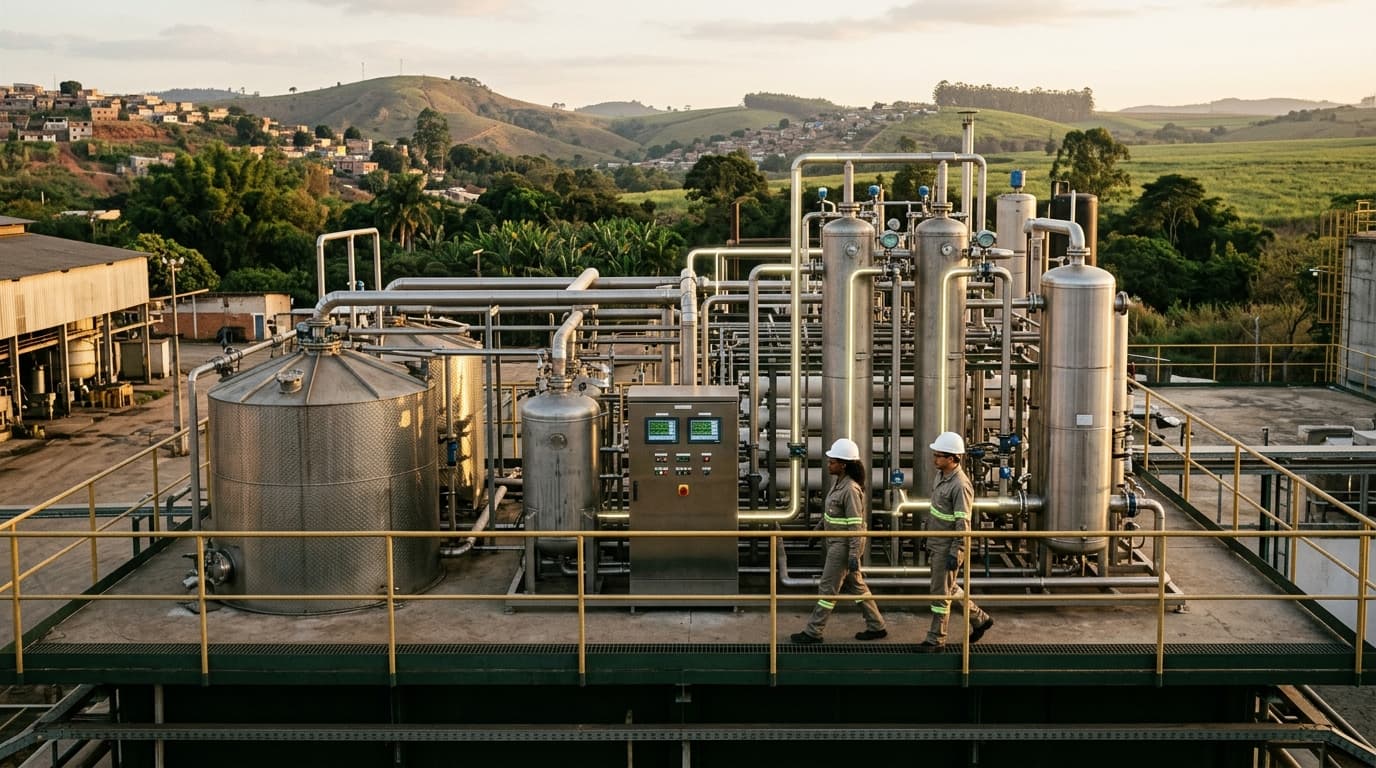
Biomethane from Sugarcane Vinasse
Geography: Americas · South America · Brazil
Sugarcane ethanol production generates 10-15 liters of vinasse (a nutrient-rich liquid waste) per liter of ethanol. Traditionally applied to fields as fertilizer, vinasse emits methane as it decomposes. Anaerobic digestion captures this methane as biogas, which is then purified into biomethane — a drop-in replacement for fossil natural gas. São Martinho invested R$250 million in its first biomethane plant, operational in 2025, with IFC providing $165 million in financing.
Brazil produces roughly 30 billion liters of ethanol annually, generating 300-450 billion liters of vinasse. The biomethane potential from this single waste stream is enormous — industry estimates suggest it could replace 10-15% of Brazil's fossil natural gas consumption. The 'Fuel of the Future' law (2024) and a new National Biomethane Program regulation (public consultation May 2025) create the regulatory framework for scale-up.
Biomethane from vinasse represents a triple win: it eliminates a polluting waste stream (vinasse runoff damages waterways), generates renewable fuel from a byproduct that is already produced at massive scale, and creates a new revenue stream for ethanol mills without requiring additional land or feedstock. The technology turns Brazil's ethanol industry from a biofuel producer into a biogas-and-biofuel producer — extracting maximum energy from every ton of sugarcane.
Research this in Signals
Signals turns a topic into a sourced research record you can inspect and rerun. Your first scan is free, and this one starts with Biomethane from Sugarcane Vinasse already loaded, so edit it or scan as is.