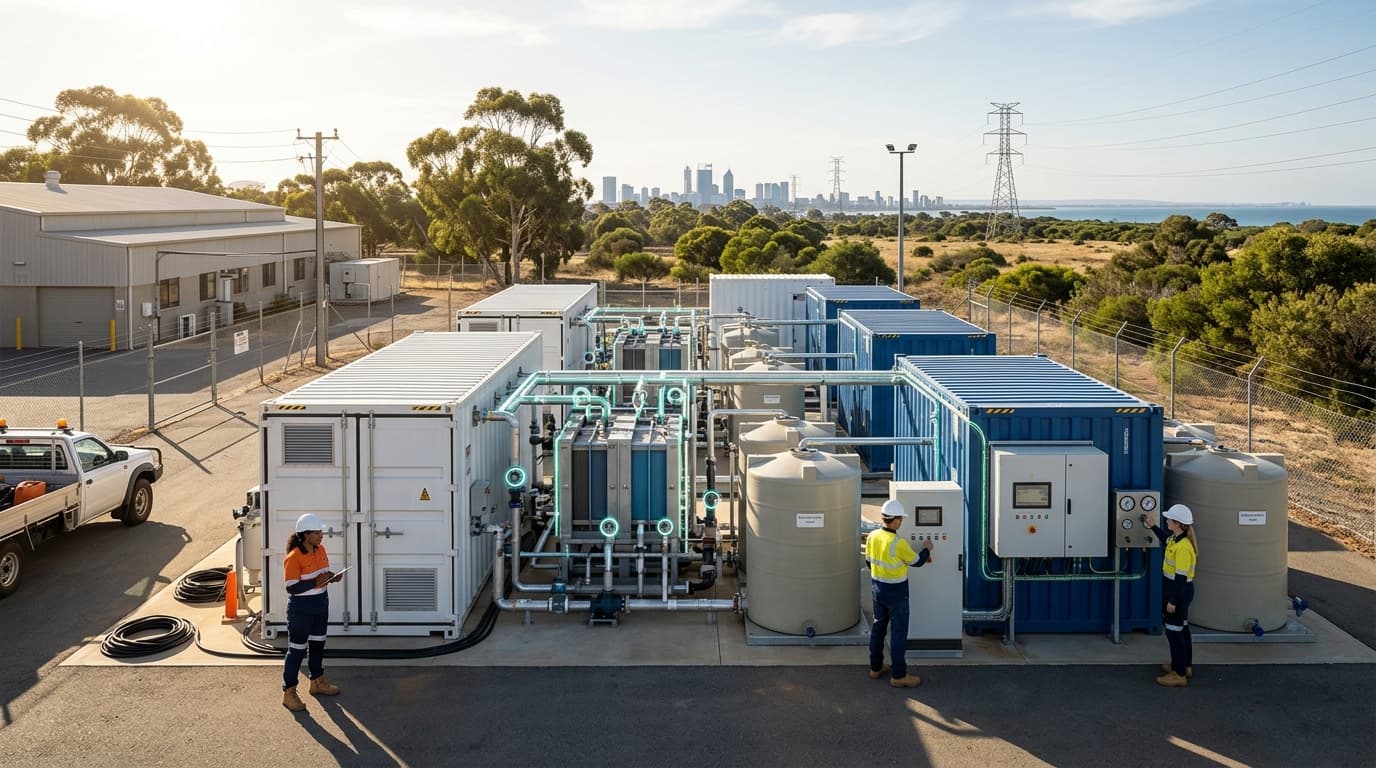
Vanadium Flow Battery Grid Storage
Geography: Asia Pacific · Oceania · Australia New Zealand
Western Australia is building the world's largest vanadium flow battery deployment, backed by AU$150M from the state's Diversification, Electrification, Economic Diversification (DEED) fund. The initiative requires batteries to be manufactured within WA using locally sourced and processed vanadium, creating a vertically integrated supply chain from mine to grid. Australia holds significant vanadium reserves, and flow batteries offer advantages over lithium-ion for long-duration storage: 20+ year lifespan, no capacity degradation, and ability to independently scale power and energy.
Grid-scale energy storage is the critical enabler for renewable energy penetration beyond 50%. While lithium-ion batteries dominate short-duration storage (2-4 hours), vanadium flow batteries excel at 6-12 hour discharge cycles needed to bridge evening solar gaps and weather events. Australia's grid, transitioning from coal baseload to distributed renewables at record pace, needs exactly this capability.
The strategic dimension is resource sovereignty. Vanadium is primarily produced in China, Russia, and South Africa. Australia's decision to mandate local processing and manufacturing creates a vertically integrated flow battery industry that reduces import dependence, creates skilled jobs, and positions WA as an exporter of both vanadium electrolyte and complete battery systems. If the 500MWh deployment succeeds, it could catalyze a global shift toward flow batteries for grid storage.
Research this in Signals
Signals turns a topic into a sourced research record you can inspect and rerun. Your first scan is free, and this one starts with Vanadium Flow Battery Grid Storage already loaded, so edit it or scan as is.