Supercritical Geothermal Energy
Geography: Asia Pacific · Oceania · Australia New Zealand
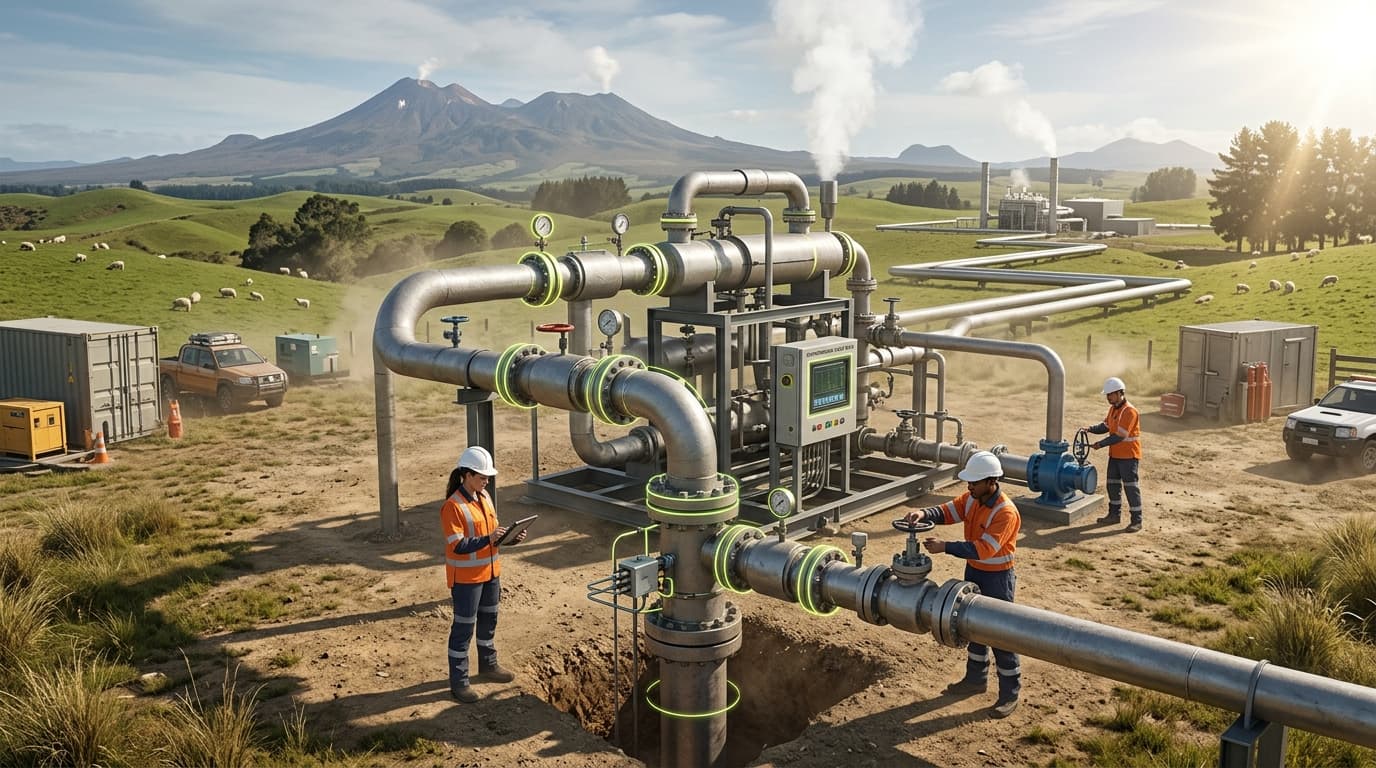
New Zealand's supercritical geothermal program aims to tap fluid at temperatures exceeding 400°C and pressures above 220 bar in the Taupo Volcanic Zone — conditions where water enters a supercritical state with energy density 5-10 times higher than conventional geothermal. The government committed NZ$60M in late 2024 to support deep drilling beyond 5km, and in July 2025 launched 'From the Ground Up,' a national geothermal strategy positioning the technology as a moonshot for baseload renewable energy.
New Zealand already generates approximately 17% of its electricity from conventional geothermal sources, ranking in the global top ten. Supercritical geothermal would dramatically increase output per well, potentially making a single drill site equivalent to a small power station. The technology, if proven commercially viable, could be exported to volcanic regions worldwide — Indonesia, Philippines, East Africa, Iceland, Japan — representing tens of gigawatts of untapped baseload renewable capacity.
For New Zealand, supercritical geothermal addresses the country's core energy challenge: maintaining 85%+ renewable electricity generation while meeting growing demand from electrification and data centers. Unlike wind and solar, geothermal provides firm baseload power unaffected by weather. The University of Auckland's Geothermal Institute serves as the global center of excellence for this research, training geothermal engineers from 50+ countries and reinforcing New Zealand's position as the world's leading geothermal innovator.
Research this in Signals
Signals turns a topic into a sourced research record you can inspect and rerun. Your first scan is free, and this one starts with Supercritical Geothermal Energy already loaded, so edit it or scan as is.