Submerged Wave Energy Conversion (CETO)
Geography: Asia Pacific · Oceania · Australia New Zealand
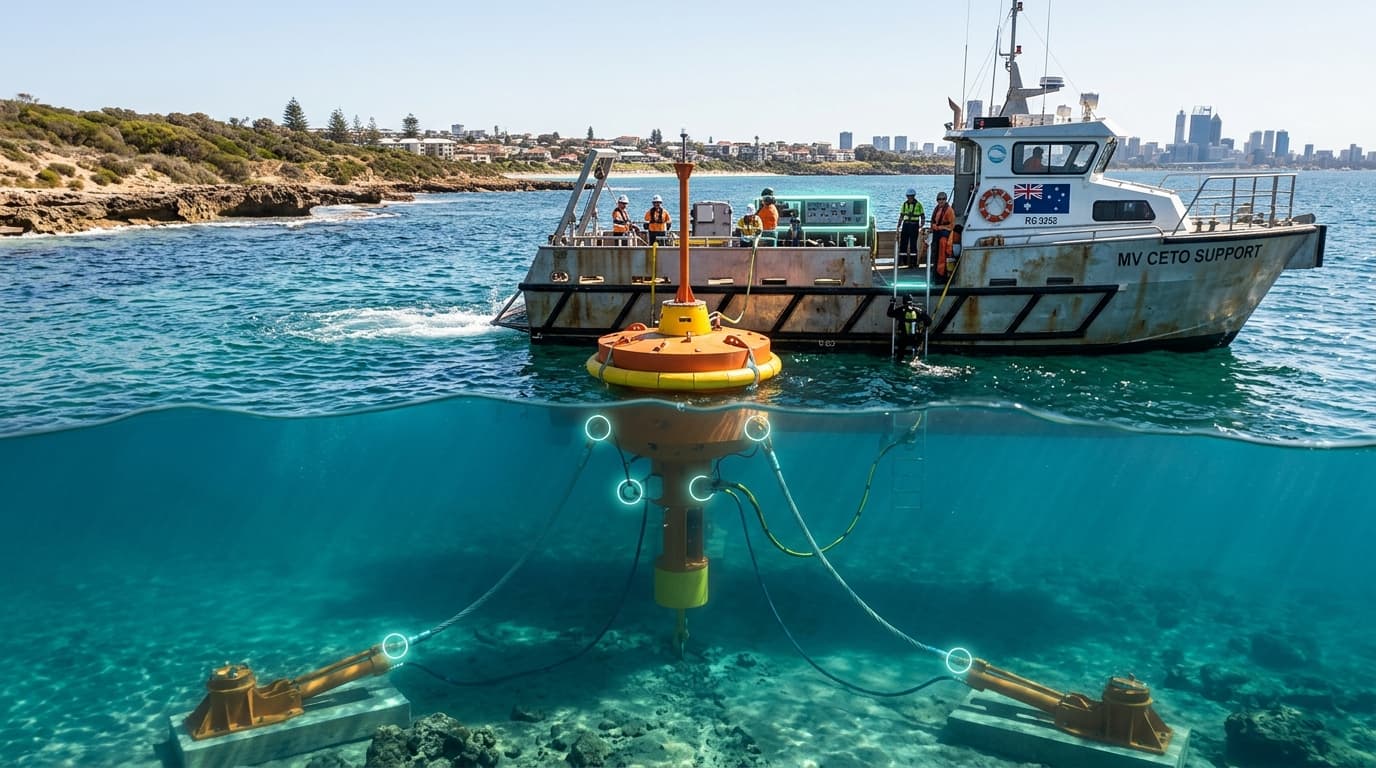
Carnegie Clean Energy has developed the CETO wave energy converter — a fully submerged buoy system that captures energy from ocean wave motion and converts it to electricity via subsea power generation. Unlike surface-based wave energy devices, CETO operates below the wave break zone, making it invisible from shore, resistant to storm damage, and safe for marine users. In March 2025, Carnegie received milestone funding through the EU's ACHIVE project to build and test a 400kW CETO device off Spain's Atlantic coast.
Australia's Southern Ocean coastline receives some of the world's most consistent wave energy — estimated at 1,800 TWh per year of technically recoverable resource. Wave energy is complementary to solar (waves continue overnight and during winter storms when solar output drops), making it a natural fit for Australia's renewable energy mix. The Blue Economy CRC's M4 Wave Energy Demonstrator was deployed in King George Sound, Albany, over the 2024-25 summer, advancing the sector's readiness.
Wave energy remains the least developed major renewable energy source globally, primarily due to the engineering challenge of building equipment that survives decades in corrosive, high-energy marine environments. CETO's fully submerged approach addresses the survivability problem that destroyed many earlier wave energy concepts. If commercialized, the technology is highly exportable to wave-rich coastlines worldwide — Chile, Portugal, Ireland, Japan — and could provide firm renewable electricity for remote island communities and offshore aquaculture operations.
Research this in Signals
Signals turns a topic into a sourced research record you can inspect and rerun. Your first scan is free, and this one starts with Submerged Wave Energy Conversion (CETO) already loaded, so edit it or scan as is.