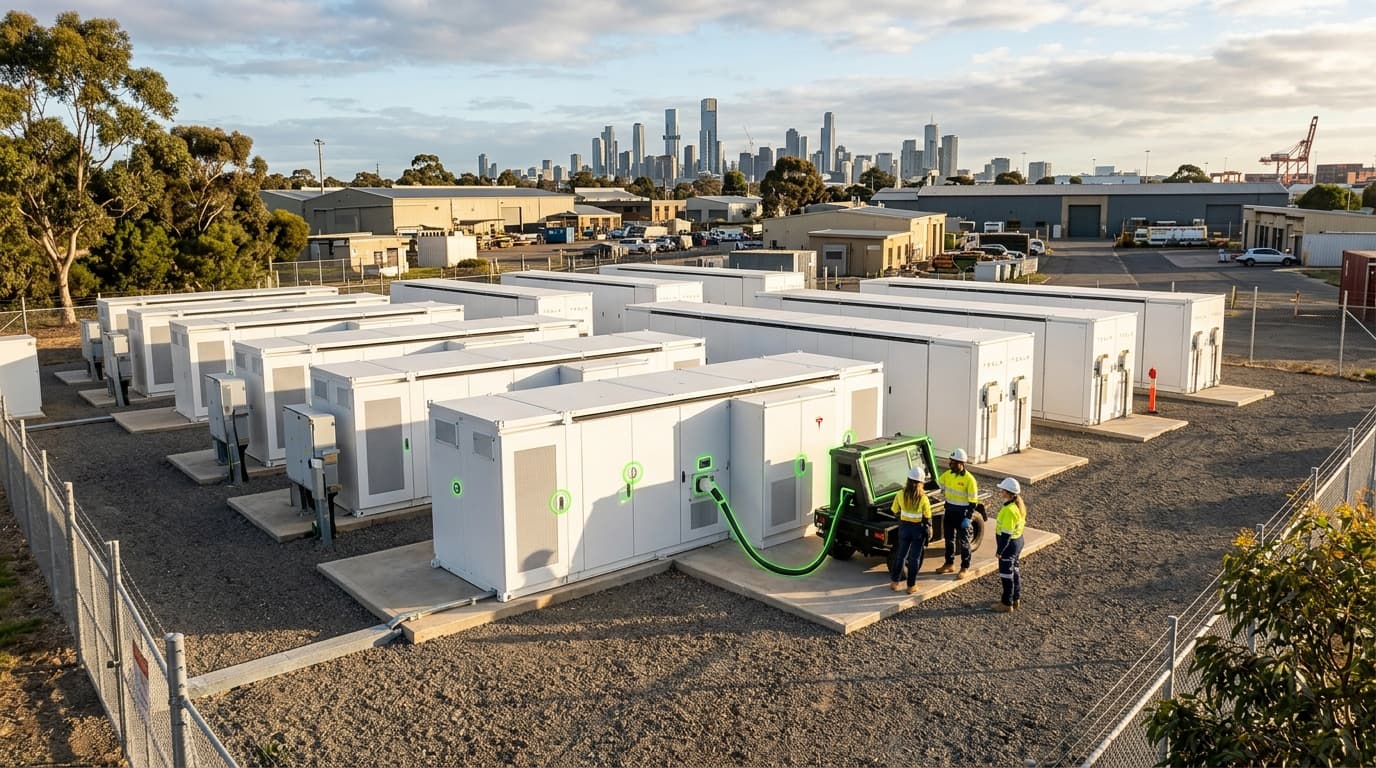
Grid-Scale Battery Energy Storage Systems
Geography: Asia Pacific · Oceania · Australia New Zealand
Australia has become a global leader in grid-scale battery storage deployment, driven by the rapid closure of coal-fired power stations and the intermittency of wind and solar generation. The Hornsdale Power Reserve in South Australia (originally Tesla's 'big battery') demonstrated the technology's commercial viability in 2017 and has since been expanded to 150MW/194MWh. Neoen's Victorian Big Battery (300MW/450MWh) and numerous other projects across the National Electricity Market are stabilizing a grid undergoing one of the fastest energy transitions in the developed world.
Australia's grid faces unique challenges: a geographically vast network (spanning eastern seaboard states) with increasing renewable penetration that creates frequency stability issues when coal plants retire. Battery storage provides instantaneous response to frequency deviations (faster than any thermal generator), absorbs excess renewable generation during peak solar hours, and dispatches stored energy during evening demand peaks. The economic case is proven — Hornsdale earned AU$150M+ in its first years through frequency control ancillary services.
The deployment of grid-scale batteries alongside vanadium flow batteries (for longer duration) and green hydrogen (for seasonal storage) creates a multi-technology energy storage portfolio that few countries are pursuing with Australia's ambition. The lessons learned from integrating battery storage into a grid with 35%+ renewable penetration are directly applicable to other countries embarking on energy transitions.
Research this in Signals
Signals turns a topic into a sourced research record you can inspect and rerun. Your first scan is free, and this one starts with Grid-Scale Battery Energy Storage Systems already loaded, so edit it or scan as is.