Geothermal Direct-Use Heating for Agriculture
Geography: Asia Pacific · Oceania · Australia New Zealand
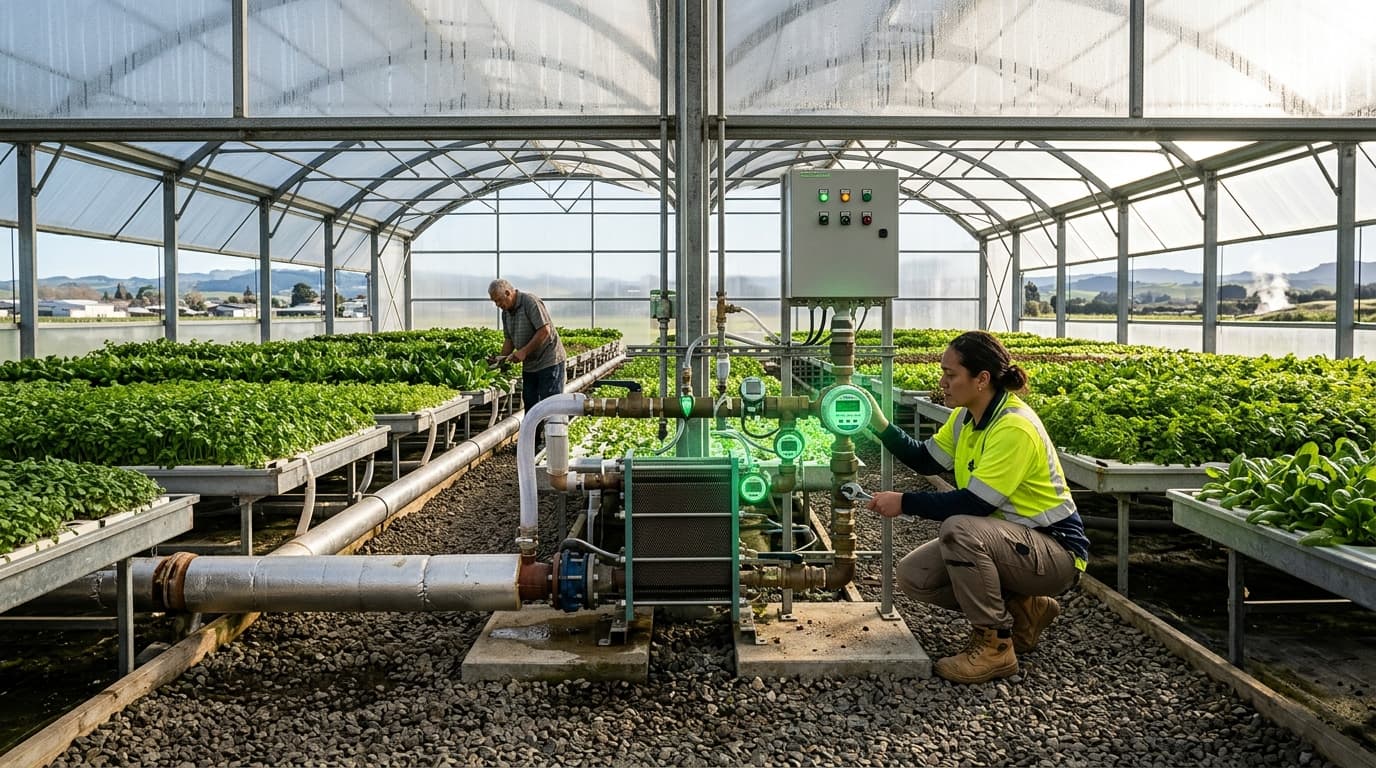
New Zealand is developing web-based tools and incentive programs to help greenhouse growers transition from fossil fuel heating to geothermal direct-use, particularly in the Taupo Volcanic Zone and Bay of Plenty regions. Geothermal direct-use — applying hot water and steam directly to industrial and agricultural processes without converting to electricity — is significantly more efficient than electricity generation, capturing 90%+ of the thermal energy. Applications include greenhouse heating, timber kiln drying, prawn farming, and milk pasteurization.
New Zealand's geothermal strategy explicitly targets expanded direct-use applications as a pathway to decarbonize regional industries. The country's existing geothermal fields produce hot water at temperatures suitable for most industrial heating applications (80-180°C), and the geographic concentration of horticulture and forestry near geothermal resources in the central North Island creates a natural synergy. The government's 'From the Ground Up' strategy launched in July 2025 includes direct-use expansion as a near-term priority.
Direct-use geothermal represents a lower-risk, lower-cost complement to the high-profile supercritical drilling program. While supercritical technology aims for breakthrough energy production, direct-use heating delivers immediate emissions reductions using proven technology. For New Zealand's agricultural export industries — facing increasing pressure from trading partners to demonstrate low carbon footprints — geothermal-heated greenhouses and processing facilities offer a competitive advantage that fossil-fuel-dependent competitors cannot easily replicate.
Research this in Signals
Signals turns a topic into a sourced research record you can inspect and rerun. Your first scan is free, and this one starts with Geothermal Direct-Use Heating for Agriculture already loaded, so edit it or scan as is.