Coral IVF and Heat-Tolerant Breeding
Geography: Asia Pacific · Oceania · Australia New Zealand
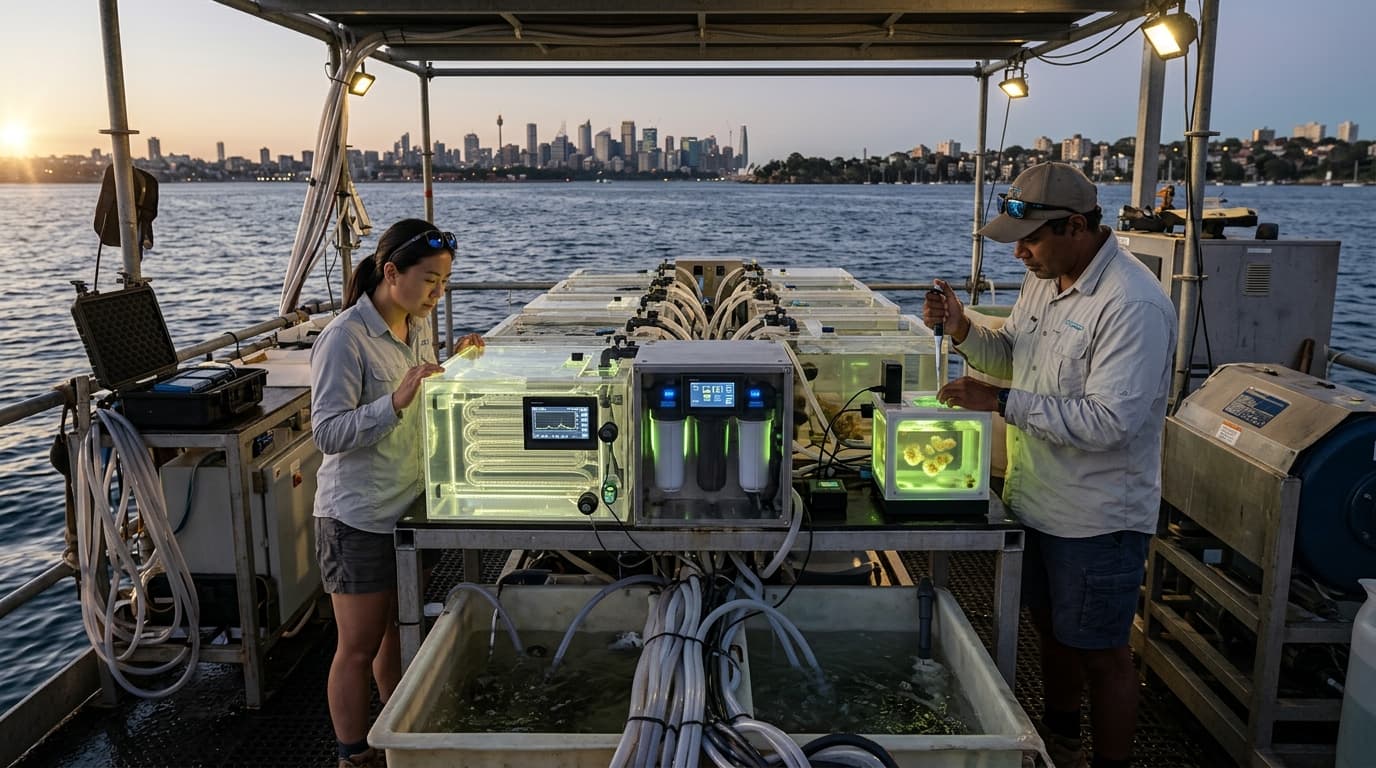
Developed by Southern Cross University's Professor Peter Harrison, Coral IVF collects millions of coral spawn during annual mass spawning events, fertilizes them in floating nursery pools on the reef, and then delivers concentrated larval slurries to degraded reef areas. The technique has been refined over a decade and is now integrated into the Reef Restoration and Adaptation Program's (RRAP) broader strategy, which includes selective breeding for thermal tolerance — identifying and cross-breeding coral genotypes that survive bleaching events.
Coral reefs support 25% of all marine species despite covering less than 1% of the ocean floor. The Great Barrier Reef's repeated bleaching events have created natural selection pressure that researchers are now accelerating through assisted evolution. By identifying genetic markers for heat tolerance and using selective breeding (not genetic modification), Australian scientists are developing coral strains that can withstand water temperatures 1-2°C higher than current populations.
This work sits at the frontier of assisted evolution — a controversial but increasingly necessary approach to conservation in a warming world. Australia's investment in the science, estimated at AU$1B+ through RRAP and related programs, generates globally applicable knowledge about managing ecosystems under climate stress. The ethical and governance frameworks being developed for interventionist reef management will likely become templates for similar programs worldwide.
Research this in Signals
Signals turns a topic into a sourced research record you can inspect and rerun. Your first scan is free, and this one starts with Coral IVF and Heat-Tolerant Breeding already loaded, so edit it or scan as is.