Engineered Biocarbon for Soil Sequestration
Geography: Asia Pacific · Oceania · Australia New Zealand
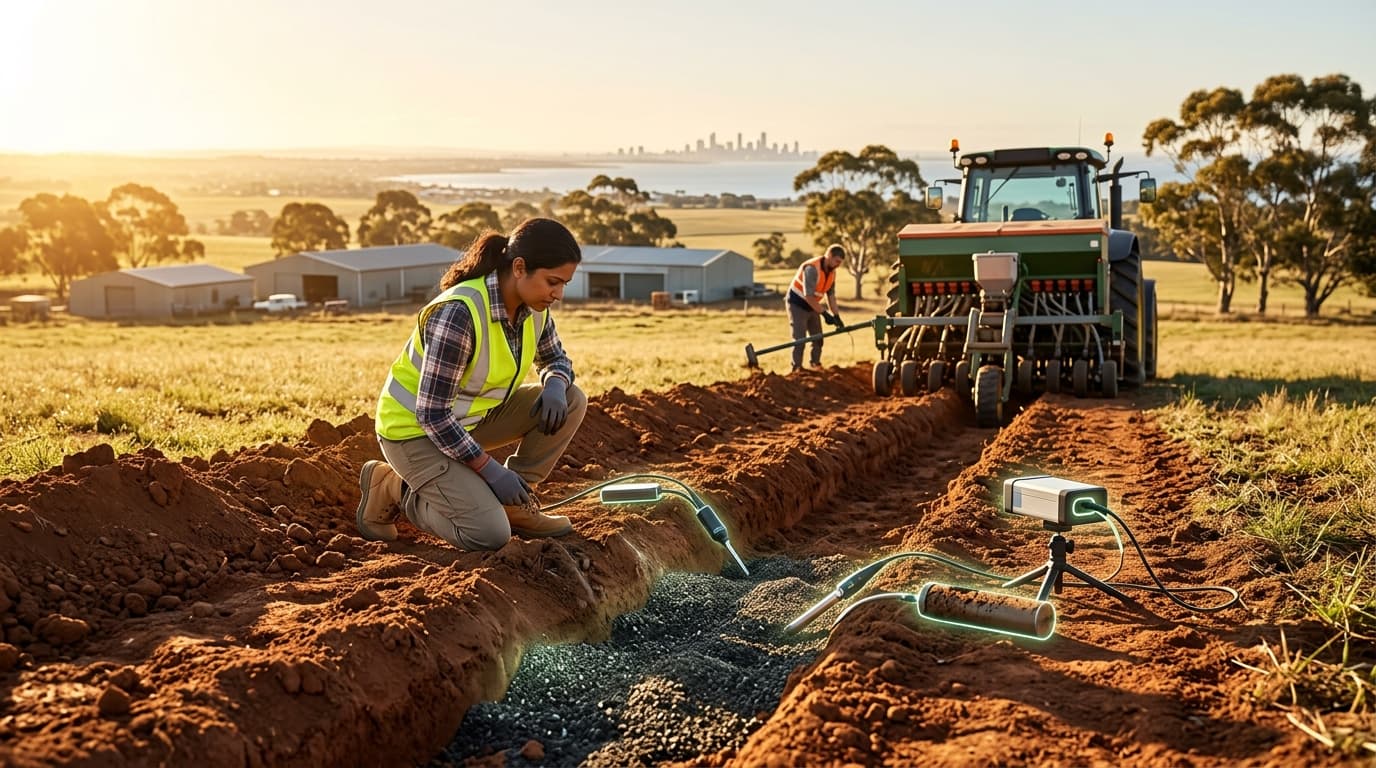
Biocarbon, featured in Cicada's Tech23 2025 cohort, is developing engineered carbon products that permanently sequester atmospheric CO2 in agricultural soils while simultaneously improving soil structure, water retention, and nutrient availability. Unlike raw biochar (charcoal produced from biomass pyrolysis), engineered biocarbon products are designed with specific surface chemistries and pore structures optimized for different soil types and agricultural applications.
Australia's soils are among the most degraded in the developed world — ancient, weathered, and depleted by 200+ years of European-style agriculture on a continent with minimal glacial soil renewal. Engineered biocarbon addresses multiple problems simultaneously: sequestering carbon (potentially eligible for carbon credits), improving water-holding capacity (critical for drought resilience), enhancing microbial communities, and reducing fertilizer leaching.
The carbon credit dimension adds financial viability. Under Australia's carbon credit framework and emerging voluntary carbon markets, permanent soil carbon sequestration can generate revenue streams that offset biocarbon production costs. If scaled to a significant fraction of Australia's 340 million hectares of agricultural land, biocarbon application could sequester meaningful quantities of CO2 while restoring soil productivity — a rare win-win in climate mitigation.
Research this in Signals
Signals turns a topic into a sourced research record you can inspect and rerun. Your first scan is free, and this one starts with Engineered Biocarbon for Soil Sequestration already loaded, so edit it or scan as is.