Autonomous Reef Monitoring and Underwater Robotics
Geography: Asia Pacific · Oceania · Australia New Zealand
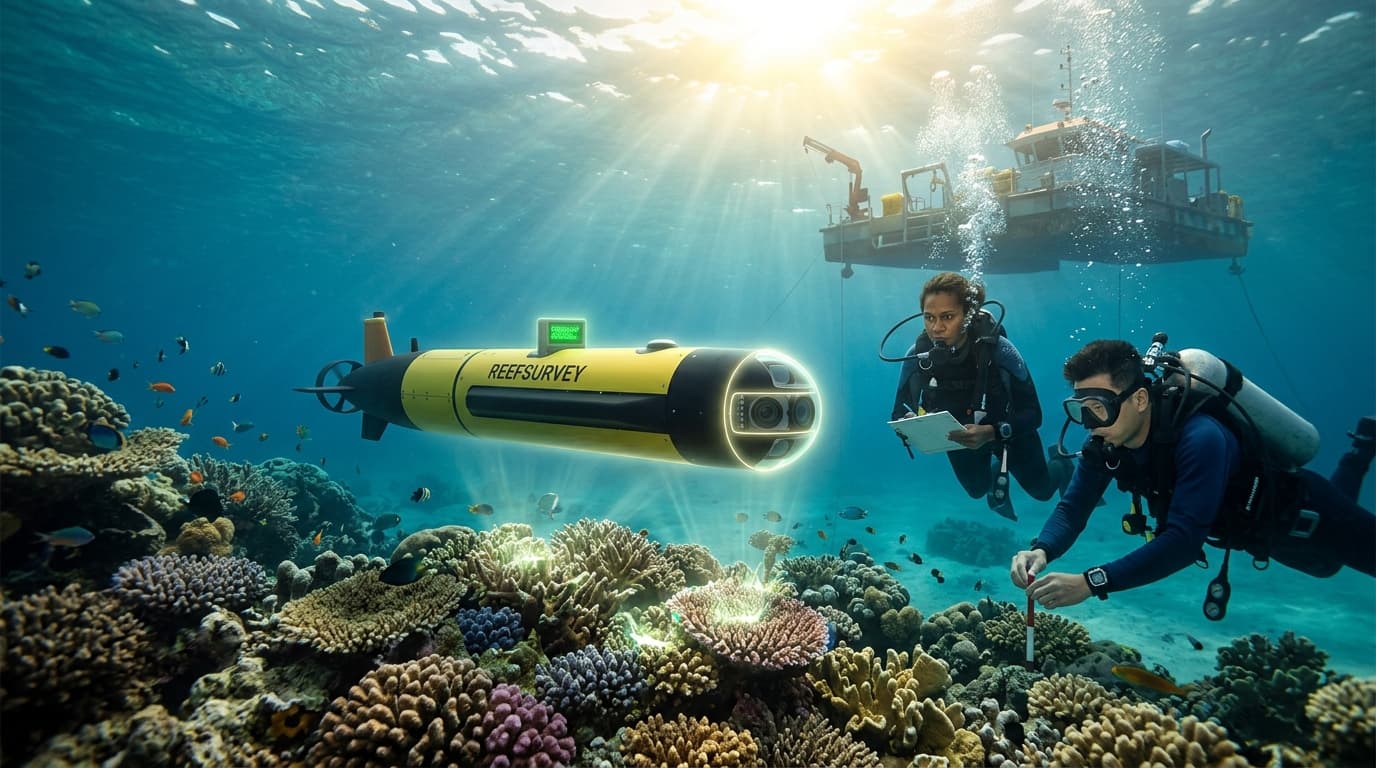
The Australian Institute of Marine Science (AIMS) has developed autonomous reef monitoring systems that combine underwater vehicles, towed camera arrays, and AI-powered image classification to survey coral reef health at unprecedented scale across the Great Barrier Reef. The Long-Term Monitoring Program uses standardized transects surveyed by autonomous and semi-autonomous platforms, with machine learning models trained on millions of reef images to classify coral species, coverage, bleaching status, and predator populations in near-real-time.
Manual reef surveys by trained divers can cover at most a few reef sites per day. Australia's Great Barrier Reef stretches 2,300km with over 3,000 individual reef systems — far beyond the capacity of human surveyors. Autonomous monitoring platforms can survey continuously, capturing standardized imagery that AI processes into actionable data on reef health trends, bleaching extent, and recovery trajectories. This data drives management decisions including crown-of-thorns starfish control programs and marine park zoning.
The technology integrates with the broader Reef Restoration and Adaptation Program (RRAP) portfolio, providing the monitoring feedback loop essential for evaluating whether interventions (larval seeding, cloud brightening, heat-tolerant coral deployment) are working. The autonomous survey platforms and AI classification systems are exportable to tropical reef nations worldwide, and the data standards established for the GBR are becoming de facto benchmarks for reef monitoring globally.
Research this in Signals
Signals turns a topic into a sourced research record you can inspect and rerun. Your first scan is free, and this one starts with Autonomous Reef Monitoring and Underwater Robotics already loaded, so edit it or scan as is.