Advanced Geothermal Systems (Hot Dry Rock)
Geography: Asia Pacific · Oceania · Australia New Zealand
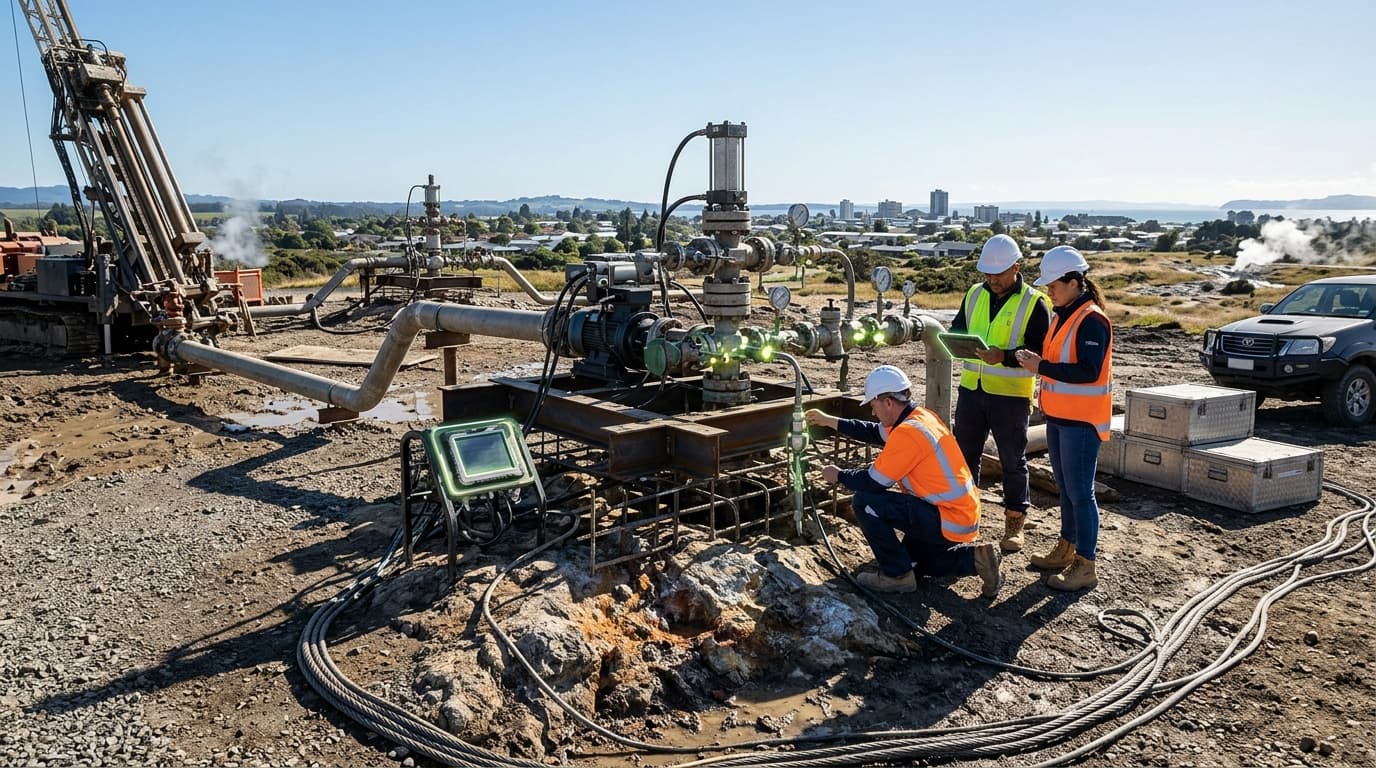
Advanced Geothermal Systems (AGS), formerly called Enhanced Geothermal Systems (EGS), create artificial geothermal reservoirs by drilling into hot dry rock and engineering fracture networks or closed-loop heat exchangers to extract thermal energy without requiring natural hydrothermal fluids. New Zealand's MBIE has identified AGS as a complementary technology to conventional and supercritical geothermal, potentially extending geothermal energy access to lower-temperature regions of the country and exportable to geographies without volcanic geology.
Conventional geothermal requires the coincidence of three conditions: heat, permeability, and fluid. AGS eliminates the need for natural permeability and fluid, meaning that any location with sufficient depth (and therefore temperature) could theoretically host a geothermal plant. This dramatically expands the global geothermal resource base. US companies like Fervo Energy are pursuing similar approaches in Nevada and Utah, but New Zealand's deep geothermal expertise provides a research advantage.
For the Australian context, AGS is potentially transformational — Australia lacks New Zealand's volcanic geology but has significant heat flow in several sedimentary basins. Previous Australian EGS ventures (Geodynamics, Petratherm) in the Cooper Basin struggled with the technical challenges of hot dry rock at depth. NZ-developed AGS expertise could eventually be transferred across the Tasman to unlock Australian geothermal resources, providing firm baseload renewable power to complement solar and wind.
Research this in Signals
Signals turns a topic into a sourced research record you can inspect and rerun. Your first scan is free, and this one starts with Advanced Geothermal Systems (Hot Dry Rock) already loaded, so edit it or scan as is.