Urban Waste-to-Energy Conversion Technology
Geography: Emea · Africa · Africa
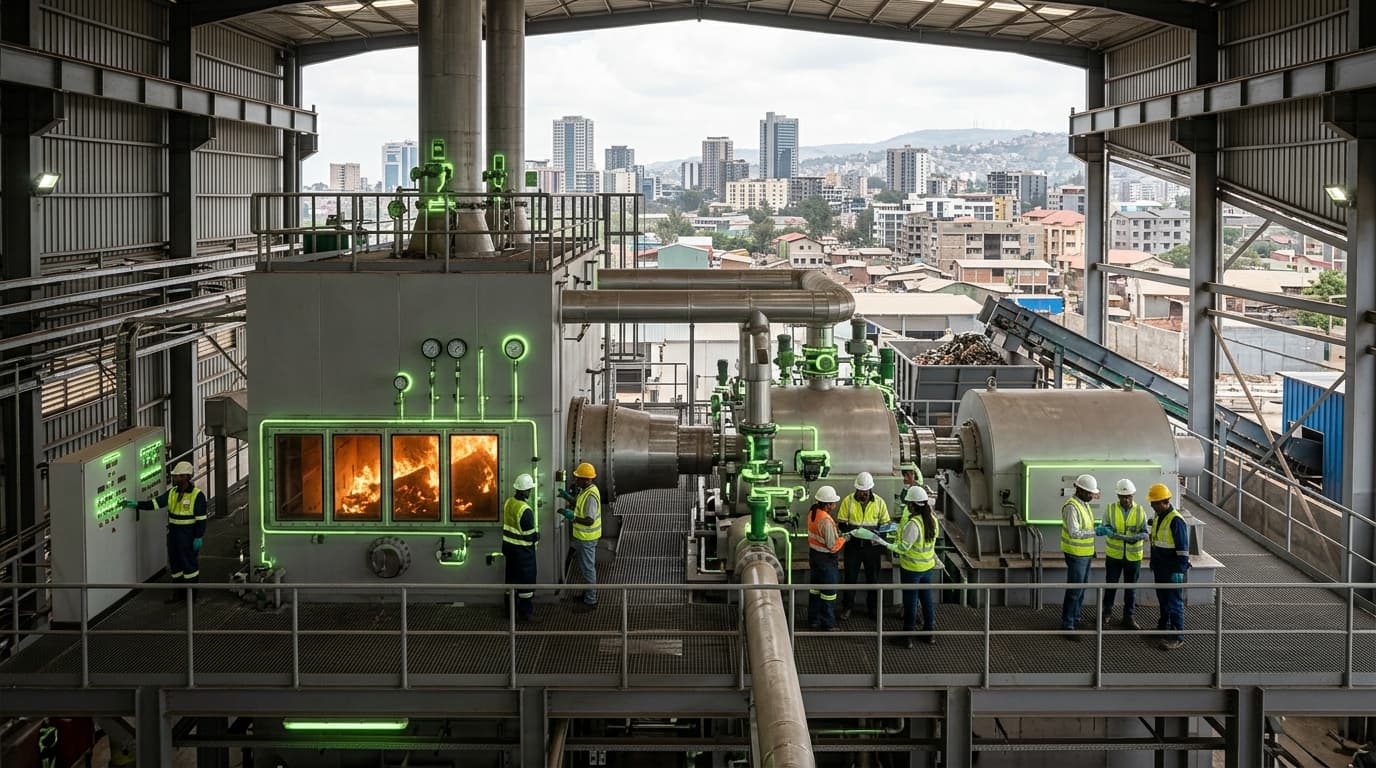
The Reppie Waste-to-Energy facility in Addis Ababa, Ethiopia, commissioned in 2018, is Africa's first and only waste-to-energy plant. Located on the site of Koshe, the city's former landfill where a 2017 landslide killed over 100 people, Reppie incinerates 1,400 tonnes of municipal solid waste daily to generate 25 MW of electricity — enough to power 30% of Addis Ababa's households. The facility uses moving grate incineration technology with emissions controls.
The dual-problem-solving nature is distinctly African: rapid urbanization generates mounting waste with no collection infrastructure, while power grids can't keep up with demand. Reppie addresses both simultaneously. Addis Ababa generates 3,000+ tonnes of waste daily, most of which previously ended up in open dumps. The facility processes nearly half of this, reducing landfill volume, methane emissions, and public health hazards while producing electricity.
The facility serves as a proof of concept for other African cities facing identical challenges. Lagos, Nairobi, Kinshasa, and Dar es Salaam all struggle with waste management and energy supply. If Reppie's model can be scaled — potentially with improved technology for emissions reduction and energy recovery — it could transform Africa's urban waste crisis into an energy resource. The challenge is capital cost and operational complexity, but the Addis Ababa example demonstrates feasibility.
Research this in Signals
Signals turns a topic into a sourced research record you can inspect and rerun. Your first scan is free, and this one starts with Urban Waste-to-Energy Conversion Technology already loaded, so edit it or scan as is.