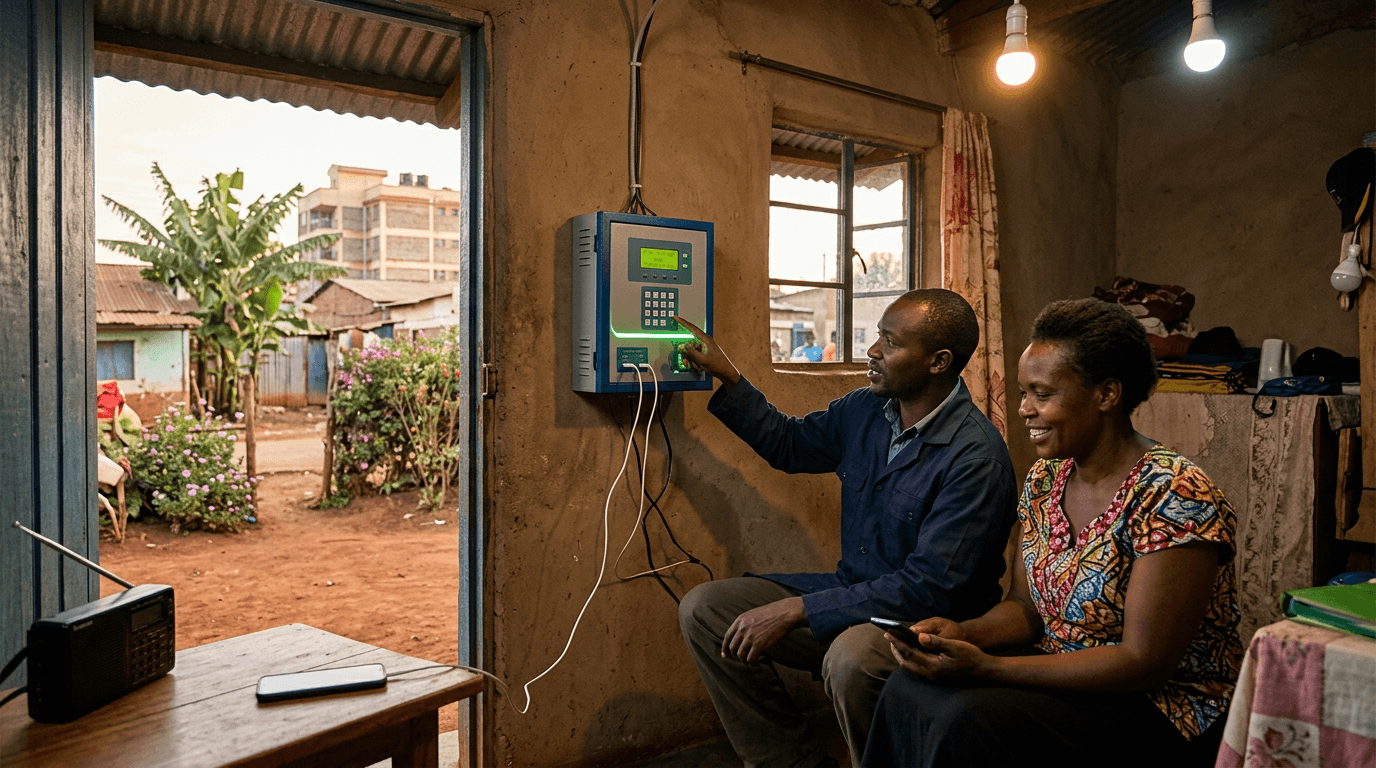
Pay-As-You-Go Solar Home Systems
Geography: Emea · Africa · Africa
Pay-as-you-go (PAYG) solar is a Kenyan-originated innovation that bundles three technologies: solar panels with embedded SIM cards, mobile money micropayments (via M-Pesa), and remote IoT lock/unlock capabilities. Companies like M-KOPA (founded 2011 in Nairobi), d.light, and Greenlight Planet sell solar home systems to off-grid households who pay in daily installments of $0.50-1.00 via mobile money. If payments stop, the system is remotely disabled. After 12-24 months, the customer owns the system outright.
This model cracked the affordability barrier that kept 600 million sub-Saharan Africans without electricity. A kerosene lamp costs ~$0.30/day to operate; PAYG solar replaces it with clean light, phone charging, and sometimes a TV or radio for comparable cost but with eventual ownership. M-KOPA alone has connected over 3 million homes. The company has expanded from solar kits to financing smartphones, motorcycles, and other productive assets using the same PAYG framework.
The strategic significance is the creation of a credit-scoring infrastructure for the unbanked. Every daily payment builds a financial identity for people with no bank account, no address, and no formal employment. PAYG solar companies now sit on payment data for millions of previously invisible consumers, making them platforms for broader financial inclusion. The model has been exported to Nigeria, South Africa, India, and Southeast Asia.
Research this in Signals
Signals turns a topic into a sourced research record you can inspect and rerun. Your first scan is free, and this one starts with Pay-As-You-Go Solar Home Systems already loaded, so edit it or scan as is.