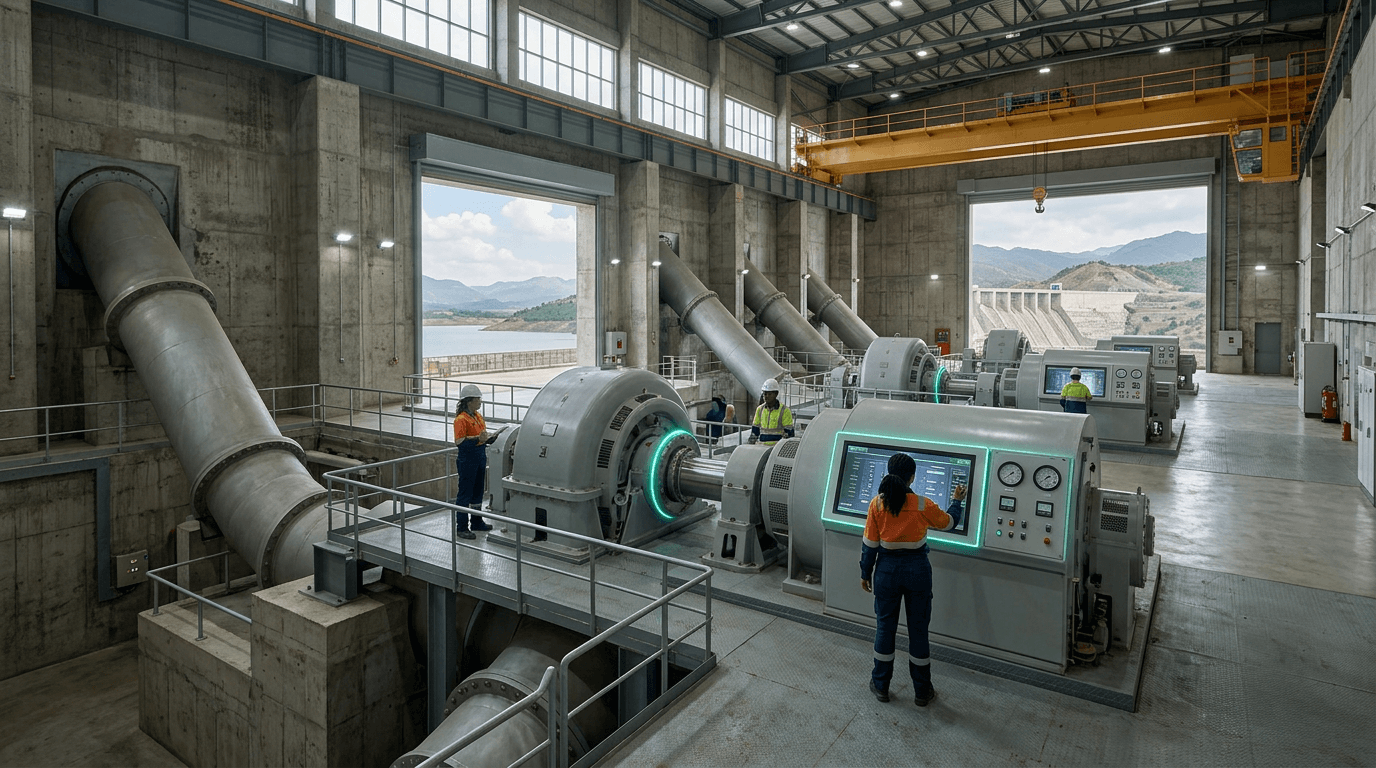
Grand Ethiopian Renaissance Dam Hydroelectric System
Geography: Emea · Africa · Africa
The Grand Ethiopian Renaissance Dam (GERD) is a 6,450 MW hydroelectric power plant on the Blue Nile River, making it the largest in Africa and one of the ten largest in the world. Construction began in 2011 and the dam was officially inaugurated in September 2025. The fourth filling phase was completed in 2024, bringing the reservoir to its optimal 625m level. The first four 400 MW turbines are operational, with the remaining turbines being commissioned progressively.
GERD will more than double Ethiopia's electricity generation capacity, transforming the country from energy-poor to a potential regional power exporter. Ethiopia plans to sell electricity to neighboring Sudan, Djibouti, Kenya, and beyond via the Eastern Africa Power Pool. The project was financed almost entirely through domestic bond sales and diaspora contributions — a remarkable demonstration of financial sovereignty for one of the world's poorest countries.
The geopolitical implications are enormous. GERD has been a source of tension with downstream Egypt and Sudan over Nile water rights for over a decade. Beyond the regional politics, the dam represents Africa's assertion of the right to develop its own natural resources. It is also a test case for large-scale renewable energy infrastructure on the continent, proving that African nations can undertake megaprojects independently.
Research this in Signals
Signals turns a topic into a sourced research record you can inspect and rerun. Your first scan is free, and this one starts with Grand Ethiopian Renaissance Dam Hydroelectric System already loaded, so edit it or scan as is.