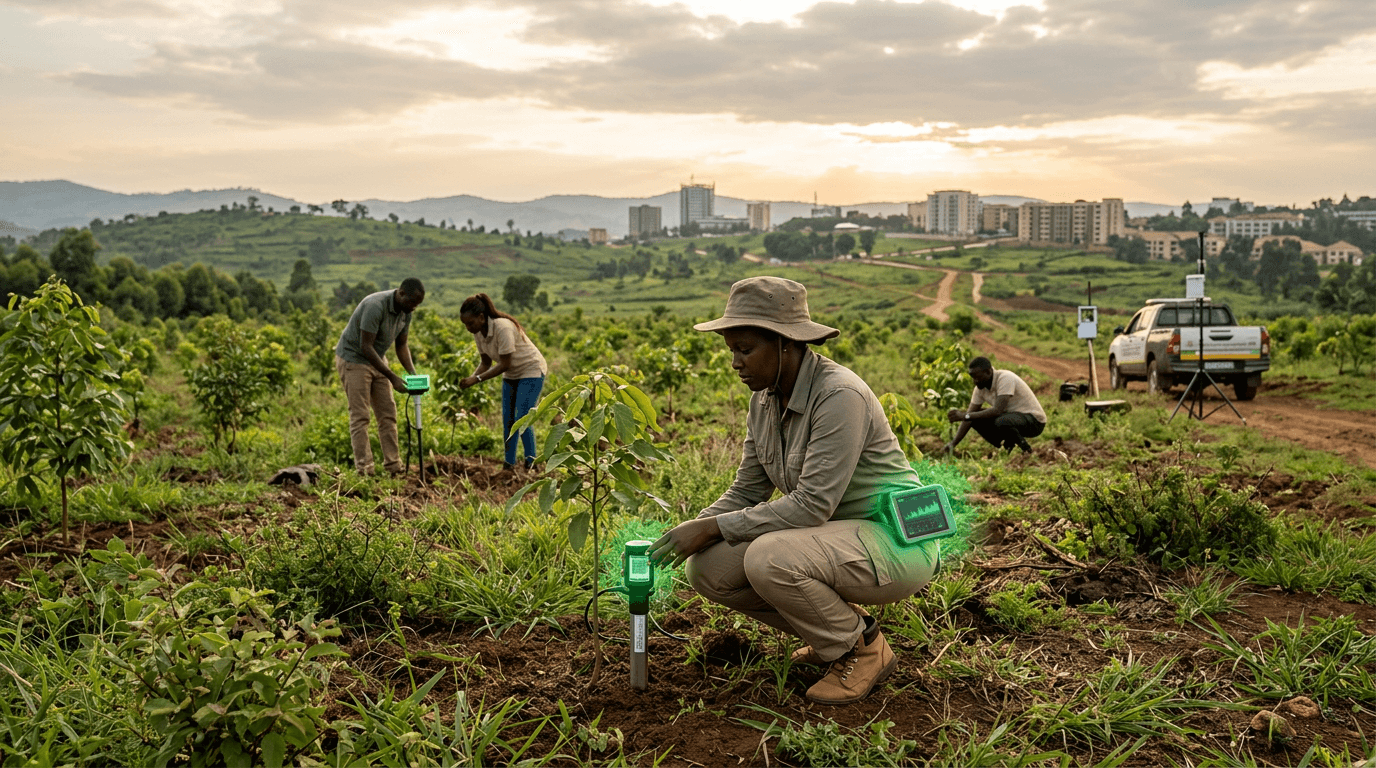
Indigenous Carbon Credit Monitoring and Verification Technology
Geography: Emea · Africa · Africa
Africa generates a growing share of voluntary carbon credits — from clean cookstove distribution, reforestation, mangrove restoration, and improved agricultural practices — but has historically depended on foreign verification organizations and technology. Emerging African companies are building indigenous MRV (monitoring, reporting, verification) technology: satellite-based forest monitoring, IoT-enabled cookstove usage tracking, and blockchain-based credit registries that give African project developers direct access to carbon markets.
The African Voluntary Carbon Market has enormous potential: the continent has 60% of the world's tropical forests, vast savannas suitable for restoration, and hundreds of millions of households using inefficient cooking methods that generate carbon credits when improved. But African countries capture less than 12% of the value from carbon credits generated on their land — the rest goes to international project developers, brokers, and verification bodies.
Building indigenous MRV technology is essential for capturing more value. If African organizations can verify their own carbon stocks, issue credits through transparent registries, and connect directly to buyers, the economics shift dramatically. Kenya's government has signaled it wants to host an African carbon exchange. The technology challenge is achieving credibility — MRV systems must be accurate and tamper-proof enough for international buyers to trust African-verified credits at the same premium as those verified by established organizations.
Research this in Signals
Signals turns a topic into a sourced research record you can inspect and rerun. Your first scan is free, and this one starts with Indigenous Carbon Credit Monitoring and Verification Technology already loaded, so edit it or scan as is.