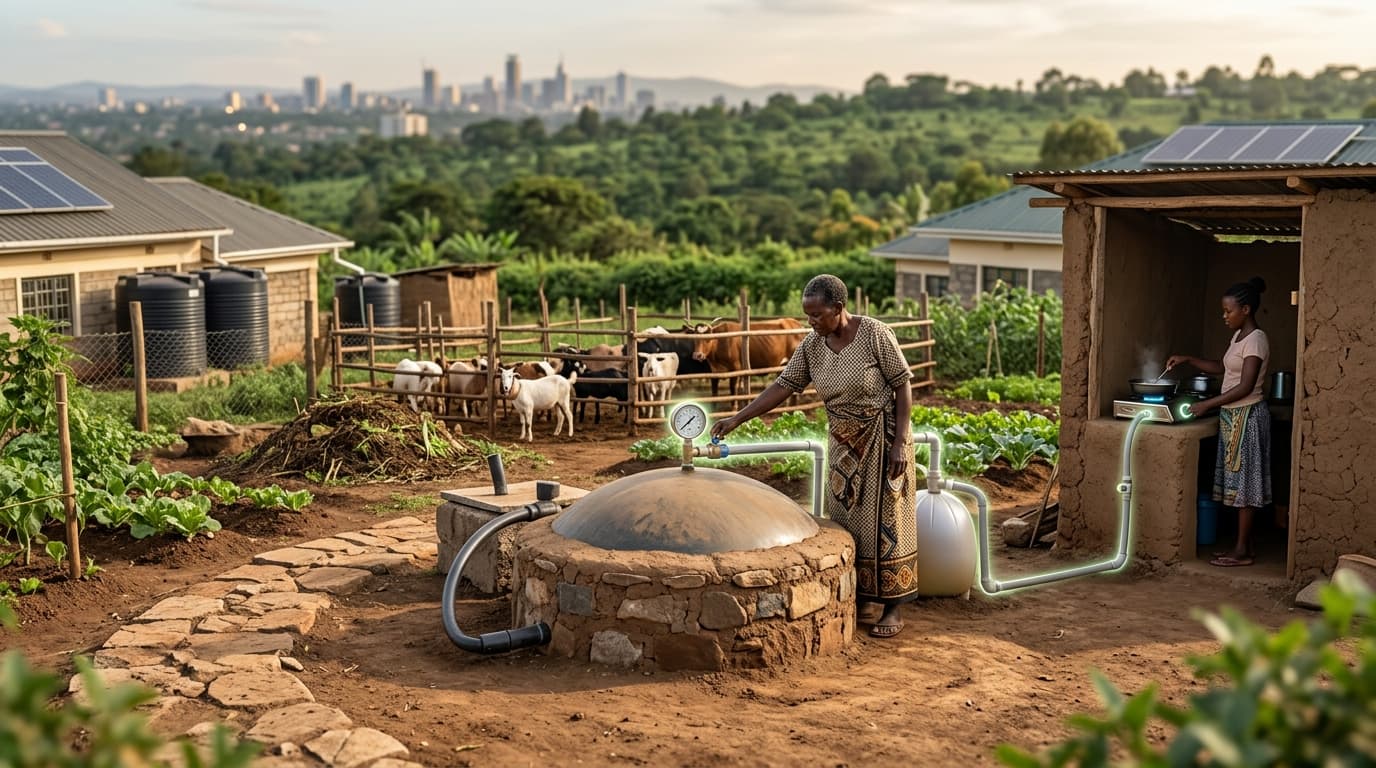
Small-Scale Biogas Digester Technology
Geography: Emea · Africa · Africa
Small-scale biogas digesters, adapted for African farming conditions, convert animal dung and crop residues into methane gas for cooking and lighting, plus nutrient-rich slurry for fertilizer. Companies like Sistema.bio (Kenya operations), HomeBiogas, and locally manufactured designs produce digesters costing $300-1,500 that serve individual households or small farms. Over 100,000 household biogas systems have been installed across Kenya, Tanzania, Ethiopia, and Uganda through programs supported by the Africa Biogas Partnership Programme.
The technology addresses Africa's deadliest environmental health crisis: household air pollution from cooking with wood and charcoal kills an estimated 600,000 people annually in Sub-Saharan Africa, primarily women and children. Biogas provides a clean cooking fuel from waste that would otherwise decompose in the open. The digesters also reduce demand for firewood, slowing deforestation, and produce organic fertilizer that replaces expensive chemical inputs.
African adaptations include designs optimized for tropical temperatures (which accelerate digestion), use of locally available materials, and integration with smallholder livestock operations (a household with 2-3 cows can produce enough biogas for daily cooking). The challenge is scaling: at current installation rates, it would take decades to reach the 200 million households that need clean cooking solutions. Financing mechanisms — including carbon credits and PAYG models — are being developed to accelerate deployment.
Research this in Signals
Signals turns a topic into a sourced research record you can inspect and rerun. Your first scan is free, and this one starts with Small-Scale Biogas Digester Technology already loaded, so edit it or scan as is.