AI-Powered Bioacoustic Ecosystem Monitoring
Geography: Emea · Africa · Africa
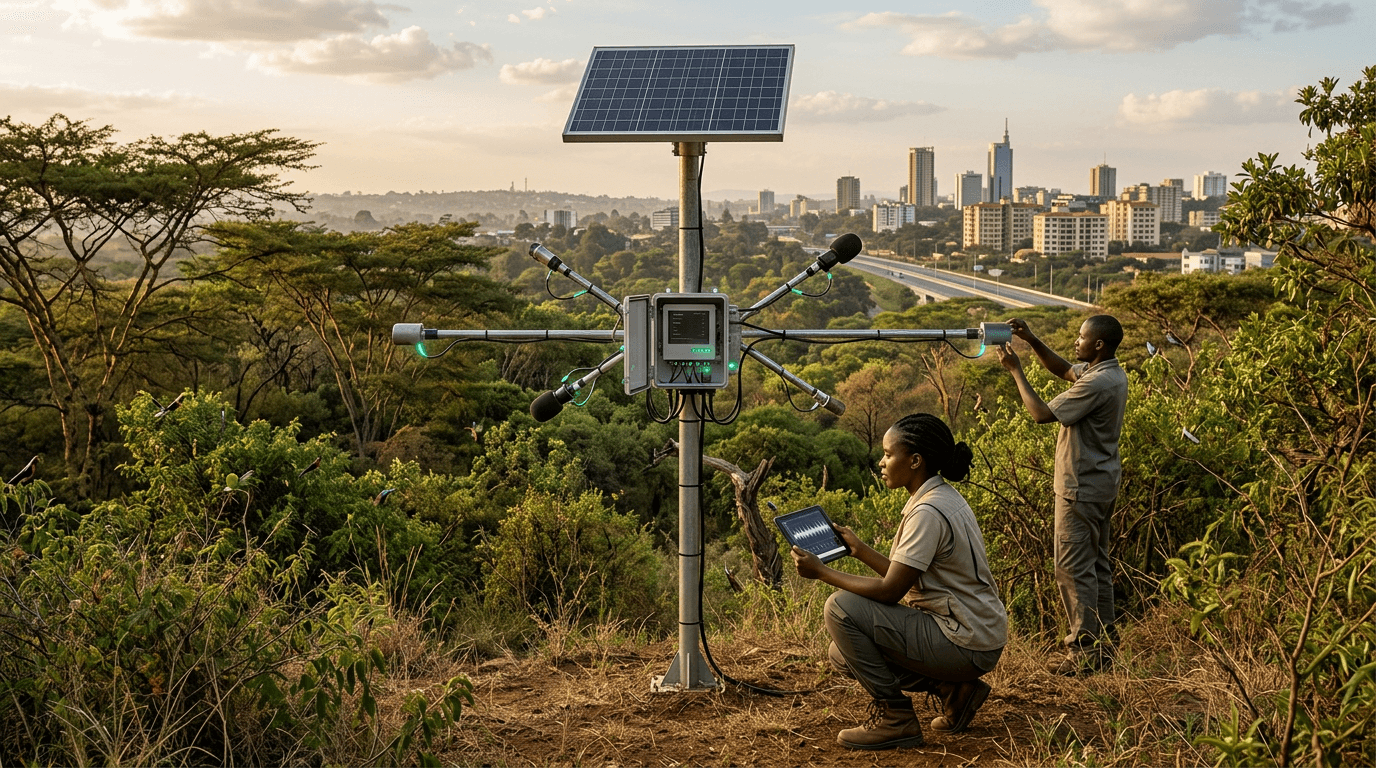
African researchers, coordinated through the African Bioacoustics Community based at South African institutions, are deploying networks of autonomous acoustic recorders across ecosystems from Kruger National Park to tropical forests. These solar-powered devices continuously capture soundscapes, which AI models (including BirdNET and custom African species classifiers) analyze to identify individual species, detect gunshots and chainsaws (poaching/logging indicators), and compute acoustic biodiversity indices that measure ecosystem health without visual observation.
The technology addresses a fundamental monitoring gap: Africa contains some of the world's richest biodiversity but the least monitoring infrastructure. Traditional wildlife surveys are expensive, labor-intensive, and provide only snapshots. Bioacoustic monitoring operates 24/7, captures nocturnal and cryptic species that visual surveys miss, and covers areas impossible to patrol physically. A single $200 recorder can monitor a square kilometer continuously for months, generating species inventories that would take teams of field biologists weeks to compile.
The African Bioacoustics Community is building continent-specific AI training datasets — African bird calls, primate vocalizations, frog choruses, and insect soundscapes differ markedly from the Northern Hemisphere data that global models are trained on. Field courses at Kruger National Park train African researchers in bioacoustic methods through the Organization for Tropical Studies. The approach integrates with carbon credit monitoring (proving forest ecosystem integrity through biodiversity metrics) and anti-poaching systems (gunshot detection), creating a multi-purpose environmental intelligence layer.
Research this in Signals
Signals turns a topic into a sourced research record you can inspect and rerun. Your first scan is free, and this one starts with AI-Powered Bioacoustic Ecosystem Monitoring already loaded, so edit it or scan as is.