AI-Integrated Anti-Poaching Surveillance Systems
Geography: Emea · Africa · Africa
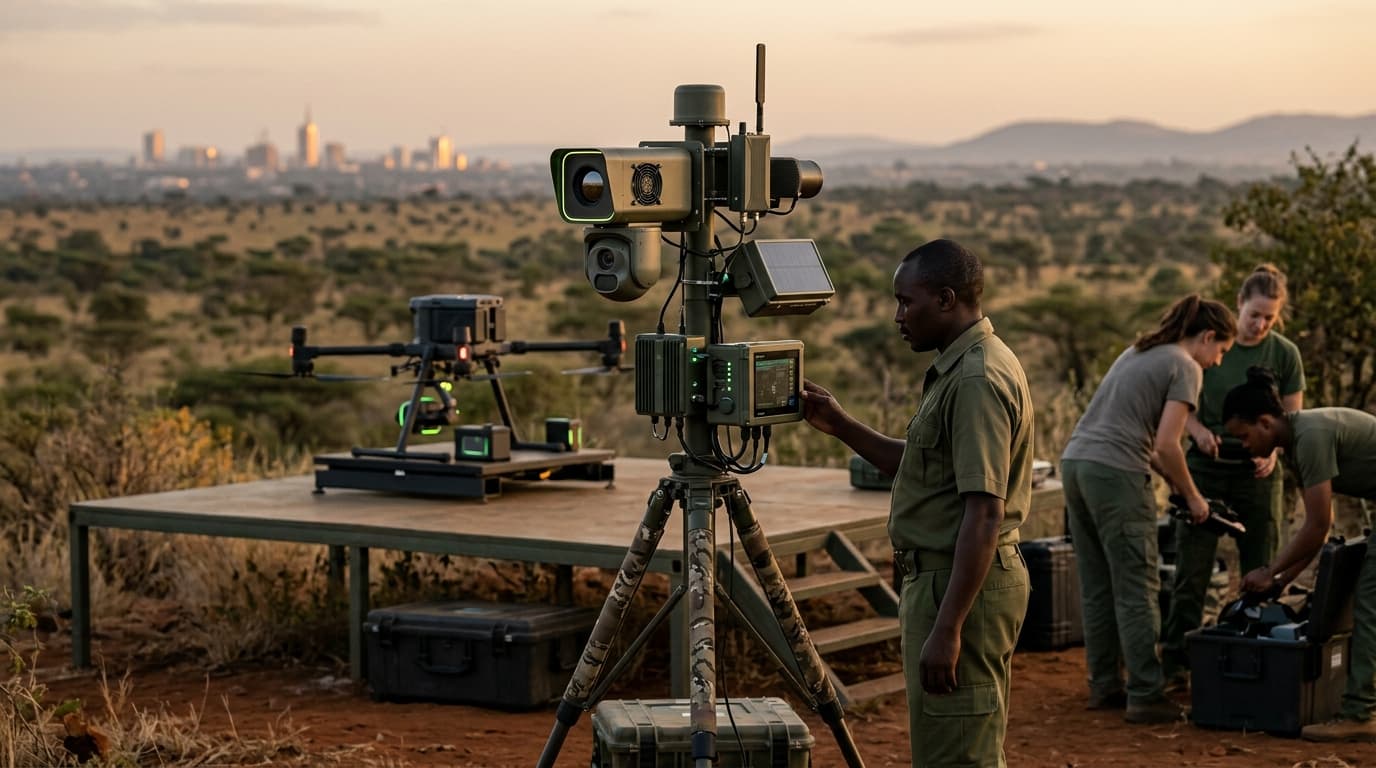
Kenya has become the world's leading testbed for AI-integrated wildlife protection technology. At reserves like Ol Pejeta and Lewa, systems combine FLIR thermal cameras with AI that distinguishes humans from animals at night, autonomous drones for aerial patrol, acoustic sensors that detect gunshots and vehicle sounds, and predictive analytics (PAWS — Protection Assistant for Wildlife Security) that forecast poaching hotspots based on historical patterns, ranger patrol data, and environmental conditions. Since deploying thermal AI cameras in partnership with WWF and Teledyne FLIR in 2016, some reserves have achieved zero poaching incidents.
The technology integration is adapted for African conditions: vast areas with minimal infrastructure, limited connectivity, extreme temperature variations that affect thermal imaging, and the need for systems that rangers with limited technical training can operate. Edge computing allows AI processing at the camera level without cloud connectivity. Solar-powered sensor nodes operate autonomously for months. The systems generate real-time alerts to ranger command centers, enabling rapid deployment to intercept poachers before they reach targets.
The strategic significance extends beyond conservation. Kenya's wildlife protection technology is being exported to other African countries and to Asia (for tiger and elephant protection). The underlying capabilities — wide-area persistent surveillance, AI-powered threat detection, predictive patrol optimization — have applications in border security, infrastructure protection, and environmental monitoring. Kenya's wildlife reserves have become innovation labs for a technology stack that didn't exist a decade ago.
Research this in Signals
Signals turns a topic into a sourced research record you can inspect and rerun. Your first scan is free, and this one starts with AI-Integrated Anti-Poaching Surveillance Systems already loaded, so edit it or scan as is.