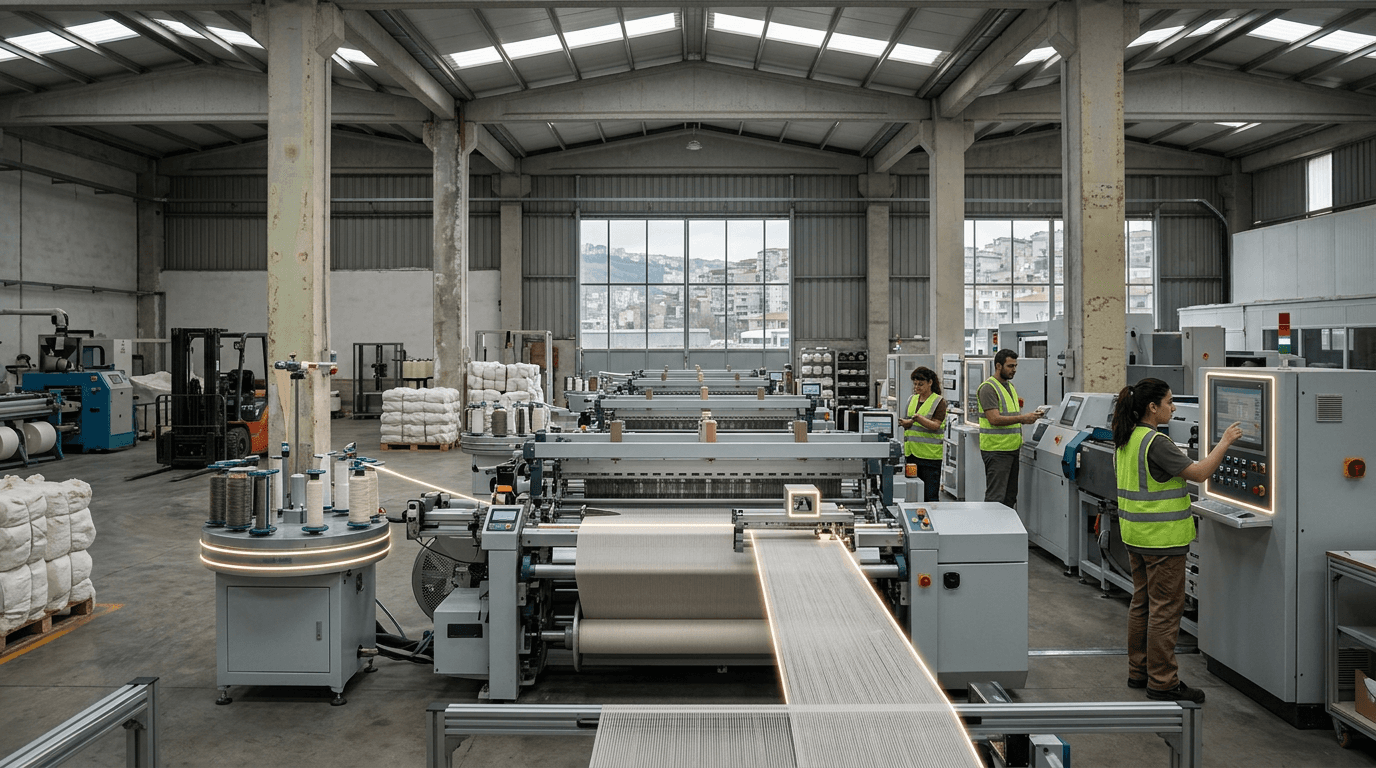
Smart Textile Manufacturing
Geography: Emea · Middle East · Turkey
Turkey's textile and apparel sector, valued at over $50 billion with 5th-place global export ranking, is undergoing a technology transformation to maintain competitiveness against lower-cost Asian producers. The MEXT innovation center (MESS/McKinsey partnership) has reached over 650 companies with digital transformation programs including robotic automation, AI-powered quality inspection, predictive maintenance, and supply chain optimization.
The sector's strategic challenge is familiar to many middle-income manufacturing economies: Turkey cannot compete with Bangladesh or Vietnam on labor costs, nor with Italy or France on luxury branding, so technology-driven efficiency and sustainability become the competitive differentiators. Turkish textile firms are investing in waterless dyeing technologies, recycled fiber processing, circular fashion supply chains, and digital fabric printing that reduces waste and enables small-batch customization.
Turkey's proximity to European markets (its largest textile export destination) provides a logistics advantage over Asian competitors for fast-fashion supply chains that require rapid turnaround. Combined with automation, this geographic position enables Turkish manufacturers to serve as 'nearshore' production partners for European brands seeking to reduce Chinese supply chain dependence — a trend accelerating since the COVID-19 supply chain disruptions.
Research this in Signals
Signals turns a topic into a sourced research record you can inspect and rerun. Your first scan is free, and this one starts with Smart Textile Manufacturing already loaded, so edit it or scan as is.