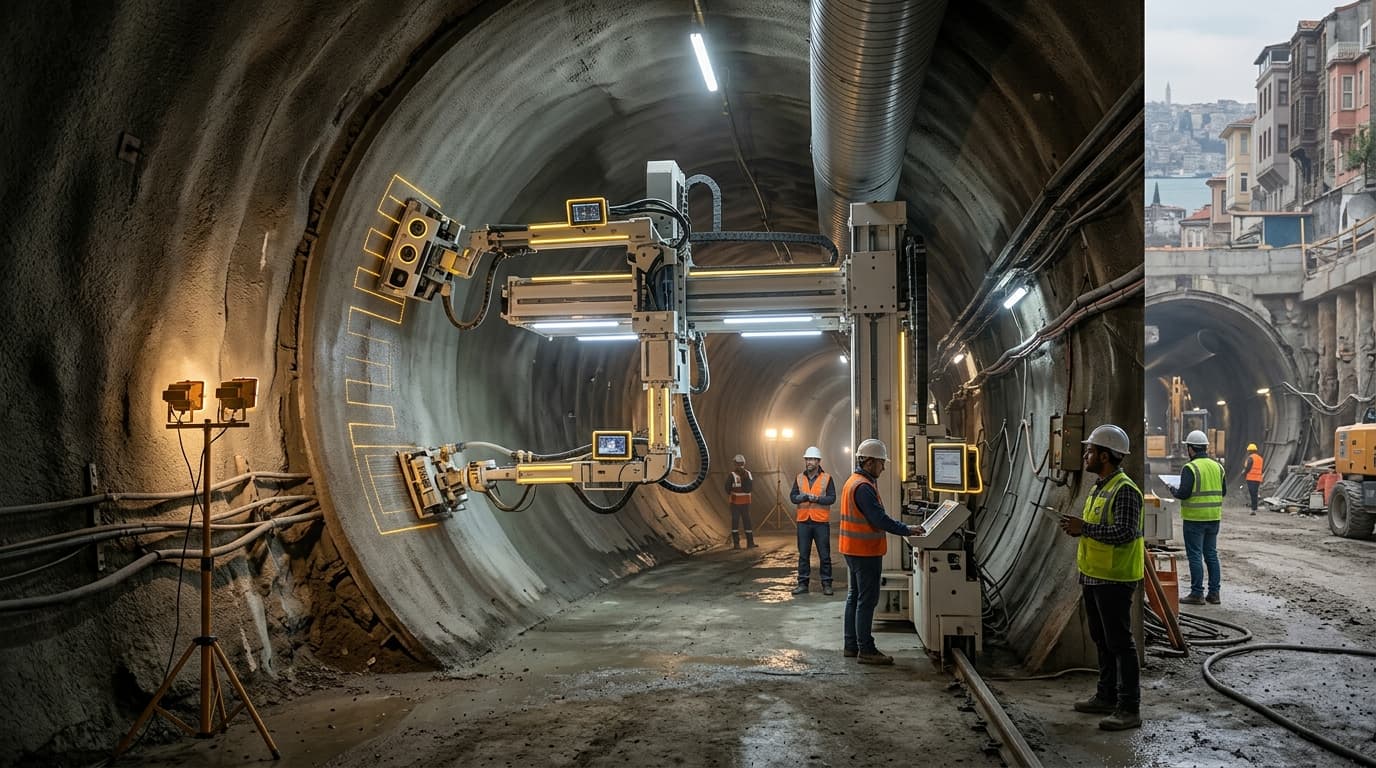
Advanced Construction & Megaproject Engineering
Geography: Emea · Middle East · Turkey
Turkish construction firms rank second globally after China in international contracting, with projects spanning over 130 countries and cumulative overseas project value exceeding $450 billion. Companies like Limak, Kalyon, Cengiz, and IC Içtaş have built some of the world's largest infrastructure projects including Istanbul Airport (world's largest by terminal area), the Yavuz Sultan Selim Bridge, the Eurasia Tunnel, and major railways, airports, and infrastructure across the Middle East, Africa, Central Asia, and Russia.
Turkish construction companies have developed expertise in BIM (Building Information Modeling), modular construction techniques, tunnel boring, seismic-resistant design (critical in earthquake-prone Turkey), and rapid-deployment infrastructure. The 2023 earthquake in southeastern Turkey, while devastating, accelerated adoption of seismic monitoring technology and reinforced building codes that drive innovation in earthquake-resistant construction.
The strategic significance lies in Turkey's ability to combine competitive labor costs with world-class engineering capability. Turkish contractors often win bids against Chinese and European competitors by offering quality comparable to Western firms at prices closer to Chinese firms. This construction-industrial complex also builds the infrastructure for Turkey's own megaprojects — nuclear plants, defense factories, and transportation networks — while generating foreign currency earnings and diplomatic influence.
Research this in Signals
Signals turns a topic into a sourced research record you can inspect and rerun. Your first scan is free, and this one starts with Advanced Construction & Megaproject Engineering already loaded, so edit it or scan as is.