Advanced Boron Processing & Materials
Geography: Emea · Middle East · Turkey
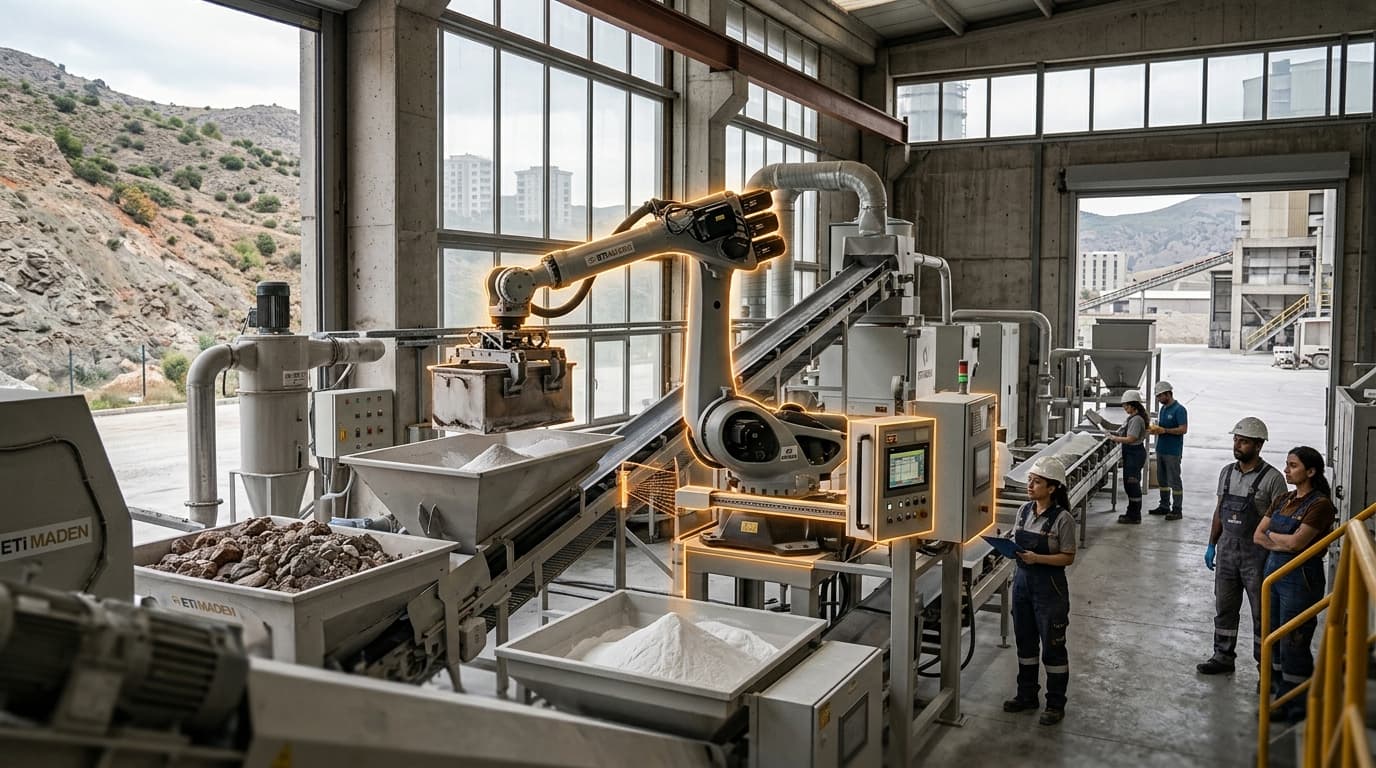
Turkey possesses approximately 73% of the world's known boron reserves, primarily in the Eskişehir, Kütahya, and Balıkesir provinces of western Anatolia. State-owned Eti Maden operates these deposits, exporting refined boron products including boric acid, borax, and colemanite. While Turkey has long been the dominant boron exporter, investment is shifting toward higher-value-added products including boron nitride (used in semiconductors and thermal management), boron carbide (one of the hardest known materials, used in armor), and boron-based energy storage materials.
Boron is increasingly recognized as a critical mineral for emerging technologies. Boron nitride nanotubes have properties comparable to carbon nanotubes but with superior thermal and chemical stability. Boron-based compounds are being investigated for solid-state battery electrolytes, hydrogen storage, and nuclear reactor moderators. Turkey's near-monopoly position in boron reserves gives it potential leverage similar to what rare earth deposits give China.
The strategic challenge is moving up the value chain from raw mineral exports to advanced materials manufacturing. Turkey currently exports primarily refined minerals rather than high-technology boron products, leaving the highest-value processing to Japanese, American, and European companies. Government-backed research programs are working to develop indigenous boron materials technology that could create a unique competitive advantage in sectors from defense (boron carbide armor) to energy (boron-based batteries).
Research this in Signals
Signals turns a topic into a sourced research record you can inspect and rerun. Your first scan is free, and this one starts with Advanced Boron Processing & Materials already loaded, so edit it or scan as is.