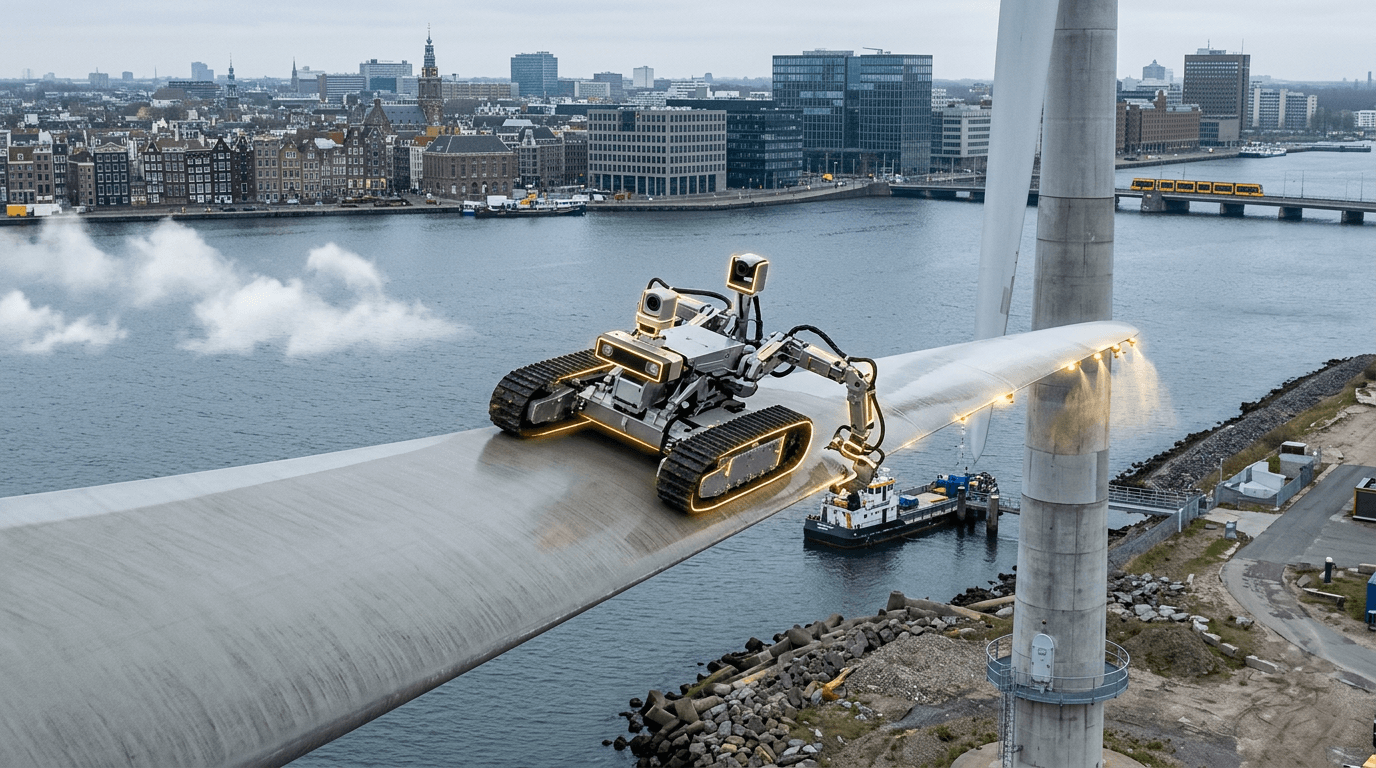
Wind Turbine Maintenance Robots
Geography: Emea · Europe · Europe
Aerones (Latvia, $38M raised) developed robotic systems that maintain wind turbines without requiring humans to climb towers or work at height. The robots clean blades, inspect for damage using computer vision, and perform repairs — completing work 4x faster than human rope-access teams while eliminating the risk of falls.
With Europe's offshore wind fleet growing rapidly (100+ GW in the North Sea alone), maintenance is becoming a critical bottleneck. Offshore turbines are expensive and dangerous to access — each human maintenance visit requires crew transfer vessels, weather windows, and trained rope-access technicians. Robotic maintenance can operate in worse weather conditions and doesn't require helicopter or vessel support for routine inspections.
The technology addresses a specific European industrial need: the largest concentration of offshore wind turbines in the world, increasingly located in harsh deep-water environments (Dogger Bank, North Sea) where human maintenance is most difficult and expensive.
Research this in Signals
Signals turns a topic into a sourced research record you can inspect and rerun. Your first scan is free, and this one starts with Wind Turbine Maintenance Robots already loaded, so edit it or scan as is.