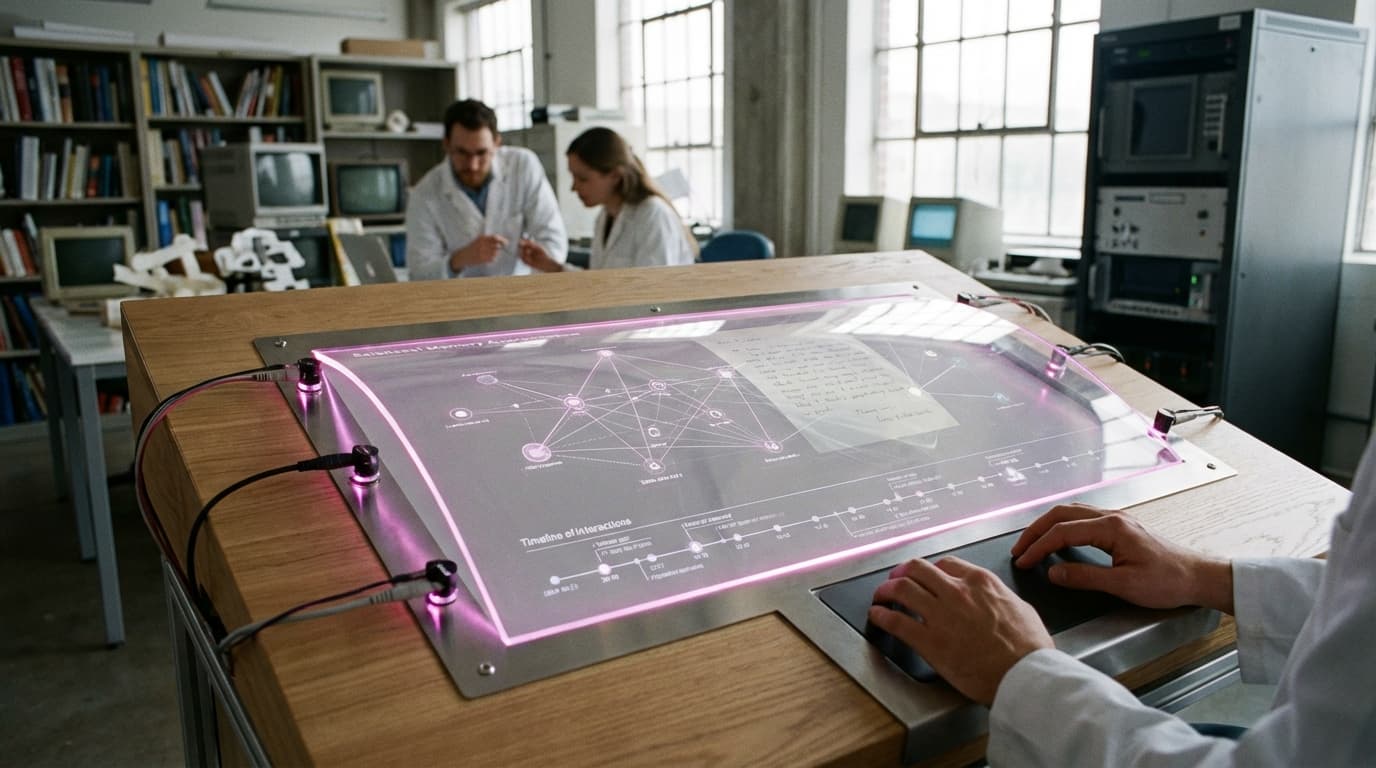
Relational Memory Augmentation
Relational Memory Augmentation represents a category of AI-powered systems designed to capture, organize, and retrieve the intricate details that form the fabric of human relationships. These platforms function by continuously indexing various forms of interpersonal data—from conversation transcripts and shared calendar events to emotional markers and preference patterns—creating a comprehensive archive of relationship history. The underlying technology typically combines natural language processing to analyze communication content, sentiment analysis to track emotional contexts, and temporal mapping to understand the evolution of relationships over time. By maintaining this structured repository of relational information, these systems can surface relevant memories, patterns, and contextual details precisely when they're most needed during interactions. The technical architecture often includes privacy-preserving local storage options, encrypted databases, and user-controlled access permissions to address the sensitive nature of intimate relationship data.
The fundamental challenge these systems address is the natural limitation of human memory in maintaining the depth and nuance of multiple relationships, particularly as social networks expand and life becomes increasingly complex. Research suggests that people struggle to remember important details about loved ones—birthdays, dietary preferences, past conversations, or significant shared experiences—not due to lack of care but simply cognitive overload. This memory gap can create friction in relationships, leading to hurt feelings, missed opportunities for connection, and a sense of being undervalued. For aging populations experiencing natural memory decline, these tools offer particular value in maintaining relationship continuity and independence. Similarly, individuals managing complex family structures, long-distance relationships, or extensive professional networks find these systems invaluable for preserving the personal touches that sustain meaningful connections. The technology effectively serves as a prosthetic for intimacy, compensating for memory limitations without replacing the emotional substance of relationships themselves.
Early implementations of relational memory augmentation have emerged primarily through personal CRM (Customer Relationship Management) applications adapted for personal use, journaling apps with relationship-tracking features, and specialized platforms designed for couples or families. Some systems integrate with existing communication channels—email, messaging apps, social media—to automatically capture interaction data, while others rely on manual input and reflection. Industry analysts note growing interest in this space as populations age and as younger generations seek tools to manage increasingly distributed social networks. The technology connects to broader trends in personal AI assistants and ambient computing, where systems learn individual patterns and preferences to provide contextual support. Future developments may include more sophisticated emotional intelligence capabilities, integration with wearable devices to capture physiological responses during interactions, and collaborative memory systems where multiple relationship participants contribute to shared archives. As these tools mature, they raise important questions about the nature of authentic remembering versus technologically mediated recall, suggesting a future where the boundaries between natural and augmented intimacy become increasingly nuanced.
Related Organizations

A relationship management tool that aggregates data from email, calendar, and social platforms to help users remember details about their network.
Developers of the Limitless Pendant and software (formerly Rewind AI) that records, transcribes, and summarizes user interactions to create a personalized memory stack.

A personal CRM designed to help users keep in touch and remember context about friends and acquaintances.

A smart CRM that automatically tracks emails, calls, meetings, and documents to create a view of every person and company.

A collaborative CRM that centralizes contacts and interactions to manage relationships like a workflow.

An AI-powered workspace that self-organizes notes and information, using a personal knowledge graph to surface relevant memories and tasks automatically.

An AI meeting assistant that records audio, writes notes, and generates summaries.

A revenue intelligence platform that captures customer interactions to provide insights.
Supporting Evidence
Research this in Signals
Signals turns a topic into a sourced research record you can inspect and rerun. Your first scan is free, and this one starts with Relational Memory Augmentation already loaded, so edit it or scan as is.