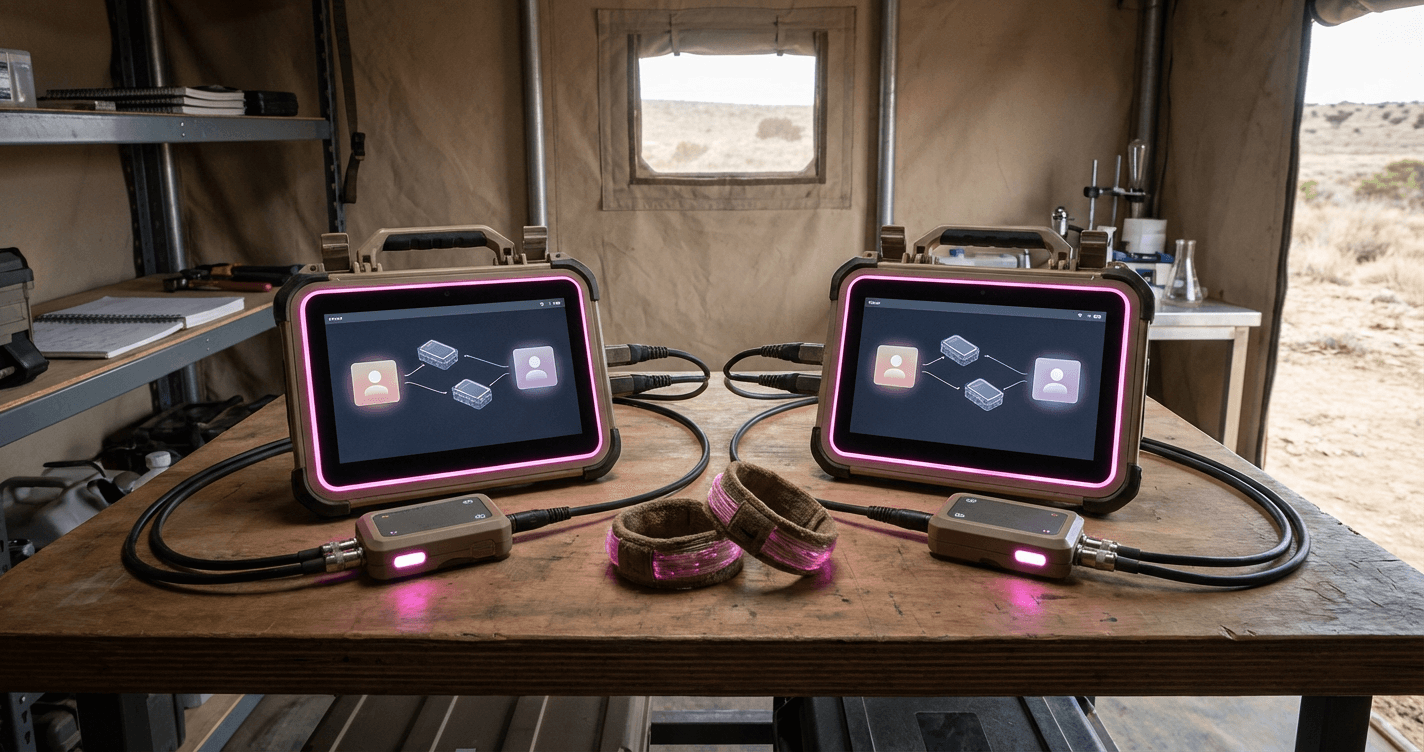
Climate Migration Relationship Continuity Tools
Climate migration represents one of the most profound humanitarian challenges of our time, with millions of people expected to be displaced by rising sea levels, extreme weather events, and environmental degradation in the coming decades. This displacement fractures not just physical communities but the intricate web of relationships that define human identity and wellbeing. Traditional communication tools, while enabling basic contact, fail to address the deeper relational trauma that occurs when families are separated across borders, when cultural practices lose their geographic context, and when community bonds are stretched across vast distances. Climate Migration Relationship Continuity Tools emerge as a specialized category of technology designed specifically to preserve and sustain these vital human connections through the upheaval of environmental displacement. These platforms integrate multiple functions that go beyond simple messaging, incorporating spatial coordination for family reunification, shared resource networks that maintain economic interdependence, and digital repositories for cultural knowledge that might otherwise be lost when communities scatter.
The fundamental challenge these tools address is the compound loss experienced during climate migration—not just the loss of place, but the erosion of social capital, cultural identity, and emotional support systems that sustain human resilience. Research suggests that displaced populations face significantly higher rates of mental health challenges, family dissolution, and cultural discontinuity when relationship maintenance infrastructure is absent. By providing coordinated platforms for reunion planning, these tools help separated family members navigate complex logistics across jurisdictions and borders, sharing real-time information about safe routes, temporary housing, and legal resources. The resource-sharing components enable displaced communities to maintain economic relationships and mutual aid networks that would otherwise collapse under geographic separation, allowing traditional systems of reciprocity and support to persist in digital form. Cultural preservation features address the intangible losses of displacement by creating shared digital spaces where language, oral histories, traditional practices, and community rituals can be documented, transmitted across generations, and practiced collectively despite physical separation.
Early deployments of these specialized platforms have emerged primarily through humanitarian organizations and diaspora communities, with pilot programs focusing on populations displaced by Pacific island submersion, African drought migration, and South Asian flooding events. These applications are increasingly incorporating features like asynchronous cultural event participation, allowing dispersed community members to engage in traditional ceremonies across time zones, and intergenerational knowledge transfer systems that connect displaced elders with youth who may have been born in resettlement locations. The technology represents a critical intersection of climate adaptation and social infrastructure, recognizing that successful climate migration is not merely about physical relocation but about preserving the relational fabric that makes communities resilient. As climate displacement accelerates, these tools are likely to evolve toward more sophisticated functions, including predictive modeling for family reunification, integration with legal aid systems for migration rights, and artificial intelligence-supported cultural preservation that can help reconstruct fragmented community knowledge. The broader trajectory points toward relationship continuity becoming a recognized dimension of climate adaptation strategy, with these platforms serving as essential infrastructure for maintaining human dignity and social cohesion through one of the century's defining transitions.
Related Organizations

A nonprofit that helps refugees and displaced persons reconnect with their missing loved ones through a global database.
Humanitarian institution based in Geneva.

A global organization coordinating the tech community to build solutions for refugee needs, including communication and identity.

UNHCR
Switzerland · Government Agency
The UN Refugee Agency, managing international displacement and housing camps globally and in Brazil (Operação Acolhida).

Technology leader in the development of open-source software for information collection, visualization, and interactive mapping.

An app that connects refugees with volunteer translators in real-time.

Software platform for real-time matching of humanitarian needs and resources.
The world's authoritative source of data and analysis on internal displacement.
Supporting Evidence
Research this in Signals
Signals turns a topic into a sourced research record you can inspect and rerun. Your first scan is free, and this one starts with Climate Migration Relationship Continuity Tools already loaded, so edit it or scan as is.