Ectogenesis Ethics
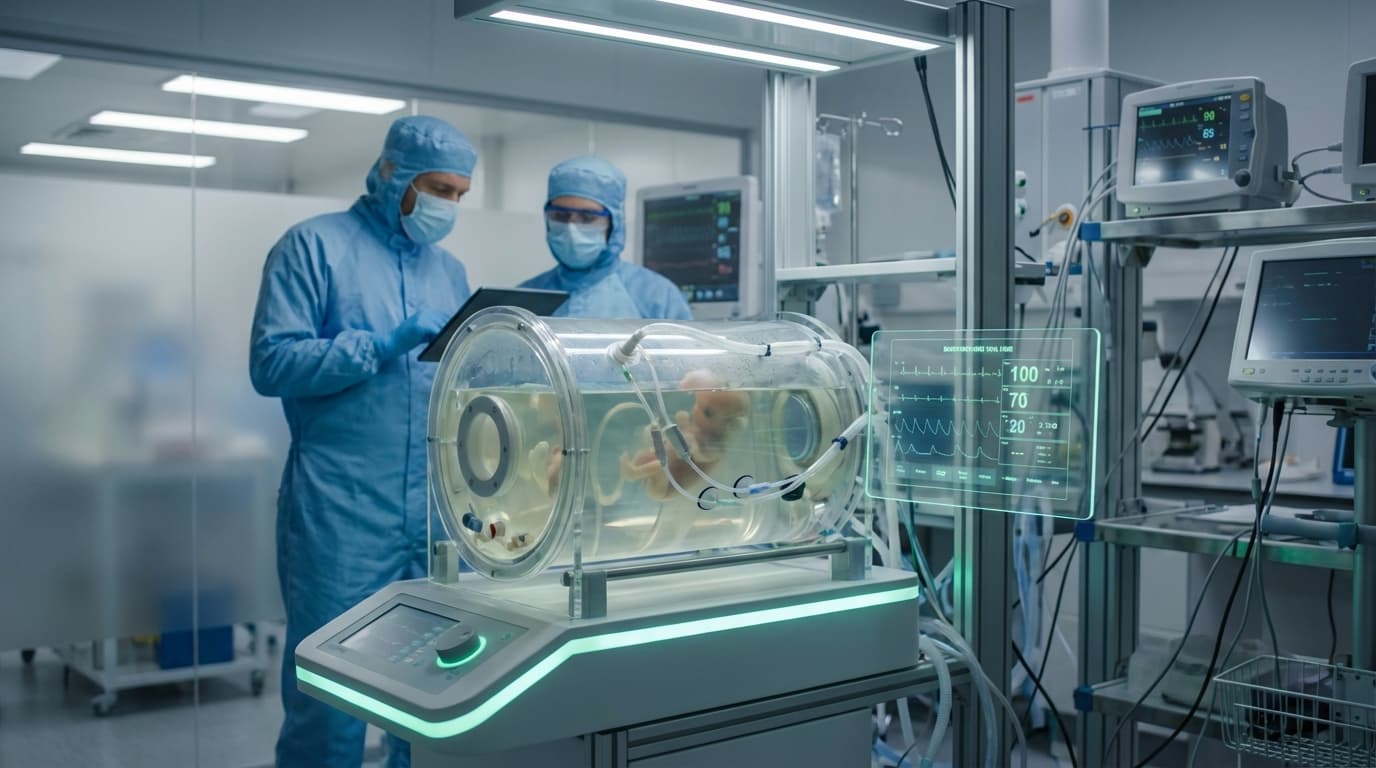
Ectogenesis ethics encompasses the evolving moral and philosophical frameworks needed to address the profound questions raised by artificial womb technology. As research advances toward the possibility of gestating human embryos entirely outside the human body, bioethicists, legal scholars, and policymakers grapple with unprecedented challenges regarding personhood, parental rights, and the very definition of reproduction. The technical foundation of ectogenesis—maintaining a developing fetus in a controlled artificial environment with synthetic amniotic fluid, oxygen supply, and nutrient delivery—raises questions that extend far beyond the laboratory. These ethical frameworks must address who has decision-making authority over an embryo developing in an artificial system, how to define parental relationships when biological gestation occurs externally, and what legal protections should apply to fetuses developing outside a woman's body. The technology also intersects with existing debates around abortion rights, as the ability to transfer rather than terminate a pregnancy fundamentally alters the moral calculus that has shaped reproductive rights discourse for decades.
The development of comprehensive ectogenesis ethics addresses critical gaps in current biomedical and legal systems that were designed around traditional human reproduction. Existing frameworks for reproductive rights, custody, medical decision-making, and even citizenship are predicated on pregnancy occurring within a woman's body. Artificial womb technology challenges these assumptions, creating scenarios where multiple parties might claim parental rights, where the state's interest in protecting potential life takes on new dimensions, and where questions of access and equity become paramount. Research institutions and medical ethics boards are beginning to establish preliminary guidelines that consider issues such as informed consent for embryo transfer to artificial systems, quality control standards for gestation environments, and protocols for handling complications or abnormalities detected during artificial gestation. These frameworks must also grapple with concerns about commodification of reproduction, potential exploitation of economically disadvantaged populations, and the risk of creating new forms of inequality based on access to advanced reproductive technologies.
Early discussions in bioethics journals and international medical ethics committees suggest that ectogenesis ethics will likely evolve through a combination of regulatory frameworks, professional guidelines, and case-by-case legal precedents as the technology moves from animal models toward potential human applications. Some jurisdictions are beginning to consider how existing assisted reproductive technology regulations might be adapted or expanded to encompass artificial womb scenarios. The field also intersects with broader conversations about reproductive justice, disability rights, and the social construction of motherhood and family. As partial ectogenesis systems have already demonstrated success in extending the viability of extremely premature infants, the ethical questions are no longer purely theoretical. The development of robust ethical frameworks now will be essential for ensuring that if and when complete ectogenesis becomes technically feasible, society has the moral and legal infrastructure to deploy it in ways that respect human dignity, promote equity, and protect the rights of all parties involved—including the children who would be gestated through these systems.
Related Organizations

Leads the Perinatal Life Support (PLS) consortium, developing an artificial womb system using simulation mannequins.

An independent body that examines ethical issues in biology and medicine, actively publishing on the ethics of artificial wombs.

Academic center at Oxford University conducting philosophical research on digital minds and moral status.

A nonpartisan, nonprofit bioethics research institute.

Research into spintronics and probabilistic computing which overlaps with reversible logic principles.

Renowned for research into fractional quantum Hall effect and topological states of matter.

Established the Expert Advisory Committee on Developing Global Standards for Governance and Oversight of Human Genome Editing.

The primary professional organization for stem cell research, which issues guidelines specifically warning patients against unproven stem cell tourism.

A center dedicated to the study of the ethical implications of biological and medical research.
Supporting Evidence
Research this in Signals
Signals turns a topic into a sourced research record you can inspect and rerun. Your first scan is free, and this one starts with Ectogenesis Ethics already loaded, so edit it or scan as is.