





Ultra-High-Voltage Direct Current and Macro Grids
Ultra-High Voltage DC Transmission
High-voltage DC lines that move renewable power across continents with minimal loss
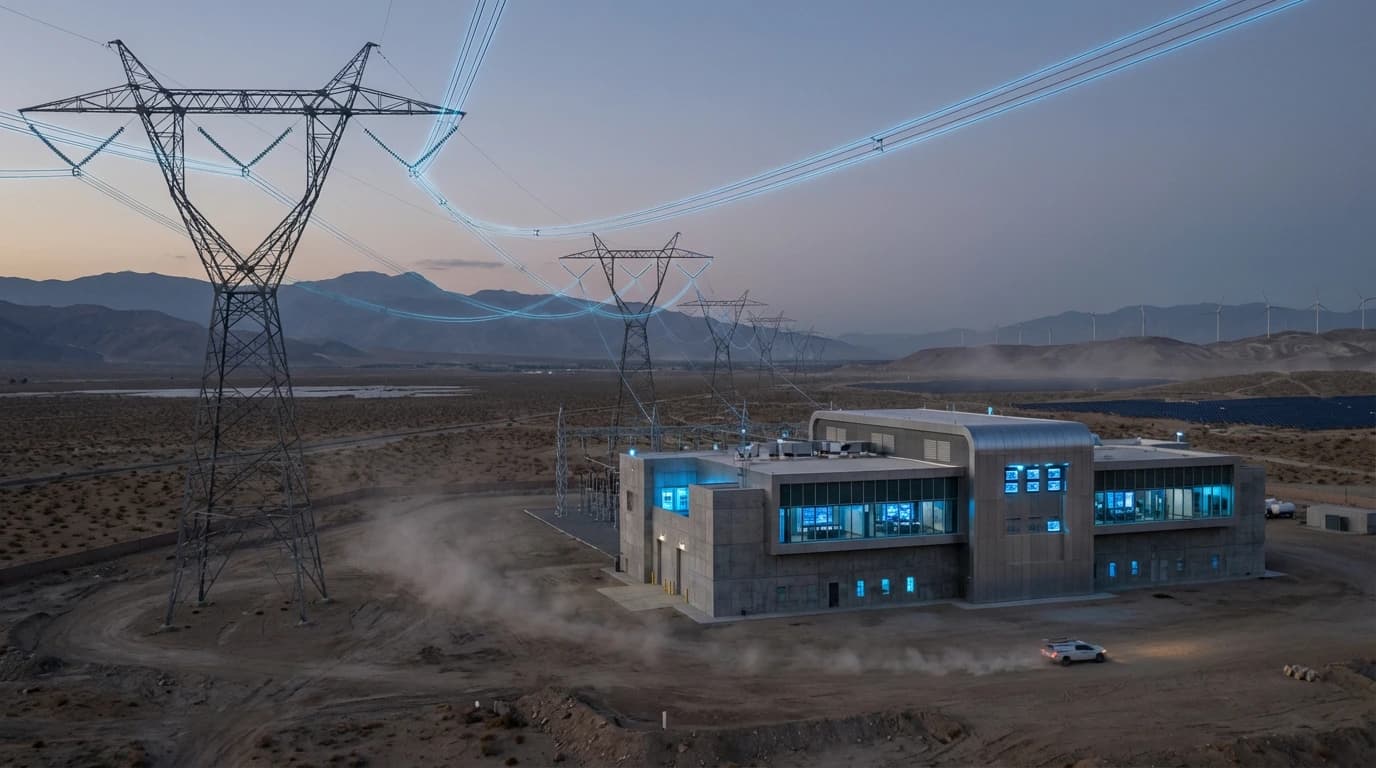
Ultra-High Voltage Direct Current (UHVDC) transmission represents a fundamental advancement in electrical grid infrastructure, operating at voltage levels of ±800kV and above, with cutting-edge systems reaching ±1100kV. Unlike conventional alternating current (AC) transmission, UHVDC systems convert electricity to direct current for long-distance transport, dramatically reducing resistive losses that plague traditional grids. The technology relies on sophisticated converter stations at each terminus, employing voltage source converters or line-commutated converters to transform AC power from generation sources into high-voltage DC for transmission, then back to AC for distribution. These systems can transport multiple gigawatts of power across distances exceeding 3,000 kilometers with transmission losses as low as 3% per thousand kilometers—roughly half the loss rate of equivalent AC lines. The physical infrastructure consists of bipolar transmission lines, typically using aluminum conductor steel-reinforced cables suspended on massive lattice towers, with each pole capable of independent operation for enhanced reliability.
The fundamental challenge UHVDC addresses is the geographic mismatch between renewable energy resources and population centers. Solar installations in desert regions, wind farms in remote coastal or mountainous areas, and hydroelectric facilities in river basins often lie thousands of kilometers from major cities and industrial zones. Traditional AC grids become economically and technically impractical beyond approximately 800 kilometers due to reactive power losses and synchronization constraints. UHVDC overcomes these limitations, enabling the economic viability of massive renewable energy projects in resource-rich but sparsely populated regions. This technology also solves the intermittency problem inherent to renewable energy by allowing grid operators to pool resources across vast geographic areas—when solar generation peaks in one region, wind or hydro capacity in another can compensate for deficits elsewhere. Furthermore, UHVDC lines can interconnect asynchronous AC grids operating at different frequencies or phases, something impossible with conventional AC interconnections, thereby creating unified energy markets across previously isolated grid systems.
Large-scale UHVDC networks are already operational, most notably in China, where multiple ±800kV and ±1100kV lines connect hydroelectric resources in the southwest to coastal demand centers, with individual lines capable of transmitting up to 12 gigawatts. Similar projects are emerging globally, with planned corridors in India linking Himalayan hydro to southern cities, and feasibility studies underway for trans-continental systems connecting North African solar resources to European grids. Industry developments indicate growing interest in subsea UHVDC cables for offshore wind integration and intercontinental connections. As renewable energy deployment accelerates and climate adaptation requires more resilient infrastructure, UHVDC transmission is positioned as essential backbone technology for the energy transition. The ability to create what researchers describe as a "planetary energy web"—where renewable resources are shared across time zones and weather systems—represents a paradigm shift from localized grids to truly continental-scale energy systems. This infrastructure not only enhances grid stability and renewable integration but also provides strategic resilience against regional disruptions, whether from extreme weather events, geopolitical tensions, or equipment failures, by enabling rapid power redistribution across vast distances.
TRL
7/9Operational
Impact
5/5
Investment
5/5
Category
Hardware
Related Organizations
A global leader in HVDC technology, specifically HVDC Light (VSC), supplying converter stations for major interconnectors worldwide.
Developer
State Grid Corporation of China
China · Company
The world's largest utility company and the pioneer of 1100kV UHVDC transmission.
Deployer
Global council on large electric systems that sets technical standards for HVDC and supergrid interoperability.
Standards Body
The energy portfolio of GE (formerly GE Digital), offering Asset Performance Management (APM) software powered by AI.
Developer
Provides HVDC Plus technology (VSC) and transformers for ultra-high-voltage transmission projects globally.
Developer
French cable manufacturer supplying cabling for projects like the EuroAsia Interconnector.
Developer
Specializes in high-voltage cable systems, including the 525 kV XLPE DC cables used in modern HVDC corridors like the German SuedLink.
Developer
A leading power stability control and protection solution provider.
Developer
The world's largest cable manufacturer, supplying submarine and land cables for major projects like the Viking Link and NeuConnect.
Developer
Contracted by JAXA to develop the HTV-X cargo vehicle which will supply Gateway.
Developer
What was expected
Published forecasts about this technology, graded against what happened in Hindsight.
Ultra-High-Voltage Power Lines
UHV Power Lines
This page is a narrower case of it.
Supporting Evidence
Evidence data is not available for this technology yet.
Research this in Signals
Scan Ultra-High Voltage DC Transmission for yourself.
Signals turns a topic into a sourced research record you can inspect and rerun. Your first scan is free, and this one starts with Ultra-High Voltage DC Transmission already loaded, so edit it or scan as is.