






Solar Radiation Management
Stratospheric Aerosol Injection
Dispersing reflective aerosols in the stratosphere to reduce incoming solar radiation
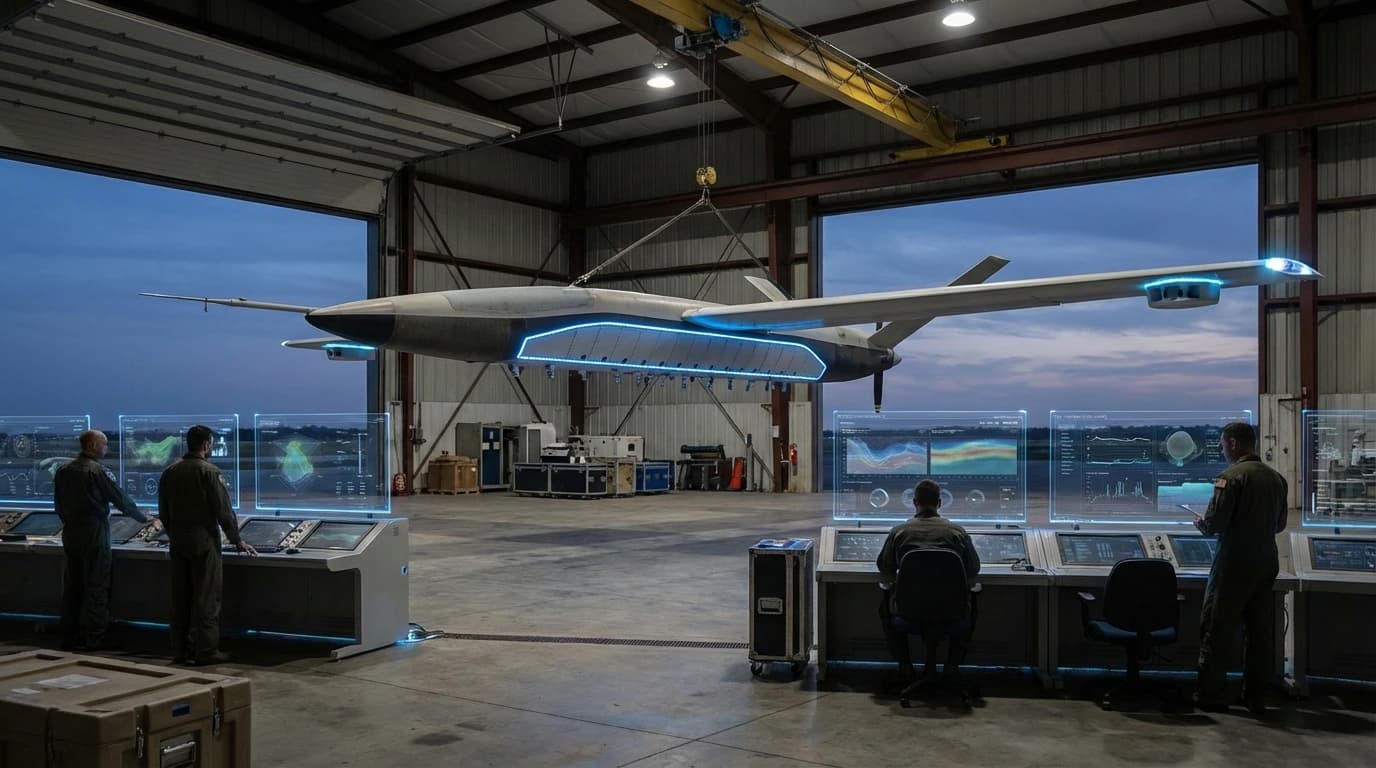
Stratospheric Aerosol Injection represents a controversial yet technically feasible approach to solar radiation management, designed to temporarily reduce global temperatures by mimicking the cooling effects of major volcanic eruptions. The technology involves deploying specialized high-altitude aircraft, stratospheric balloons, or purpose-built delivery systems to disperse reflective aerosol particles—typically sulfate compounds, calcium carbonate, or other light-scattering materials—into the stratosphere at altitudes between 15 and 25 kilometers. Once released, these particles remain suspended for months or years, forming a thin reflective layer that scatters incoming solar radiation back into space before it can warm the Earth's surface. The technical mechanisms draw directly from observations of natural phenomena: the 1991 eruption of Mount Pinatubo, for instance, injected approximately 20 million tons of sulfur dioxide into the stratosphere, resulting in measurable global cooling of roughly 0.5°C over the following two years. Modern proposals envision controlled, continuous deployment systems that could achieve similar effects with far smaller particle volumes, using modified commercial aircraft, specialized high-altitude platforms, or even tethered balloon systems anchored to ground stations.
The primary challenge this technology addresses is the temporal gap between current greenhouse gas emissions and the decades required for comprehensive decarbonization of global energy systems. Even with aggressive emissions reductions, atmospheric carbon dioxide concentrations will remain elevated for centuries, committing the planet to continued warming and associated climate impacts including sea-level rise, extreme weather events, and ecosystem disruption. Research suggests that stratospheric aerosol injection could provide a temporary "planetary thermostat," potentially reducing peak temperatures during the critical transition period while renewable energy infrastructure scales and carbon capture technologies mature. However, this approach introduces significant governance and risk management challenges: the technology could affect regional precipitation patterns, potentially disrupting monsoon systems that billions depend upon for agriculture; it requires continuous deployment to maintain cooling effects, creating dependency risks; and it does nothing to address ocean acidification or the underlying carbon accumulation. Industry analysts note that the relatively low direct costs—early estimates suggest tens of billions rather than trillions of dollars—make unilateral deployment by individual nations technically feasible, raising urgent questions about international coordination and oversight.
Current development remains primarily in the research and modeling phase, with small-scale field experiments proposed to better understand particle behavior, atmospheric chemistry, and potential side effects. Organizations including Harvard University's Solar Geoengineering Research Program have outlined controlled experiments to release small quantities of aerosols to study dispersion patterns and atmospheric interactions, though these efforts face significant public and scientific debate. No large-scale operational deployment exists, and the technology remains deeply controversial within climate science and policy communities. Some researchers view it as a necessary insurance policy against catastrophic climate tipping points, while others warn that even discussing such approaches could reduce political will for emissions reductions. The technology connects to broader discussions about planetary-scale intervention, technological risk, and intergenerational responsibility. As climate impacts intensify and decarbonization timelines extend, stratospheric aerosol injection will likely remain a contentious but increasingly studied option within the portfolio of climate response strategies, representing humanity's growing—if uncertain—capacity to deliberately modify Earth's energy balance at civilizational scales.
TRL
3/9Conceptual
Impact
5/5
Investment
4/5
Category
Hardware
Related Organizations
Promotes research and policy for near-term climate interventions, including solar climate intervention.
Researcher
A cross-disciplinary research center focused on deep emissions reduction, greenhouse gas removal, and targeted climate repair.
Researcher
A startup attempting to sell 'cooling credits' by releasing sulfur balloons, forcing regulatory conversations.
Deployer
Catalyzes the creation of effective governance for climate-altering technologies like solar radiation modification.
Standards Body
Builds capacity in developing countries to evaluate solar radiation management (SRM) and its governance.
Researcher
Home to the Organic Robotics Lab, focusing on soft robots that can heal and adapt.
Researcher

National Oceanic and Atmospheric Administration (NOAA)
United States · Government Agency
US federal agency tasked with monitoring Earth's radiation budget and atmospheric composition.
Researcher
Conducts advanced research in bioelectronics and the interface between biological systems and electronic circuits.
Researcher

Aerospace Corporation
United States · Nonprofit
Provides technical analysis and wargaming for planetary defense scenarios for US government agencies.
Researcher
What was expected
Published forecasts about this technology, graded against what happened in Hindsight.
Stratospheric Aerosol Scattering with Sulfur Dioxide
Atmospheric Climate Engineering
This page is a narrower case of it.
Supporting Evidence
Evidence data is not available for this technology yet.
Research this in Signals
Scan Stratospheric Aerosol Injection for yourself.
Signals turns a topic into a sourced research record you can inspect and rerun. Your first scan is free, and this one starts with Stratospheric Aerosol Injection already loaded, so edit it or scan as is.