Deep-Borehole Energy Storage
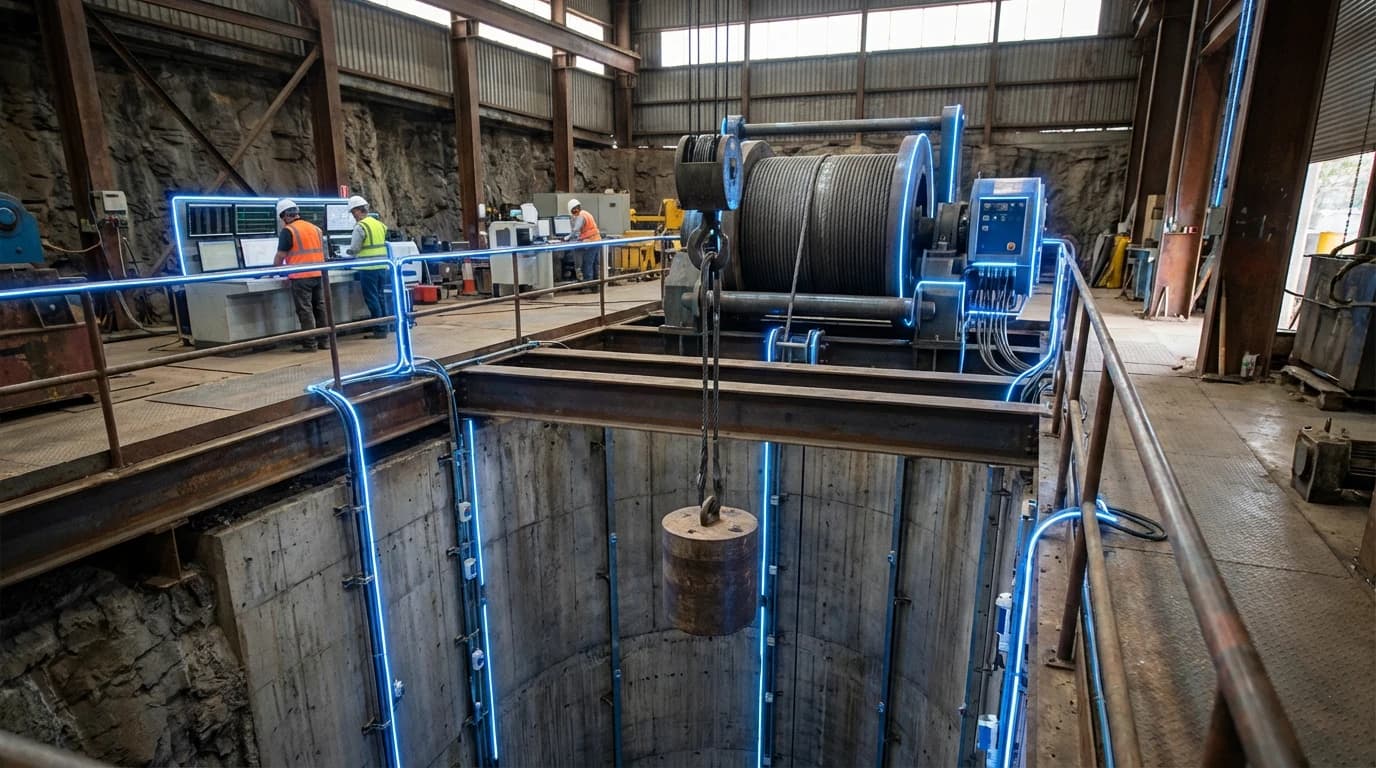
Deep-borehole energy storage represents a novel approach to grid-scale energy storage that leverages gravitational potential energy within vertical shafts extending hundreds of meters to several kilometers below the Earth's surface. Unlike conventional battery systems or pumped hydro storage, this technology operates by raising and lowering massive weights—often composed of dense materials like concrete, sand, or recycled mining waste—through deep boreholes drilled into stable geological formations. When excess renewable energy is available, electric motors hoist these masses upward, converting electrical energy into potential energy. During periods of high demand or when renewable generation drops, the weights descend under gravity, driving generators that convert the stored potential energy back into electricity. Alternative configurations circulate dense fluids or slurries through closed-loop borehole systems, achieving similar energy storage through pressure differentials and elevation changes. The depth of these installations, combined with the substantial mass involved, enables storage capacities measured in tens to hundreds of megawatt-hours, with discharge durations extending from hours to days.
The energy sector faces a critical challenge in balancing intermittent renewable generation with consistent demand, particularly as solar and wind power constitute growing shares of electrical grids worldwide. Conventional lithium-ion batteries excel at short-duration storage but become economically prohibitive for the multi-day or seasonal storage needed to address prolonged periods of low renewable output or extreme weather events. Deep-borehole systems address this gap by offering ultra-long-duration storage at potentially lower lifecycle costs, utilizing abundant materials and requiring minimal surface footprint compared to pumped hydro facilities. This technology proves especially valuable in regions lacking suitable topography for traditional pumped storage or where surface land use faces competing demands. Furthermore, these systems can repurpose abandoned mining infrastructure or oil and gas wells, transforming legacy industrial sites into energy storage assets while avoiding the environmental disruption of new excavation projects.
Early pilot installations and demonstration projects are currently underway in several countries, with research institutions and energy companies exploring optimal configurations for different geological contexts and grid requirements. Prototype systems have validated the core mechanical principles, though commercial deployment awaits further optimization of drilling costs, weight handling mechanisms, and integration with existing grid infrastructure. The technology shows particular promise for supporting critical infrastructure during extended grid disruptions, whether caused by severe weather, cyberattacks, or geomagnetic storms that could disable conventional power systems. As electricity grids transition toward higher renewable penetration and face increasing climate-related stresses, deep-borehole storage emerges as a complementary solution alongside batteries, pumped hydro, and hydrogen storage, contributing to a diversified portfolio of energy storage technologies essential for civilizational resilience and long-term grid stability.
Related Organizations

Repurposes legacy mine shafts for gravitational energy storage.

Converts idle oil and gas wells into gravity energy storage devices.

Develops underground pumped hydro storage using decommissioned mines.

International Institute for Applied Systems Analysis (IIASA)
Austria · Research Lab
Conducts policy-oriented research into problems of a global nature.
Specializes in gravity-based energy storage solutions that lift and lower composite blocks to store and release energy.

A US Department of Energy lab actively researching adiabatic logic circuits and reversible computing to overcome thermodynamic limits in microelectronics.

Provides the eMine portfolio, including charging infrastructure and trolley systems for electric mines.


Creates the Restore smart sleep assistant which combines light and sound to regulate circadian rhythms.
Supporting Evidence
Research this in Signals
Signals turns a topic into a sourced research record you can inspect and rerun. Your first scan is free, and this one starts with Deep-Borehole Energy Storage already loaded, so edit it or scan as is.