Envisioning is an emerging technology research institute and advisory.

LinkedInInstagramGitHub

2011 — 2026

research
  • Reports
  • Newsletter
  • Methodology
  • Origins
  • Vocab
services
  • Research Sessions
  • Signals Workspace
  • Bespoke Projects
  • Use Cases
  • Signal Scanfree
  • Readinessfree
impact
  • ANBIMAFuture of Brazilian Capital Markets
  • IEEECharting the Energy Transition
  • Horizon 2045Future of Human and Planetary Security
  • WKOTechnology Scanning for Austria
audiences
  • Innovation
  • Strategy
  • Consultants
  • Foresight
  • Associations
  • Governments
resources
  • Pricing
  • Partners
  • How We Work
  • Data Visualization
  • Multi-Model Method
  • FAQ
  • Security & Privacy
about
  • Manifesto
  • Community
  • Events
  • Support
  • Contact
  • Login
ResearchServicesPricingPartnersAbout
  1. Home
  2. Research
  3. Cities
  4. Wooden Skyscraper

Wooden Skyscraper

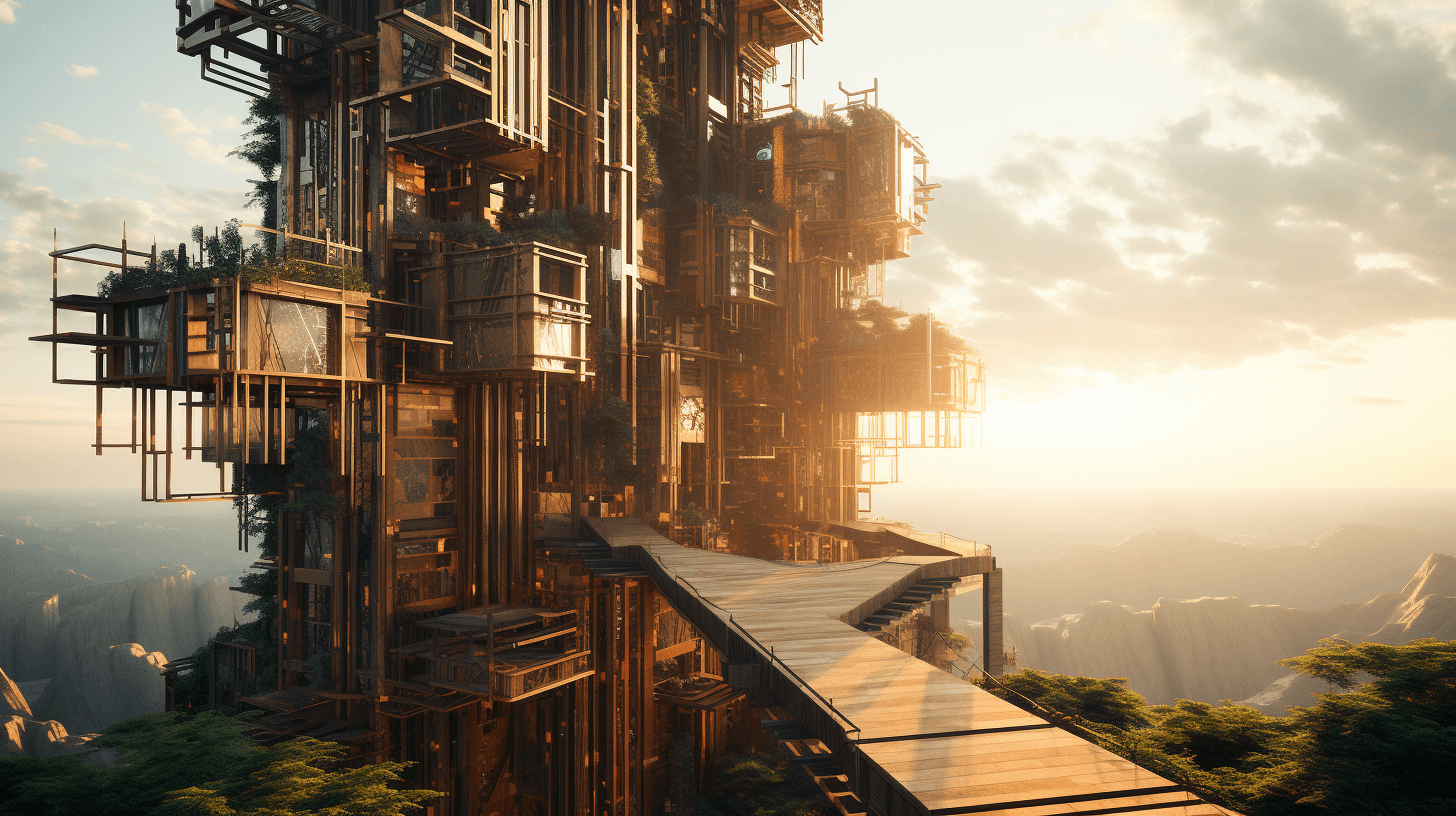
High-rise buildings constructed from engineered timber to reduce construction carbon emissions
Back to CitiesView interactive version

As urban populations continue to rise, cities face the pressing challenge of sustainable and environmentally friendly development. One innovative solution emerging in this context is the wooden skyscraper. Traditional construction materials like steel and concrete are notorious for their high carbon footprint, contributing significantly to global greenhouse gas emissions. Wooden skyscrapers, however, offer a promising alternative by utilising cross-laminated timber (CLT), which not only reduces carbon emissions but also sequesters carbon dioxide, aiding in the fight against climate change.

A wooden skyscraper, also known as a timber high-rise, is a tall building constructed primarily using engineered wood products such as CLT. These buildings leverage the strength and flexibility of timber, which has been refined and enhanced through modern engineering techniques. Cross-laminated timber involves glueing layers of wood at perpendicular angles, resulting in a material that is incredibly strong and stable. This construction method allows wooden skyscrapers to meet the rigorous safety standards required for high-rise buildings, including fire resistance and earthquake resilience.

Compared with the construction of a concrete building, the process requires a longer planning time and uses Building Information Modeling. This helps builders decide the exact size of the building elements. These elements are then prefabricated in specialised mass timber factories, reducing waste, the number of workers, and construction time. The construction process can be modular and adaptable to variable weather conditions. Furthermore, wooden skyscrapers have the potential to integrate advanced building technologies such as smart systems and energy-efficient designs, making them highly adaptable to future urban needs. In some instances, wooden skyscrapers use a small amount of concrete in the building process: in the foundations, stairways, elevator shafts, or/and supporting beams.

As urban areas strive to reduce their carbon footprints and embrace sustainable development, timber high-rises present a viable path forward. These structures not only address the environmental concerns associated with traditional construction but also offer economic and aesthetic benefits. The use of timber, a renewable resource, promotes sustainable forestry practices and creates new opportunities within the construction industry. Additionally, the natural warmth and beauty of wood enhance the living and working environments, contributing to the well-being of city dwellers.

Technology Readiness Level
8/9Ready for Implementation
Diffusion of Innovation
2/5Early Adopters
Technology Life Cycle
2/4Growth
Category
Hardware

Related Organizations

Michael Green Architecture logo
Michael Green Architecture

Canada · Company

95%

An architecture firm internationally recognized for advocating and designing tall wood buildings.

Deployer
Binderholz logo
Binderholz

Austria · Company

90%

A leading European manufacturer of solid wood products and building solutions, including CLT and glulam.

Developer
Metsä Group

Finland · Company

90%

A Finnish forest industry group that produces Kerto LVL (Laminated Veneer Lumber) and other engineered wood products.

Developer
Waugh Thistleton Architects logo
Waugh Thistleton Architects

United Kingdom · Company

90%

An architecture practice dedicated to sustainable construction, known for designing the world's first tall CLT residential building.

Deployer
CREE Buildings logo
CREE Buildings

Austria · Company

88%

A technology platform for hybrid timber construction, licensing their building system to partners worldwide.

Developer
Lendlease logo
Lendlease

Australia · Company

85%

An international property and infrastructure group that has pioneered the construction of commercial timber office buildings.

Deployer
Mercer Mass Timber logo
Mercer Mass Timber

United States · Company

85%

A subsidiary of Mercer International, manufacturing CLT and providing mass timber integration services.

Developer
Sumitomo Forestry logo
Sumitomo Forestry

Japan · Company

85%

A Japanese forestry and construction company planning the W350 Project, a 350-meter tall wooden skyscraper in Tokyo.

Developer
Council on Tall Buildings and Urban Habitat

United States · Nonprofit

80%

The world's leading body in the field of tall buildings and sustainable urban design.

Researcher

Supporting Evidence

Article

Wooden skyscrapers point the way to more sustainable cities

Nature · Dec 3, 2025

Discusses the rise of wooden skyscrapers as a solution for sustainable cities, highlighting their ability to store carbon rather than emitting it, while addressing safety concerns like fire risk.

Support 95%Confidence 98%

Paper

Functional distribution in tall timber buildings: Global case insights

Architecture, Structures and Construction · Feb 21, 2026

This study examines the functional characteristics of 79 tall timber towers worldwide, analyzing their distribution across residential, office, and mixed-use applications to understand market acceptance and regulatory feasibility.

Support 92%Confidence 95%

Report

Mass Timber Construction Industry Report 2025

Research and Markets · Sep 11, 2025

Projects the global mass timber construction market to reach $1.3 billion by 2030, driven by carbon reduction needs, green building certifications, and innovations in material science.

Support 88%Confidence 90%

Article

Mjøstårnet: The World’s Tallest Timber Building Revolutionizing Construction

Binus University · Mar 24, 2025

Detailed overview of the 85.4-meter wooden high-rise Mjøstårnet, explaining the use of glulam trusses for the main structure and CLT for secondary walls to resist wind forces.

Support 75%Confidence 80%

Article

Climate change means "whole paradigm has to change" for skyscrapers

dezeen.com

The attack on the World Trade Center 20 years ago had a significant impact on skyscraper design. Continuing our 9/11 anniversary series, we look at how skyscrapers will change over the next two decades.

Support 50%Confidence 80%

Article

Sustainable Wooden Skyscrapers for the Future Cities

intechopen.com

At the time of writing, energy-saving and eco-friendly building materials have gained acceptance, recognition, and a strong foothold in the construction sector. There is an appreciable degree of congruence in the development of green buildings and bio-based building materials, making it imperative to promote and sustain the application of such materials. Wood is endowed with a host of favorable properties sought after in a building material—its organic warmth, softness, ability to control indoor moisture levels and act as a good insulator, malleability, and workability, to name a few. Wooden buildings blend perfectly into the surrounding landscapes much better than their counterparts. It facilitates design for lightweight and strength, is a renewable resource, and accords stability and seismic resistance to structures. The focus of this chapter is on wooden skyscrapers which promise to be a greener and eco-friendlier option vis-à-vis the conventional concrete high-rises.

Support 50%Confidence 80%

Article

Transforming Trees Into Skyscrapers

newyorker.com

In Scandinavia, ecologically minded architects are building towers with pillars of pine and spruce.

Support 50%Confidence 80%

Article

Will the skyscrapers of the future be made out of wood?

nationalgeographic.com

Wood products that are nearly as strong as steel are going into more high-rises, locking up carbon. But can we grow enough trees to keep pace?

Support 50%Confidence 80%

Article

Sweden’s innovative wooden skyscraper can capture 9 million kilograms of CO2

euronews.com

The Sara Cultural Centre is designed to ‘communicate’ with the buildings around it.

Support 50%Confidence 80%

Article

"Promote demand for wood in low-rise buildings" says architect of timber supertall concept

dezeen.com

Ambitious concepts like Nikken Sekkei's proposal for the world's tallest timber skyscraper can accelerate the use of engineered wood but should not be the focus, argues Hajime Aoyagi in this Timber Revolution interview

Support 50%Confidence 80%

Article

Wood skyscrapers: 5 projects from the future

domusweb.it

The development of timber structures for tall buildings is a strategic measure to reduce the environmental impact of the construction industry, in view of a demand for housing that is expected to surge by 2030.

Support 50%Confidence 80%

Article

Canadian cities take wooden skyscrapers to new heights

theguardian.com

British Columbia has doubled height limits allowed for timber towers – and countries around the world are following suit

Support 50%Confidence 80%

Article

The skyscrapers of the future will be made of wood

theconversation.com

Vancouver-based architect Michael Green was unequivocal at a conference at which I heard him speak a while ago: “We grow trees in British Columbia that are 35 storeys tall, so why do our building codes restrict timber buildings to only five storeys?”

Support 50%Confidence 80%

Article

The Sustainable Future of Wooden Skyscrapers

architectmagazine.com

Michael Green says his wooden towers can help offset climate change. Can he find a client willing to go out on a limb and build one?

Support 50%Confidence 80%

Article

How to build a wood skyscraper

vox.com

Mass timber has gone from novelty to trend. But how does it change the construction process?

Support 50%Confidence 80%

Connections

Hardware
Hardware
Mycelium Brick

Biodegradable building blocks grown from fungal networks and agricultural waste

Technology Readiness Level
2/9
Diffusion of Innovation
1/5
Technology Life Cycle
1/4
Hardware
Hardware
Biobased Materials

Construction materials derived from renewable biological sources like plants, fungi, and agricultural waste

Technology Readiness Level
7/9
Diffusion of Innovation
3/5
Technology Life Cycle
2/4

Book a research session

Bring this signal into a focused decision sprint with analyst-led framing and synthesis.
Research Sessions