Envisioning is an emerging technology research institute and advisory.

LinkedInInstagramGitHub

2011 — 2026

research
  • Reports
  • Newsletter
  • Methodology
  • Origins
  • Vocab
services
  • Research Sessions
  • Signals Workspace
  • Bespoke Projects
  • Use Cases
  • Signal Scanfree
  • Readinessfree
impact
  • ANBIMAFuture of Brazilian Capital Markets
  • IEEECharting the Energy Transition
  • Horizon 2045Future of Human and Planetary Security
  • WKOTechnology Scanning for Austria
audiences
  • Innovation
  • Strategy
  • Consultants
  • Foresight
  • Associations
  • Governments
resources
  • Pricing
  • Partners
  • How We Work
  • Data Visualization
  • Multi-Model Method
  • FAQ
  • Security & Privacy
about
  • Manifesto
  • Community
  • Events
  • Support
  • Contact
  • Login
ResearchServicesPricingPartnersAbout
  1. Home
  2. Research
  3. Cities
  4. Decentralised Energy Grid

Decentralised Energy Grid

Distributed power generation using local renewable sources connected via smart grid technology
Back to CitiesView interactive version

The increasing demand for energy, coupled with the environmental impacts of traditional power sources, presents a significant challenge for urban areas. Also known as a distributed energy system, a decentralized energy grid addresses this issue by providing a more resilient, efficient, and sustainable energy solution. This innovative system disperses energy production across multiple smaller sources rather than relying on a centralised power plant, thereby mitigating the risk of widespread outages and reducing transmission losses.

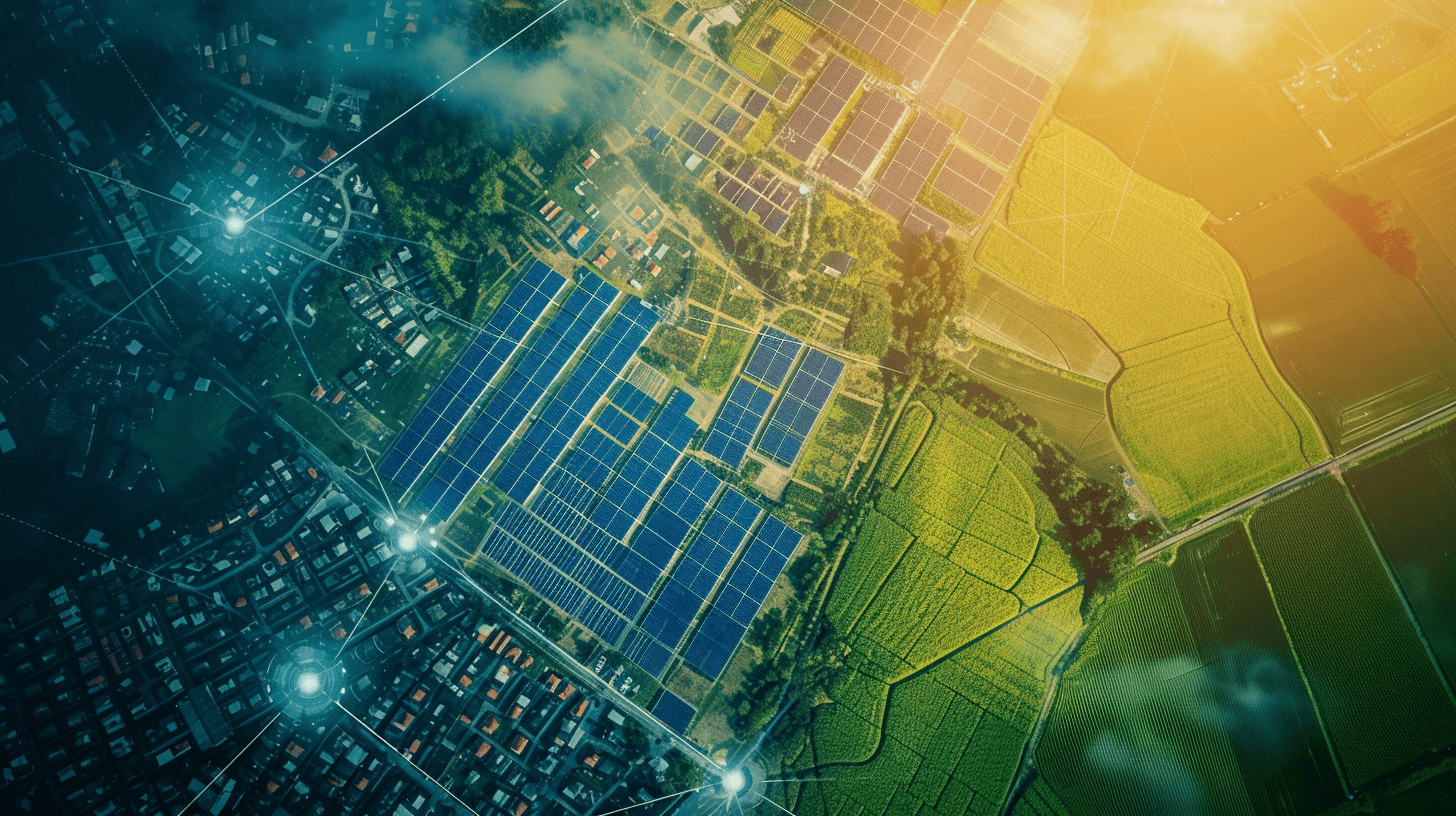
A decentralised energy grid consists of numerous localised energy producers, such as solar panels, wind turbines, and small-scale bioenergy plants, integrated into the urban infrastructure. These producers generate electricity close to the point of use, which is then distributed through a network of smart grids. The smart grid utilises advanced technologies like IoT sensors, automated control systems, and AI-driven analytics to manage and balance energy supply and demand dynamically. This approach ensures optimal energy distribution, enhances grid stability, and facilitates the integration of renewable energy sources.

The operation of a distributed energy system is underpinned by a combination of generation, storage, and management technologies. For example, residential solar panels can produce electricity during the day, which can be stored in local battery systems for use during peak hours or nighttime. Additionally, smart meters and home energy management systems enable consumers to monitor and adjust their energy usage in real-time, contributing to a more balanced and efficient grid. The interconnected nature of these systems allows for peer-to-peer energy trading, where surplus energy can be sold to neighbours or back to the grid, fostering a more collaborative energy ecosystem.

As urban areas continue to grow, the need for reliable and sustainable energy sources becomes ever more critical. Distributed energy systems not only enhance energy security by reducing dependency on centralised power plants but also promote environmental sustainability by integrating more renewable energy sources. Furthermore, they offer economic benefits by creating local jobs in the installation, maintenance, and operation of these systems.

Technology Readiness Level
8/9Ready for Implementation
Diffusion of Innovation
3/5Early Majority
Technology Life Cycle
2/4Growth
Category
Hardware

Related Organizations

Husk Power Systems logo
Husk Power Systems

United States · Company

95%

Operates one of the largest fleets of community solar microgrids in India and Africa.

Deployer
BoxPower logo
BoxPower

United States · Startup

90%

Provides containerized solar microgrids for rural, off-grid, and disaster relief applications.

Developer
Power Ledger logo
Power Ledger

Australia · Startup

90%

Blockchain-enabled energy trading platform for peer-to-peer energy exchange.

Developer
Schneider Electric logo
Schneider Electric

France · Company

90%

Global specialist in energy management and automation that integrates cybersecurity into its industrial hardware and software.

Developer
Sonnen logo
Sonnen

Germany · Company

90%

German energy storage company (owned by Shell) known for the 'sonnenCommunity' virtual power plant.

Developer
SparkMeter

United States · Company

90%

Provides smart metering and grid management software specifically for microgrids in emerging markets.

Developer
Tesla logo
Tesla

United States · Company

90%

Automotive and energy company developing custom AI silicon for autonomous driving.

Developer
AutoGrid logo
AutoGrid

United States · Company

85%

Develops enterprise software that unlocks the value of distributed energy resources (DERs) through Virtual Power Plants (VPPs).

Developer
Enphase Energy logo
Enphase Energy

United States · Company

85%

The world's leading supplier of microinverter-based solar and battery systems.

Developer
Stem, Inc. logo
Stem, Inc.

United States · Company

85%

A global leader in AI-driven clean energy solutions and services.

Developer

Supporting Evidence

Paper

Prosumer Web City: a novel energy market framework for enabling dynamic bidding and scalable integration of distributed energy participants

Scientific Reports · Dec 4, 2025

Proposes a Prosumer Web City framework implementing a multi-web, prosumer-centric energy network integrating PV, wind, and hybrid generation sources alongside battery storage and dynamic pricing.

Support 92%Confidence 95%

Paper

Integrating IoT and blockchain for smart urban energy management: enhancing sustainability through real-time monitoring and optimization

Cluster Computing · Oct 9, 2025

Addresses scalability and interoperability in urban energy by proposing a framework combining hybrid consensus blockchain mechanisms with IoT protocols for efficient, decentralized energy management.

Support 90%Confidence 95%

Paper

The Role of Smart Grid Technologies in Urban and Sustainable Energy Planning

Energies · Mar 24, 2025

Evaluates the impact of smart grid technologies in urban planning, focusing on the integration of renewable energy and the stability of distributed systems.

Support 89%Confidence 95%

Paper

Renewable Energy Microgrids in Rural Communities

International Journal of Multidisciplinary Futuristic Development · Aug 15, 2025

Explores the design and socio-economic impacts of renewable energy microgrids, emphasizing their role in providing decentralized power solutions. Discusses hybrid systems and smart grid technologies.

Support 75%Confidence 85%

Article

Can decentralized energy get good enough, fast enough?

ey.com

RECAI 60: Integration of rising amounts of renewables into grids must improve significantly if markets are to meet their decarbonization goals.

Support 50%Confidence 80%

Article

The Future Of Electrical Energy: Smart Grids & Decentralized Energy Systems

sigmaearth.com

A transformative shift towards smart grids and decentralized energy systems marks the future of electrical energy. Smart grids, with their advanced communication and control technologies, promise improved efficiency, resilience, and the integration of renewable sources. Decentralized energy systems featuring local generation and storage empower individuals and communities, reducing grid dependence and enhancing sustainability. This article explores the profound impact of these innovations on the energy landscape, emphasizing the benefits of sustainability, efficiency, and resilience in the evolving future of electrical energy.

Support 50%Confidence 80%

Article

Power to the People: On the Role of Districts in Decentralized Energy Systems

mdpi.com

The transition towards renewable and decentralized energy systems is propelled by the urgent need to address climate concerns and advance sustainable development globally. This transformation requires innovative methods to integrate stochastic renewable sources such as solar and wind power and challenging traditional energy paradigms rooted in centralized and continuous energy production. The present study focuses on the Swiss energy system to explore the optimization of energy planning strategies that incorporate decentralized energy production within a centralized framework. Here, we show that a strategic approach to decentralization can significantly reduce annual system costs by 10% to CHF 1230 per capita and increase self-consumption to 68% of the decentralized PV production, emphasizing the need for a hybrid energy-planning model that balances centralized and decentralized models for enhanced system resilience, efficiency, and cost-effectiveness. This research underscores the strategic importance of diversifying energy sources, enhancing energy storage, improving grid flexibility, and laying a foundational framework for policy making and strategic planning. It encourages further investigation into climate impacts, technology synergy, and the integration of district heating, aiming to establish a resilient, sustainable, and autonomous energy future.

Support 50%Confidence 80%

Article

Smart Integrated Decentralised Energy (SIDE) Systems

metabolic.nl

Transitioning our linear, carbon-based economy into a circular, renewable energy-based economy is without a doubt the single biggest challenge of our time. The energy sector plays a crucial role in tackling this challenge. For this reason, the Dutch government has decided to quintuple renewable power generation by 2030. It is a daunting task that requires radical new ways of thinking about our energy system architecture.

Support 50%Confidence 80%

Article

Decentralization and Energy: What It Means for Our Future

justenergy.com

The answer to the global issue of climate change may be closer to home than previously thought. Decreasing worldwide greenhouse gas emissions (GHGs) requires mammoth reductions in burning fossil fuels and a ramping up of renewable energy sources. Traditional, centralized power grids with enormous power plants need time to adapt. In the interim, decentralization and energy have started their own dance. Connectivity begins on a small scale but with large-scale implications for our energy supply. Let’s explore decentralization and energy for worldwide energy management.

Support 50%Confidence 80%

Article

Decentralised energy systems: Creating a decarbonised future

eon.com

From above, ant colonies might look chaotic, but their structure and hierarchies are highly organised and incredibly efficient. Such an integrated approach of behaviours and routines is also how decentralised energy systems work – and a better understanding of decentralised energy and its benefits is crucial to building a sustainable future.

Support 50%Confidence 80%

Article

Decentralised Energy Sytems

europarl.europa.eu

We are moving from a highly-centralized to a more decentralized energy system relying on more distributed generation, energy storage and a more active involvement of consumers through demand response. The present study makes an assessment of the status quo of decentralized energy systems, both in terms of technological developments and the legislative and policy framework. The analysis then discusses the current technical, economic and policy challenges and barriers facing decentralized energy production. Finally recommendations are provided in terms of the EU legislative and policy framework; infrastructure issues; R&D, investments and technological developments; monitoring and coordination of Member States incentive schemes; and SME support measures.

Support 50%Confidence 80%

Article

Decentralized energy systems for clean electricity access

nature.com

Innovative approaches are needed to address the needs of the 1.3 billion people lacking electricity, while simultaneously transitioning to a decarbonized energy system. With particular focus on the energy needs of the underserved, we present an analytic and conceptual framework that clarifies the heterogeneous continuum of centralized on-grid electricity, autonomous mini- or community grids, and distributed, individual energy services. A historical analysis shows that the present day is a unique moment in the history of electrification where decentralized energy networks are rapidly spreading, based on super-efficient end-use appliances and low-cost photovoltaics. We document how this evolution is supported by critical and widely available information technologies, particularly mobile phones and virtual financial services. These disruptive technology systems can rapidly increase access to basic electricity services and directly inform the emerging Sustainable Development Goals for quality of life, while simultaneously driving action towards low-carbon, Earth-sustaining, inclusive energy systems.

Support 50%Confidence 80%

Article

WTS Energy: Decentralized Energy

wtsenergy.com

Welcome to our comprehensive guide on decentralized energy in the energy industry. In this guide, we will delve into the concept of decentralizing energy, its role in promoting sustainability and resilience, and its various applications across different sectors. Join us as we explore its benefits and potential.

Support 50%Confidence 80%

Connections

Hardware
Hardware
Integrated Autonomous Energy Grid

AI-managed grid combining renewable sources with existing infrastructure for real-time urban energy optimization

Technology Readiness Level
7/9
Diffusion of Innovation
3/5
Technology Life Cycle
2/4
Hardware
Hardware
Decentralised Wastewater Treatment

Treats wastewater locally using wetlands, reactors, and biogas to recover resources and enable reuse

Technology Readiness Level
8/9
Diffusion of Innovation
3/5
Technology Life Cycle
2/4
Hardware
Hardware
Energy Harvesting

Capturing ambient energy from solar, thermal, vibration, and RF sources to power urban devices autonomously

Technology Readiness Level
6/9
Diffusion of Innovation
2/5
Technology Life Cycle
2/4
Hardware
Hardware
Plug-and-Play Solar Panel

Pre-configured solar panels that connect directly to standard outlets for instant home electricity generation

Technology Readiness Level
8/9
Diffusion of Innovation
3/5
Technology Life Cycle
2/4

Book a research session

Bring this signal into a focused decision sprint with analyst-led framing and synthesis.
Research Sessions