Envisioning is an emerging technology research institute and advisory.

LinkedInInstagramGitHub

2011 — 2026

research
  • Reports
  • Newsletter
  • Methodology
  • Origins
  • Vocab
services
  • Research Sessions
  • Signals Workspace
  • Bespoke Projects
  • Use Cases
  • Signal Scanfree
  • Readinessfree
impact
  • ANBIMAFuture of Brazilian Capital Markets
  • IEEECharting the Energy Transition
  • Horizon 2045Future of Human and Planetary Security
  • WKOTechnology Scanning for Austria
audiences
  • Innovation
  • Strategy
  • Consultants
  • Foresight
  • Associations
  • Governments
resources
  • Pricing
  • Partners
  • How We Work
  • Data Visualization
  • Multi-Model Method
  • FAQ
  • Security & Privacy
about
  • Manifesto
  • Community
  • Events
  • Support
  • Contact
  • Login
ResearchServicesPricingPartnersAbout
  1. Home
  2. Research
  3. Atmos
  4. Vortex Engine

Vortex Engine

Power generation by creating controlled atmospheric vortices from waste heat or solar energy
Back to AtmosView interactive version

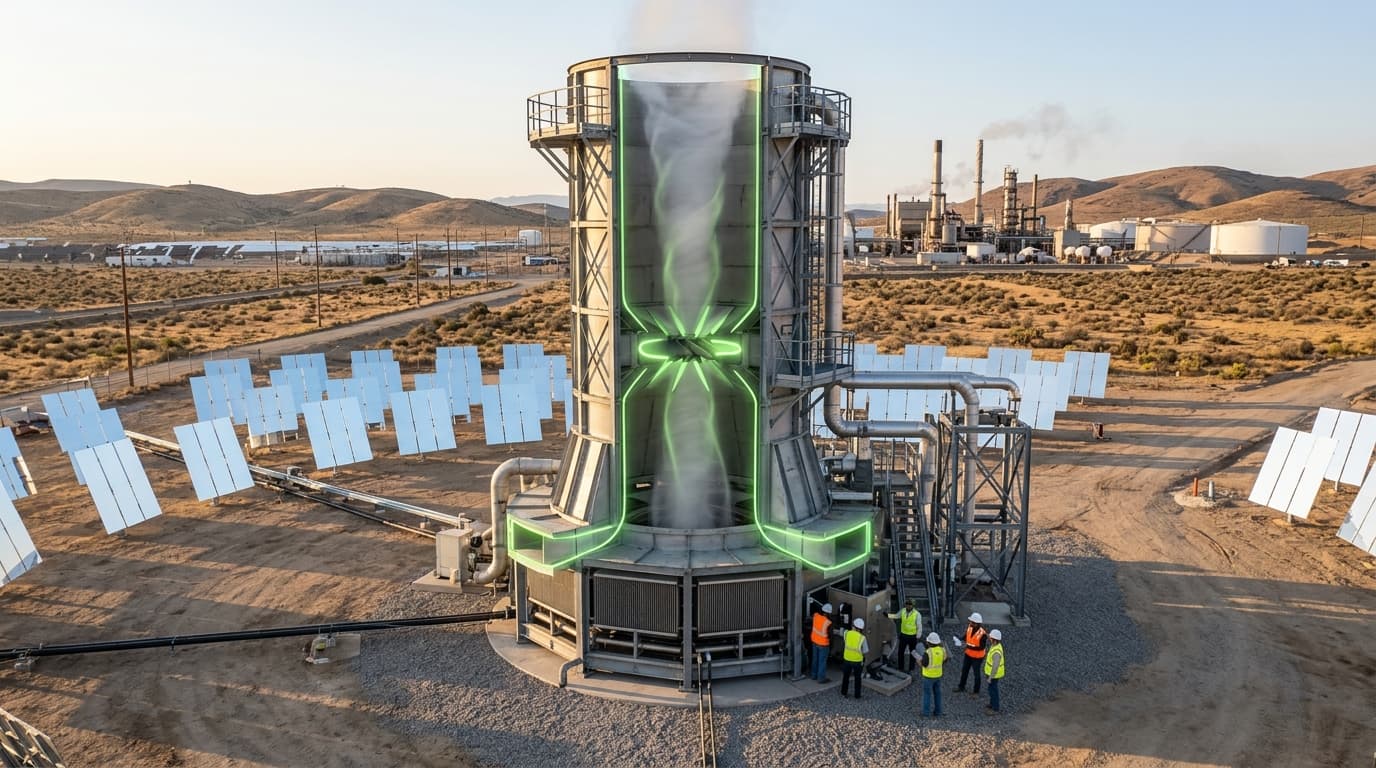
Vortex engines exploit atmospheric convection: heated air at ground level rises and spins, creating a vortex that can drive turbines. The concept—proposed by Louis Michaud and others—uses waste heat (e.g., from industrial processes) or solar energy to create a controlled convective column. Power generation would occur from the vortex flow. Research and small-scale experiments have been conducted; commercial deployment remains speculative.

Alternative power generation seeks novel approaches to harnessing thermal gradients. Vortex engines offer a conceptual pathway using low-grade heat. Challenges include scaling, control of vortex stability, and competition from established technologies. Research remains limited; vortex engines represent an exploratory concept rather than a near-term technology.

TRL
3/9Conceptual
Impact
3/5
Investment
2/5
Category
Applications

Book a research session

Bring this signal into a focused decision sprint with analyst-led framing and synthesis.
Research Sessions