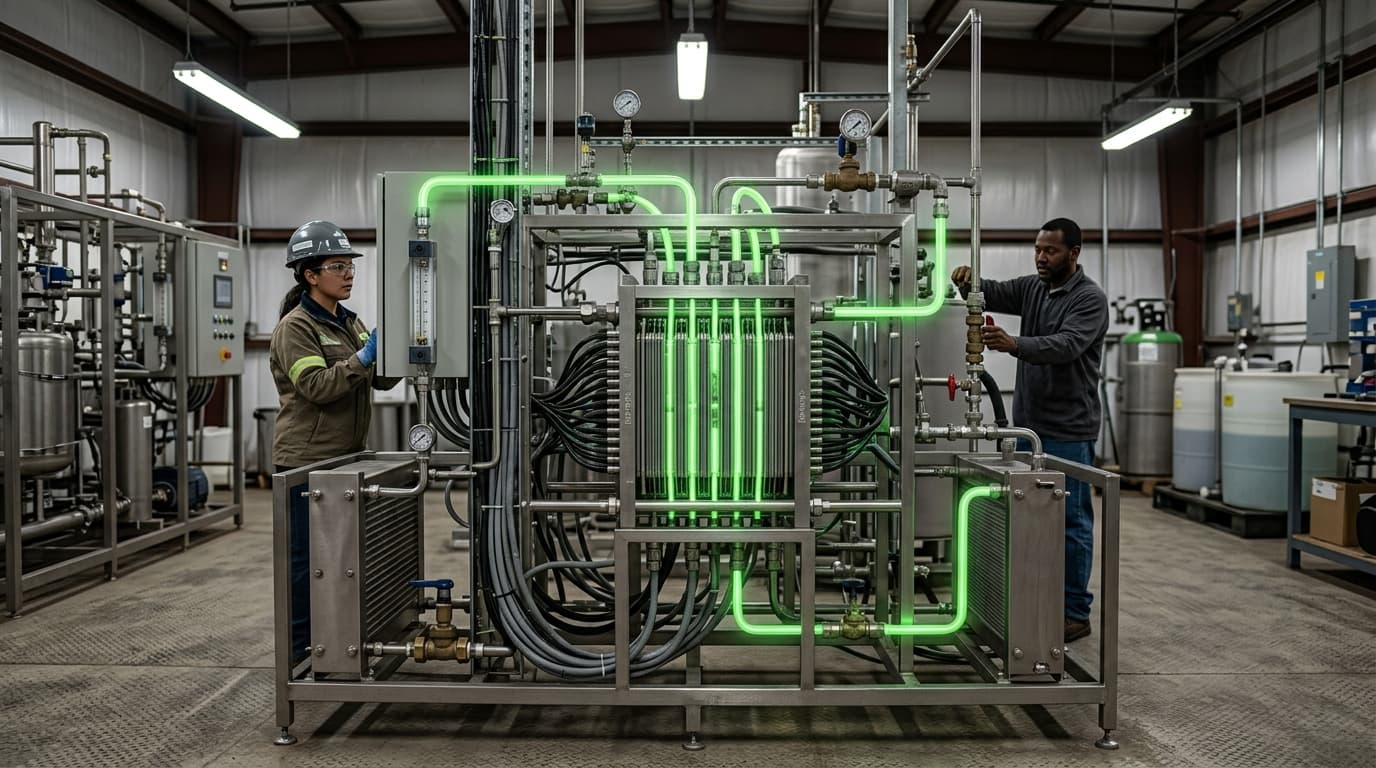
Electrosynthesis of Urea
Electrosynthesis of urea produces urea (CO(NH₂)₂)—a key nitrogen fertiliser and chemical feedstock—by co-reducing carbon dioxide and nitrogen (e.g. N₂ or nitrate) at an electrode under mild conditions, often in aqueous or non-aqueous electrolytes. The reaction couples C–N bond formation with electrochemical reduction, potentially at lower temperature and pressure than the conventional two-step industrial process (Haber–Bosch for ammonia, then reaction with CO₂). Catalysts and reactor design are under active research; selectivity, rate, and energy efficiency are the main levers. The approach could integrate with renewable electricity and CO₂ from point sources or air capture.
The technology addresses the dual challenge of fertiliser production: energy intensity and carbon footprint of conventional routes, and the opportunity to utilise CO₂ as a feedstock. Global demand for nitrogen fertiliser is substantial and linked to food security; a route that uses CO₂ and green power could reduce emissions and diversify supply. Electrosynthesis of urea is related to broader efforts in electrochemical nitrogen fixation and CO₂ valorisation.
Current status is early-stage: Faradaic efficiency, stability, and scale need improvement for commercial viability. Integration with renewable power and CO₂ supply chains would be required for full lifecycle benefit. If these hurdles are overcome, electrosynthesis of urea could become one option in a more sustainable fertiliser and chemical production landscape.
Research this in Signals
Signals turns a topic into a sourced research record you can inspect and rerun. Your first scan is free, and this one starts with Electrosynthesis of Urea already loaded, so edit it or scan as is.