Airborne Wind Turbines
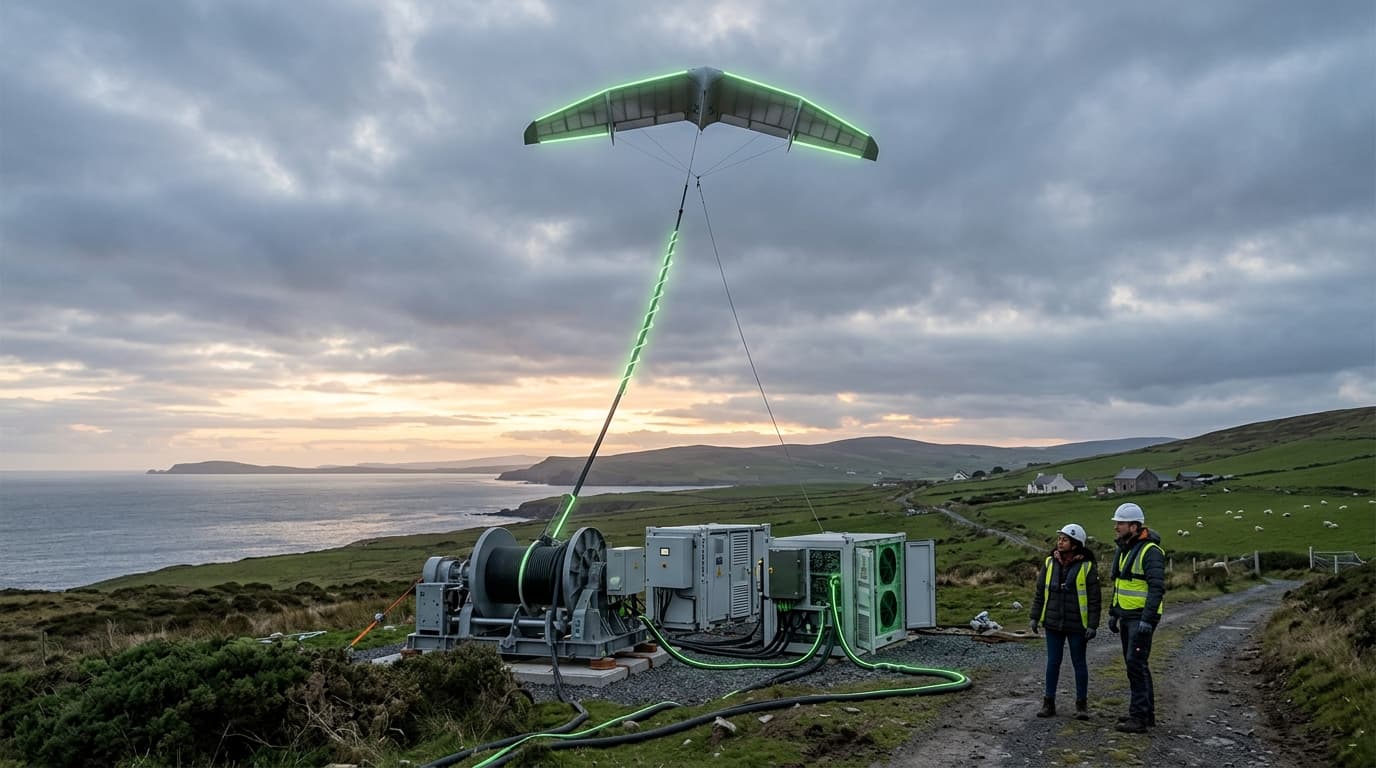
Airborne wind energy systems (AWES) capture wind at altitudes beyond conventional turbine reach—typically 200–800 meters—where wind speeds are higher and more consistent. Systems include rigid-wing kites (KiteGen, Makani), soft kites, and airborne rotors. Power is generated either by ground-based generators driven by tether tension or by turbines on the airborne unit with power transmitted via cable. The technology promises higher capacity factors and lower material use than fixed towers. Research and development are ongoing; trial projects have demonstrated feasibility; commercial deployment remains limited.
Conventional wind faces limits: tower height, land use, and material intensity. Airborne systems offer a potential pathway to higher altitudes and lower cost per kilowatt-hour. Significant challenges include tether durability, autonomous control, aviation regulation, and reliability in varied weather. Research continues into control systems, tether materials, and scaled demonstrators. Airborne wind remains an emerging technology with substantial potential but unproven at commercial scale.
Research this in Signals
Signals turns a topic into a sourced research record you can inspect and rerun. Your first scan is free, and this one starts with Airborne Wind Turbines already loaded, so edit it or scan as is.