Autonomous Vehicles
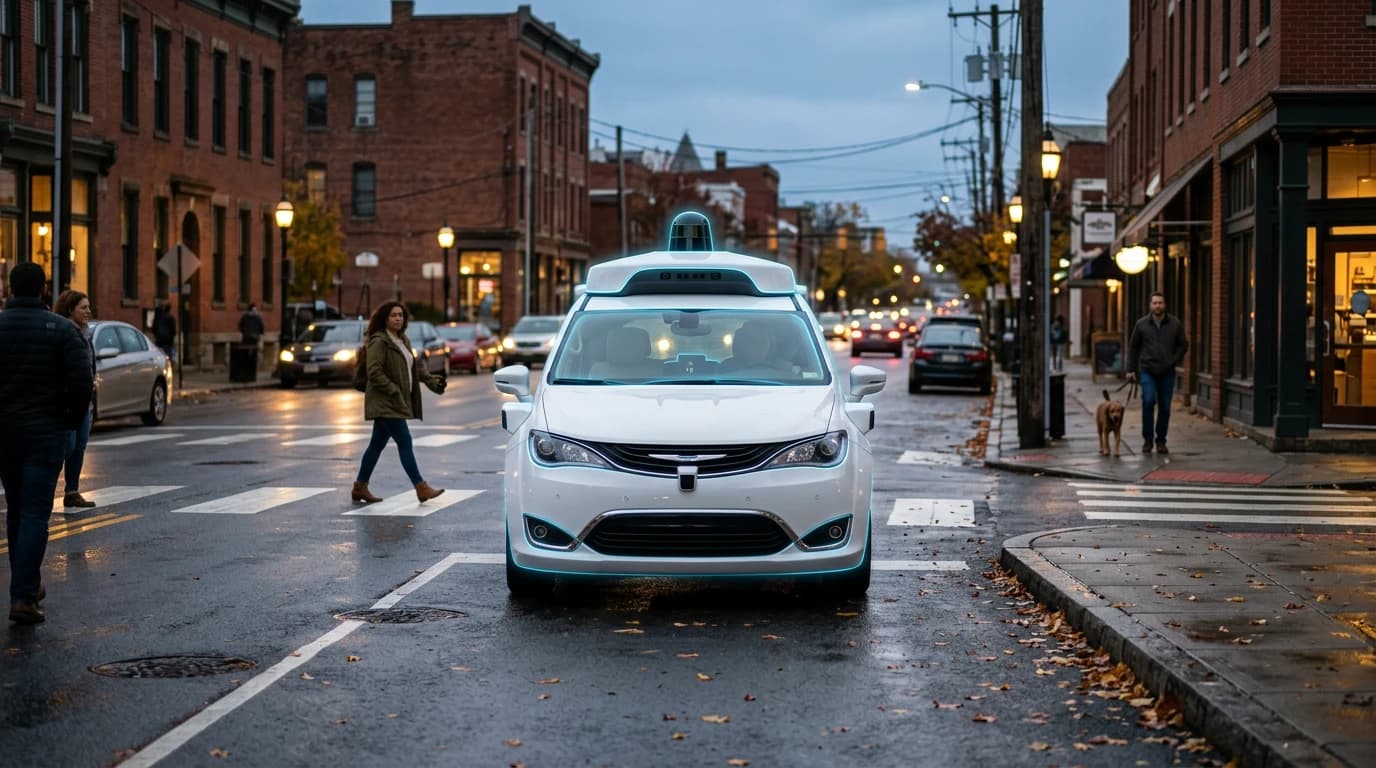
Autonomous Vehicle
Self-driving cars using sensors and AI to navigate roads without human input
Autonomous vehicles combine sensors—radar, LiDAR, cameras, and sometimes ultrasonic—with perception, prediction, and planning software to navigate without a human driver. Data is fused to build a representation of the environment; machine learning models detect objects, predict behaviour, and generate driving decisions. Approaches differ by vendor: Tesla emphasises vision and neural networks with limited reliance on high-definition maps; Waymo and Cruise use multi-sensor suites and detailed maps for geofenced robotaxi services. SAE levels 2–4 describe partial to high automation, with level 4 indicating full autonomy within an operational design domain.
The technology promises to reshape mobility by reducing human error, enabling new service models (robotaxis, delivery pods), and freeing occupants for other tasks. Deployment is advancing in controlled settings: Waymo and Cruise operate commercial robotaxi services in select cities; Tesla’s Full Self-Driving remains supervised. Long-haul trucking and confined sites (mines, ports) are active pilot areas. Regulatory frameworks are evolving, with some jurisdictions permitting testing and limited commercial use while defining safety and liability rules.
Widespread deployment still faces hurdles. Edge cases—rare scenarios, adverse weather, and complex interactions with other road users—remain difficult. Public acceptance and trust vary. Cost of sensors and compute, maintenance of HD maps, and clarity on liability and insurance are ongoing concerns. As the industry consolidates and safety evidence accumulates, autonomous vehicles are likely to reach broader adoption first in constrained domains before expanding to general-purpose passenger driving.
TRL
7/9Operational
Impact
5/5
Investment
5/5
Category
Hardware
What was expected
Published forecasts about this technology, graded against what happened in Hindsight.
Research this in Signals
Scan Autonomous Vehicle for yourself.
Signals turns a topic into a sourced research record you can inspect and rerun. Your first scan is free, and this one starts with Autonomous Vehicle already loaded, so edit it or scan as is.