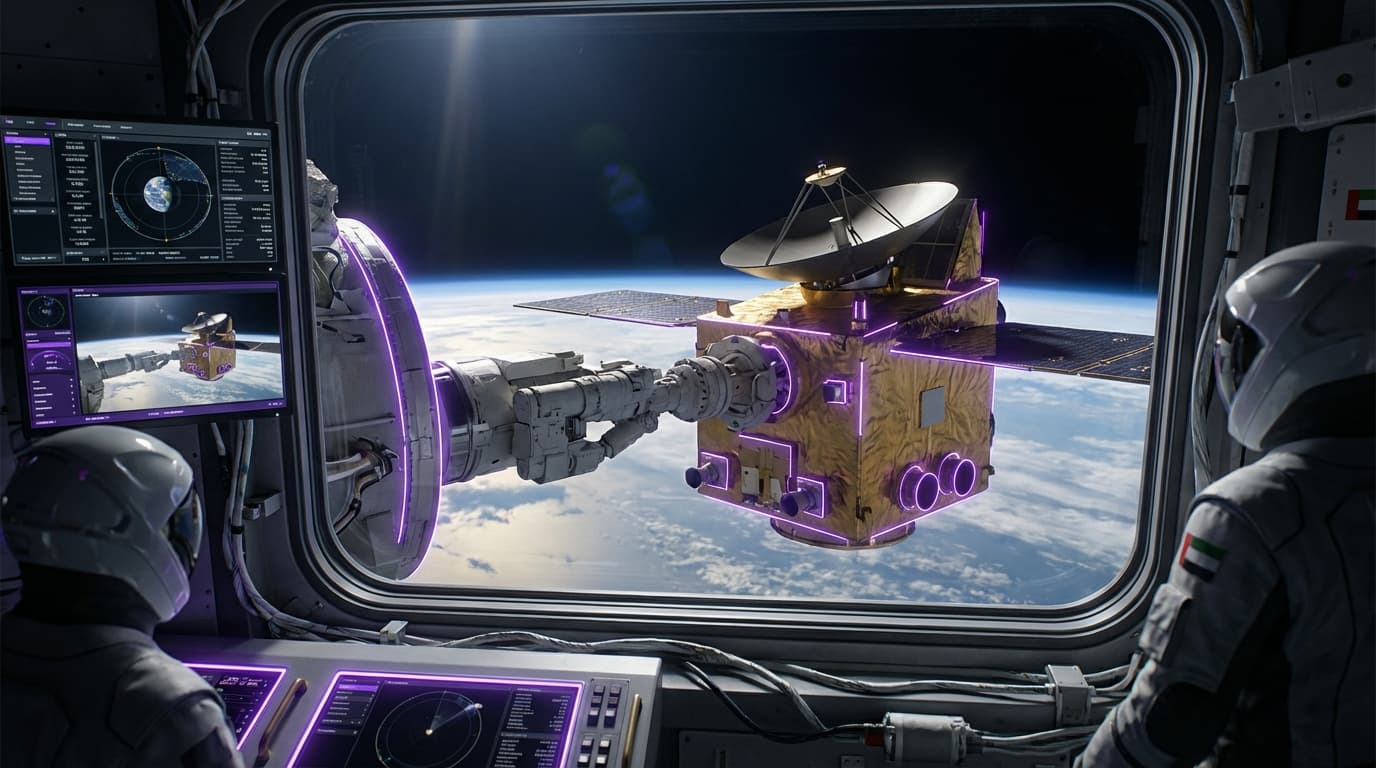
UAE Mars Missions
The UAE's Mars program, led by the Hope orbiter mission, represents a significant achievement in building deep-space capabilities in the Middle East. The Hope orbiter successfully entered Mars orbit and is conducting novel atmospheric science, studying the Martian atmosphere in ways that complement other missions. The program has catalyzed regional STEM talent development, created partnerships with US, Japanese, and European space agencies, and demonstrated that emerging space nations can successfully conduct complex interplanetary missions.
This innovation addresses the goal of building space capabilities in regions that haven't traditionally been major space powers, demonstrating that with proper planning, partnerships, and investment, emerging space nations can achieve significant milestones. The UAE's approach of partnering with established space agencies while building domestic capabilities provides a model for other nations seeking to develop space programs. The program has also inspired regional interest in space and STEM education.
The technology represents an important expansion of the global space community, bringing new perspectives and capabilities to space exploration. As more nations develop space capabilities, the global space ecosystem becomes more diverse and potentially more capable. The UAE's success demonstrates that space exploration is becoming more accessible and that international partnerships can enable emerging space nations to achieve ambitious goals. The program's focus on building long-term capabilities and talent suggests it could have lasting impact on the region's space and technology sectors.
Related Organizations
The primary operator and developer of the Emirates Mars Mission (Hope Probe) and the Mars 2117 strategy.
The federal agency overseeing the UAE space sector and funding the Emirates Mars Mission.

University of Colorado Boulder research institute that partnered with MBRSC to design and build the Hope probe.

Developed the Emirates Mars Infrared Spectrometer (EMIRS) instrument for the Hope Probe.

A major industrial conglomerate that has successfully conducted ground-based microwave power transmission tests for future space solar power.

Hosts the National Space Science and Technology Center (NSSTC), contributing research to the Mars program.

Hosts the Center for Space Science, which utilizes data from the Hope Probe for atmospheric research.

Faculty members serve on the science team for the Emirates Mars Mission, analyzing atmospheric data.
Supporting Evidence
Research this in Signals
Signals turns a topic into a sourced research record you can inspect and rerun. Your first scan is free, and this one starts with UAE Mars Missions already loaded, so edit it or scan as is.