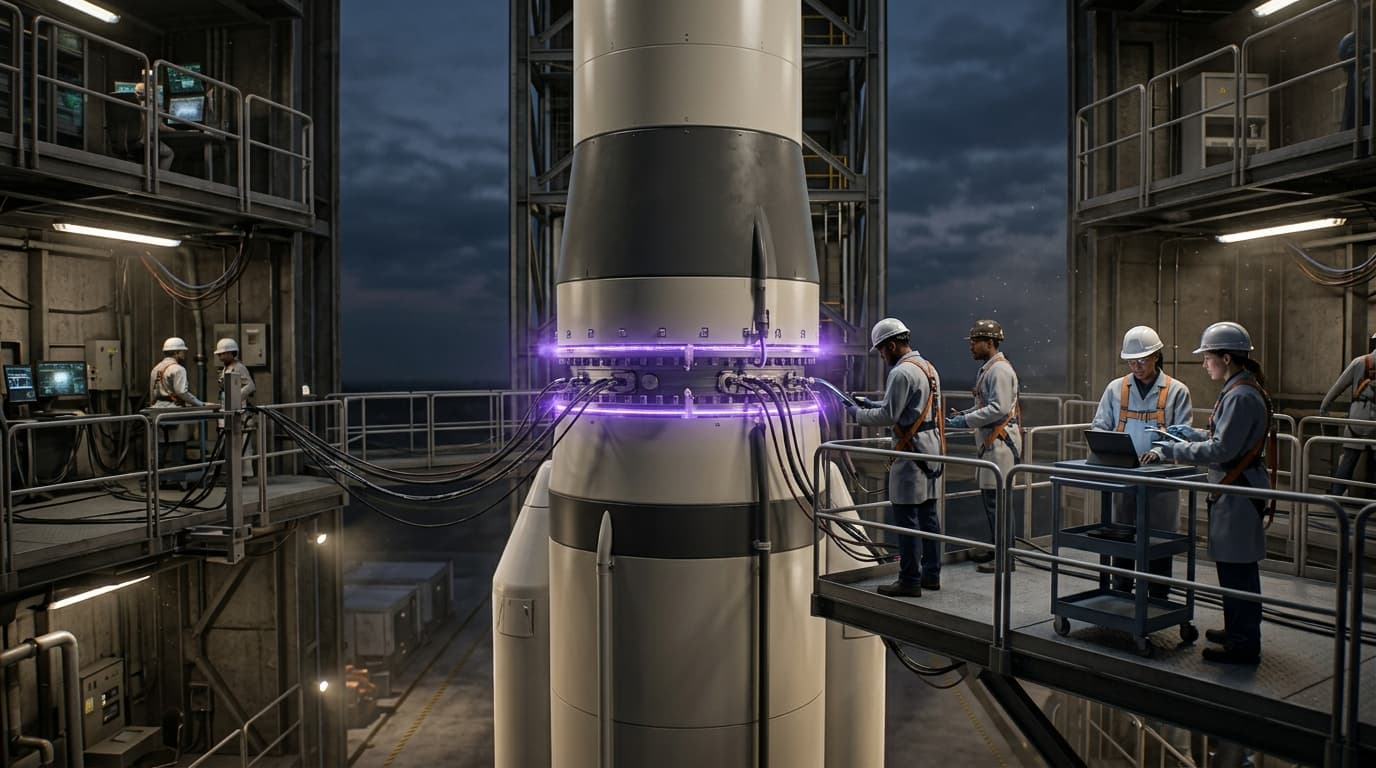
Solid-Fuel Space Launch Vehicles
Geography: Emea · Middle East · Iran
The Qaem-100 is Iran's solid-fuel satellite launch vehicle, achieving its first successful orbital mission in September 2024 when it placed the 60 kg Chamran-1 research satellite into a 550 km orbit. A second successful orbital launch followed, with plans for a three-satellite simultaneous deployment in late 2025 or early 2026. The use of solid fuel is significant: unlike liquid-fuel rockets that require hours of fueling preparation, solid-fuel SLVs can be launched on short notice, a characteristic with obvious military implications.
Iran's space launch capability is dual-use by nature. The same technologies that place satellites in orbit — propulsion, guidance, staging, thermal management — are directly applicable to long-range ballistic missiles. This is why Western nations and the UN have historically linked Iranian space launches to missile proliferation concerns. The Qaem-100's success validates Iran's solid-fuel propulsion at scales sufficient for orbital injection, implying mastery of large solid-fuel motors, composite motor cases, and multi-stage separation systems.
Strategically, indigenous orbital access provides Iran with the ability to deploy its own reconnaissance, communications, and navigation satellites without depending on foreign launch services — services that are in any case denied under sanctions. The development of the Qaem-Sadid, an advanced upper stage module, suggests ambitions for higher orbits and heavier payloads. Iran is one of approximately ten countries with demonstrated orbital launch capability.
Research this in Signals
Signals turns a topic into a sourced research record you can inspect and rerun. Your first scan is free, and this one starts with Solid-Fuel Space Launch Vehicles already loaded, so edit it or scan as is.