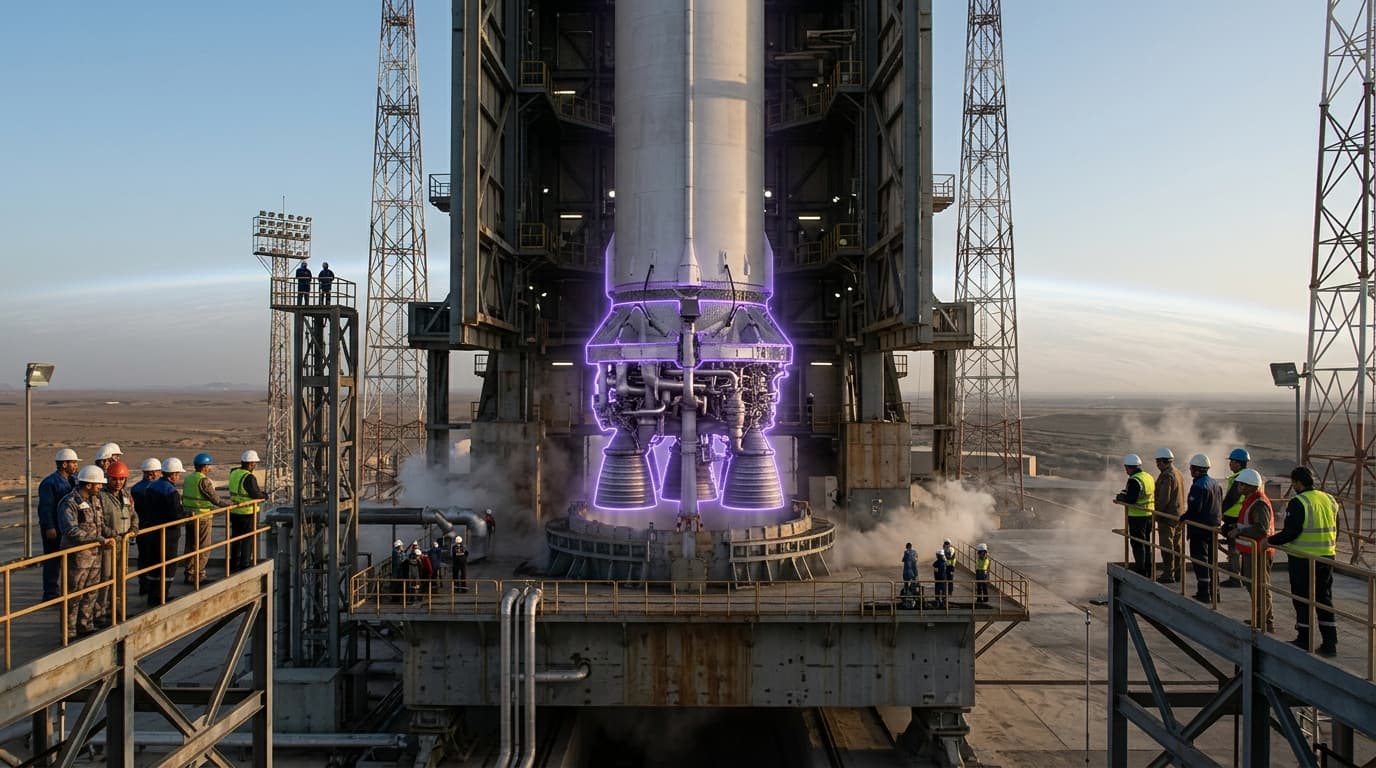
Liquid-Fuel Heavy Space Launch Vehicle
Geography: Emea · Middle East · Iran
The Simorgh (Phoenix) is Iran's liquid-fuel two-stage space launch vehicle, designed for heavier payloads than the solid-fuel Qaem-100. In January 2024, it achieved its first successful orbital mission, simultaneously deploying three satellites — one 32 kg and two nano-satellites — to a minimum orbit of 450 km. The smaller satellites tested narrowband communications and geopositioning technology. The Simorgh had previously suffered multiple launch failures, making the 2024 success a significant milestone.
The Simorgh uses a cluster of four Shahab-series engines (themselves descended from Soviet/North Korean designs) in its first stage, with a sustainer second stage. The design reflects Iran's incremental approach to space access — building on existing ballistic missile technology and gradually scaling capability. Independent analysis suggests the Simorgh can place approximately 100-250 kg into low Earth orbit, depending on altitude, which constrains its utility for larger reconnaissance or communications satellites.
The program's trajectory reveals both ambition and limitation. Iran relies on Russia for placing larger payloads into orbit, and the Simorgh's payload capacity lags behind the launch vehicles of other aspiring space powers. However, the platform provides a foundation for future development, and Iran has announced plans for a more capable successor. The successful multi-satellite deployment also demonstrates payload separation and orbital insertion precision — capabilities that translate directly to MIRV-type technologies in the missile domain.
Research this in Signals
Signals turns a topic into a sourced research record you can inspect and rerun. Your first scan is free, and this one starts with Liquid-Fuel Heavy Space Launch Vehicle already loaded, so edit it or scan as is.