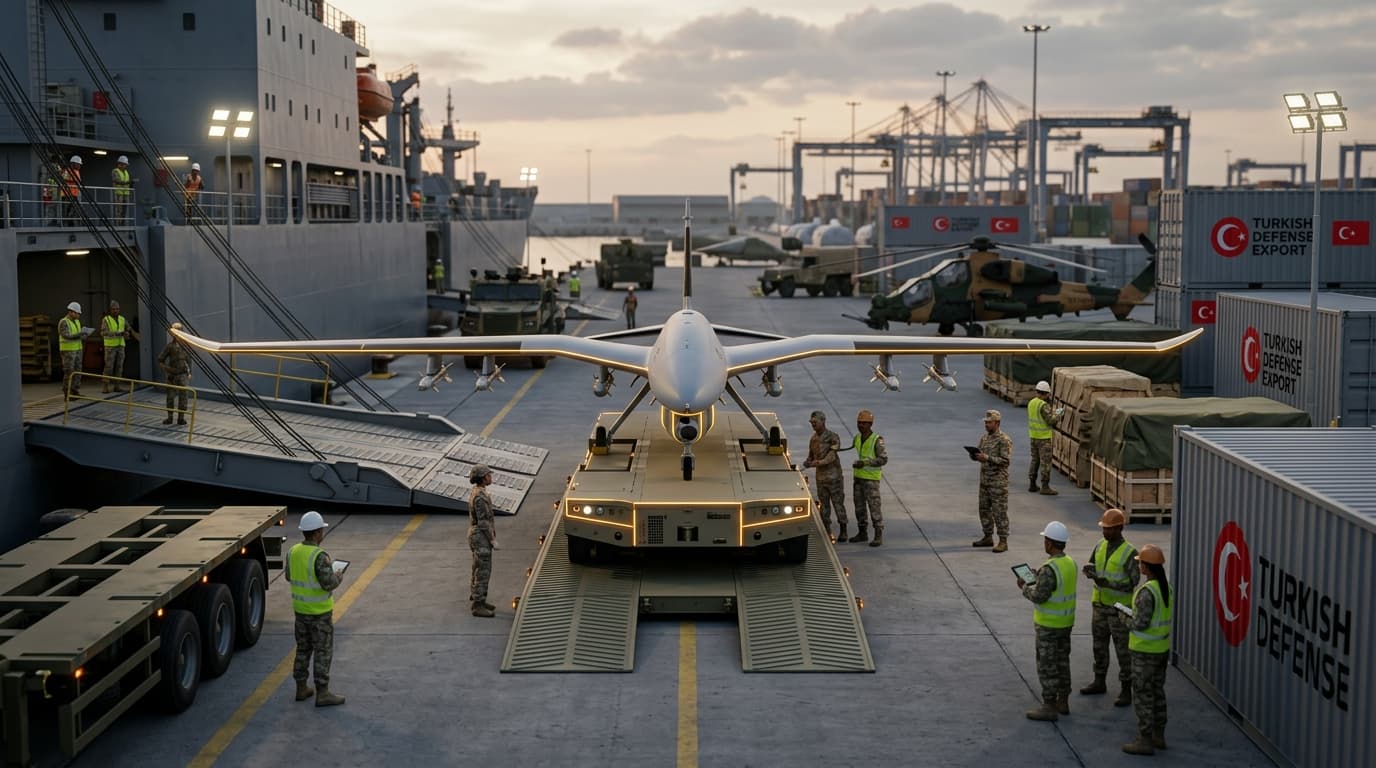
Integrated Defense Export Ecosystem
Geography: Emea · Middle East · Turkey
Turkey's defense and aerospace export ecosystem reached $10.5 billion in 2025, a 48% increase from $7.1 billion in 2024, which itself was a 29% increase from 2023's $5.5 billion. New contracts signed in 2025 totaled $17.8 billion, a 78% increase over 2024. Five Turkish defense companies appeared in SIPRI's top 100 global defense companies with combined revenue of $10.1 billion. This growth trajectory makes Turkey one of the world's fastest-growing defense exporters.
The ecosystem's strength lies in its integrated nature — Turkey doesn't export individual platforms but complete combat systems: drones with munitions, training, ground stations, and maintenance; warships with combat management systems, weapons, and sensors; armored vehicles with communications and fire control. This 'ecosystem export' model creates recurring revenue through ammunition, spare parts, and upgrade services long after initial platform delivery.
The geopolitical implications are significant. Turkey can sell to NATO allies, Middle Eastern partners, African nations, and Central Asian states without the political restrictions that constrain US or European exports. This positioning makes Turkish defense products attractive to countries that want capable systems without the strings attached to Western or Russian procurement. The defense industrial base also serves as a technology incubator that spills over into civilian sectors — sensors, software, materials, and manufacturing processes developed for defense find applications across the economy.
Research this in Signals
Signals turns a topic into a sourced research record you can inspect and rerun. Your first scan is free, and this one starts with Integrated Defense Export Ecosystem already loaded, so edit it or scan as is.