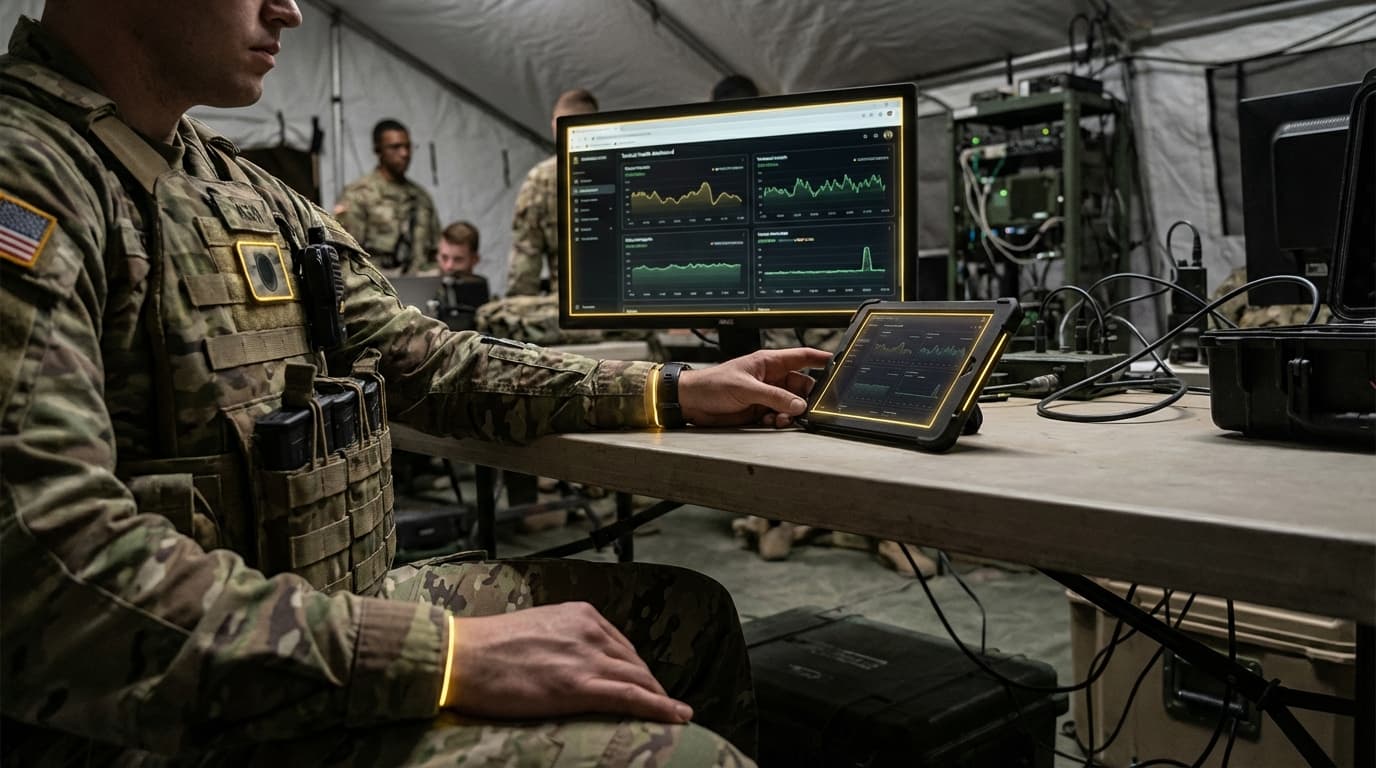
Soldier Vitals Monitoring Systems
Soldier vitals monitoring systems represent a convergence of wearable sensor technology, wireless telemetry, and battlefield medicine, designed to continuously track the physiological status of personnel in high-stress operational environments. These systems typically integrate multiple sensor modalities—including electrocardiogram (ECG) electrodes, pulse oximeters, core temperature probes, accelerometers, and GPS modules—into garments, chest rigs, or helmet-mounted devices that can withstand the rigors of combat. The sensors capture a comprehensive suite of biometric data: heart rate variability, respiratory rate, blood oxygen saturation, hydration levels, body temperature, and physical exertion metrics. Advanced systems also incorporate impact sensors capable of detecting ballistic strikes or blast overpressure events, providing immediate alerts when a soldier sustains potentially life-threatening trauma. All captured data streams wirelessly to command posts or medic stations via secure tactical networks, creating a real-time physiological picture of individual warfighters and entire units.
The fundamental challenge these systems address is the fog of war's impact on medical response and force readiness. In traditional combat scenarios, injuries often go unreported due to adrenaline, communication breakdowns, or the soldier's focus on the mission. Heat casualties, dehydration, and fatigue-related performance degradation can compromise unit effectiveness long before they become visually apparent to leadership. Soldier vitals monitoring eliminates this information gap by providing objective, continuous health data that enables proactive intervention rather than reactive treatment. Medics can prioritize evacuation based on physiological severity rather than self-reported symptoms, potentially reducing preventable deaths during the "golden hour" of trauma care. Commanders gain unprecedented visibility into their force's physical state, allowing them to rotate personnel before exhaustion leads to mission failure or friendly fire incidents. The technology also supports post-mission analysis, helping identify training gaps, optimize load-bearing equipment, and refine operational tempo based on actual physiological demands rather than assumptions.
Early deployments of these systems have occurred in special operations units and pilot programs across NATO militaries, with research suggesting significant improvements in casualty survival rates and mission endurance. Beyond immediate combat applications, the technology is being adapted for training environments where heat stroke and overexertion pose serious risks during realistic exercises. The systems also show promise for monitoring personnel in chemical, biological, radiological, and nuclear (CBRN) environments, where early detection of exposure symptoms can trigger life-saving decontamination protocols. As miniaturization continues and battery technology improves, industry analysts note a trajectory toward fully integrated smart textiles that require no additional equipment burden. The broader trend points toward a future battlefield where every soldier functions as a networked node, with vitals monitoring forming the foundation of predictive health analytics, AI-assisted triage, and autonomous medical response systems that can stabilize casualties before human medics arrive.
Related Organizations

The primary DoD laboratory for environmental medicine, physiology, and performance research.

Produces the LifeMonitor system, a chest-worn sensor suite used by US and UK military forces for physiological monitoring.

Develops the BioHarness, a strap-based physiological monitoring device used for first responder and military health tracking.

Operates a dedicated Simulation & Training division providing gunnery and combat simulators.

Elbit Systems
Israel · Company
Major defense contractor developing AI-driven autonomous swarms (Legion-X) and target acquisition systems.

Multinational technology company known for GPS and wearable technology.

Safran
France · Company
Manufacturer of the FELIN future soldier system for the French Army, which includes physiological monitoring capabilities.

Develops smart clothing with integrated body sensors for health tracking.
Performance wearable company focusing on strain and recovery.

Maker of the Oura Ring, a smart ring that tracks sleep, readiness, and stress.
Supporting Evidence
Research this in Signals
Signals turns a topic into a sourced research record you can inspect and rerun. Your first scan is free, and this one starts with Soldier Vitals Monitoring Systems already loaded, so edit it or scan as is.