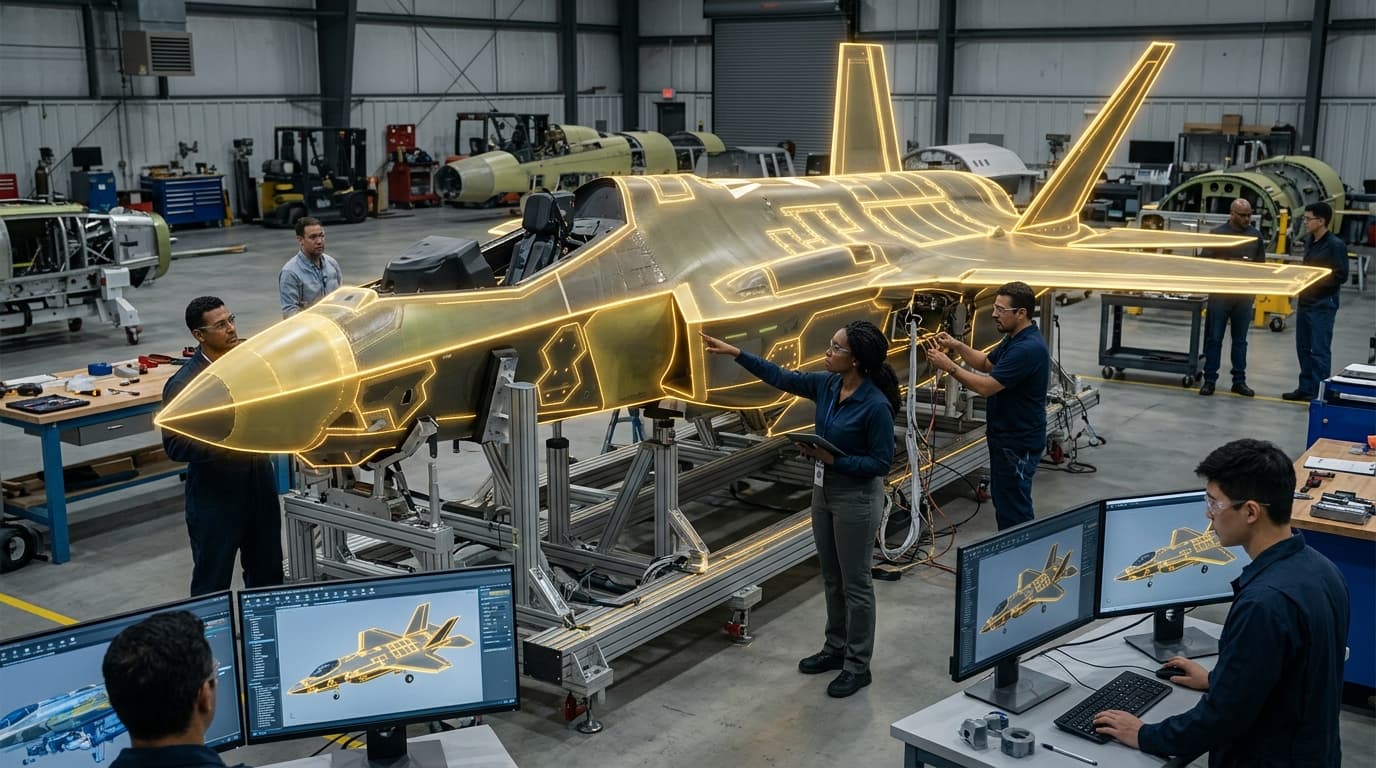
Model-Based Aerospace Engineering
Model-based aerospace engineering uses integrated digital models to design, simulate, verify, and manage complex aircraft systems across the development lifecycle. In the defense aerospace context, it helps teams coordinate aerostructures, avionics, software, mission systems, and testing through shared system representations rather than fragmented document handoffs. This matters because modern combat aircraft are increasingly software-defined and systems-dense, making digital engineering capability itself a strategic technology. The real value is not just faster design, but better integration, traceability, and upgrade readiness across long-lived platforms.
For Brazil, the Gripen F-39E tech-transfer process makes this especially relevant. The notable signal is not simply aircraft assembly, but the absorption of digital engineering methods that support local participation in systems integration, validation, sustainment, and future aerospace development. Over time, this capability can spill beyond a single aircraft program into drones, avionics, advanced manufacturing, and sovereign defense-industrial capacity.
Research this in Signals
Signals turns a topic into a sourced research record you can inspect and rerun. Your first scan is free, and this one starts with Model-Based Aerospace Engineering already loaded, so edit it or scan as is.