Indigenous Integrated Air Defense Systems
Geography: Emea · Middle East · Iran
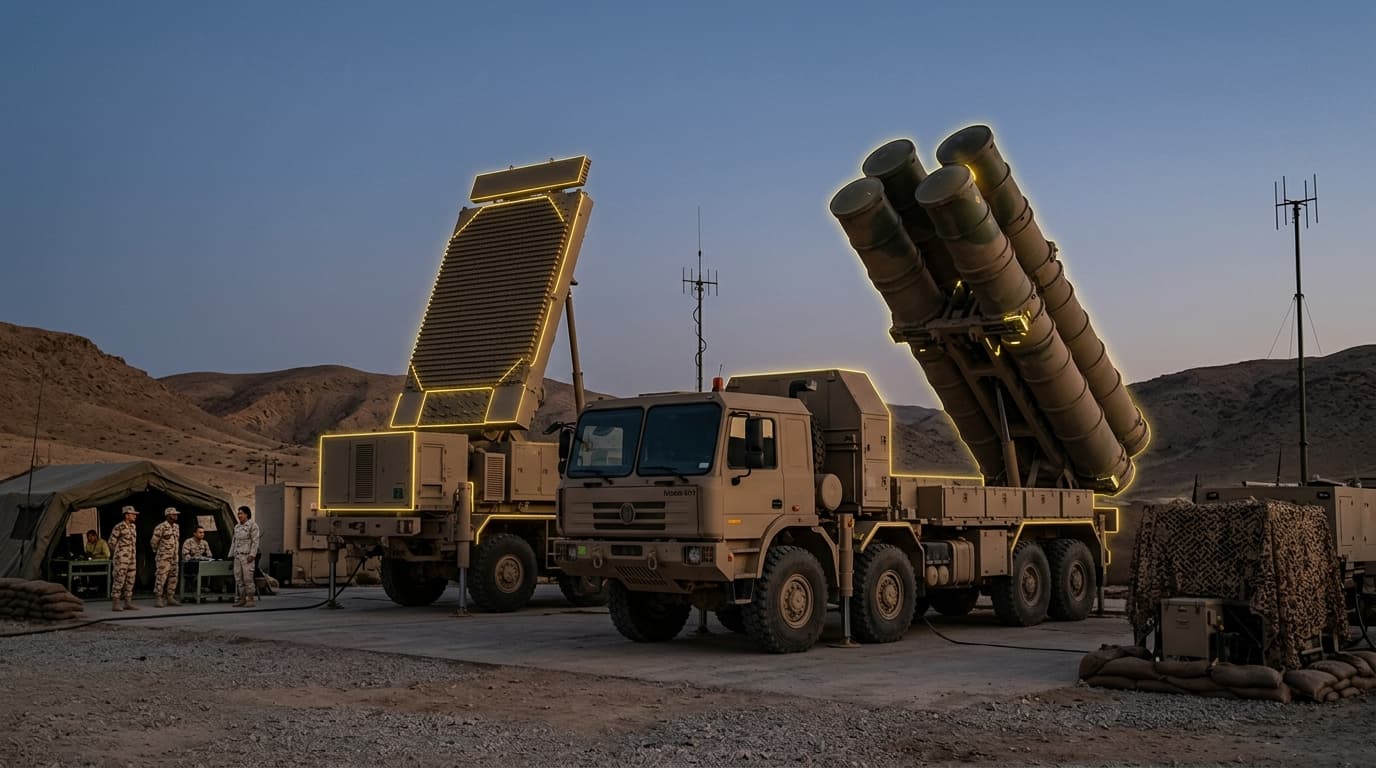
The Bavar-373 is Iran's most advanced indigenous air defense system, designed as a domestic alternative after Russia initially refused to deliver the S-300 system. It features a phased array radar claimed to track over 200 targets simultaneously at ranges up to 300 km, paired with the Sayyad-4 interceptor missile. The system is road-mobile, mounted on the ZAFAR heavy truck chassis, and integrated into a broader layered defense network alongside the Khordad-15 (medium range) and 3rd of Khordad (short range) systems.
The development trajectory of the Bavar-373 illustrates sanctions-driven innovation: denied the S-300, Iran reverse-engineered concepts and built an indigenous alternative over approximately 15 years. While independent assessments suggest it does not match the S-300PMU2 in all parameters, it represents genuine indigenous capability in phased array radar design, interceptor missile production, and systems integration — competencies that took decades to develop.
The system's real-world performance was tested during the 2025-2026 conflict with Israel, where Iranian integrated air defenses faced stealth aircraft, cruise missiles, and electronic warfare. Results are disputed — Iranian sources claim successful intercepts while Western sources emphasize significant penetration — but the existence of a multi-layered indigenous air defense network remains strategically relevant. The program also demonstrates Iran's ability to produce the radar transmit/receive modules, signal processing systems, and interceptor seekers domestically.
Research this in Signals
Signals turns a topic into a sourced research record you can inspect and rerun. Your first scan is free, and this one starts with Indigenous Integrated Air Defense Systems already loaded, so edit it or scan as is.