Indigenous Submarine Design and Production
Geography: Emea · Middle East · Iran
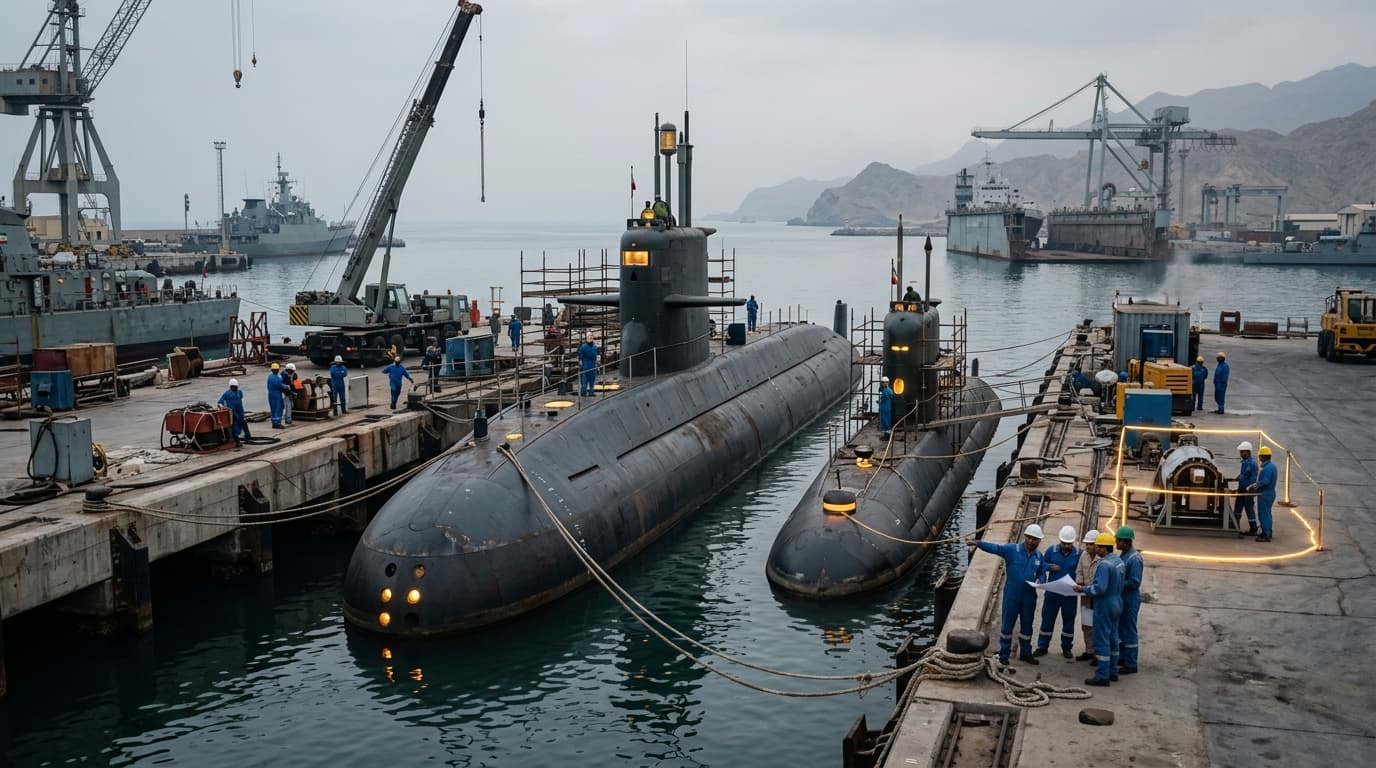
Iran's submarine program spans two main classes: the Fateh-class semi-heavy submarine (527 tons submerged, 48m length) and the Ghadir-class coastal/midget submarine. The Fateh class carries four 533mm torpedo tubes, eight mines, and two reserve torpedoes, with a submerged speed of 14 knots. Iran unveiled an AIP (air-independent propulsion) variant at DIMDEX 2024, which would significantly extend underwater endurance if operational. The Ghadir class, produced in larger numbers, is designed for shallow-water operations in the Persian Gulf.
The submarine program is strategically significant for Strait of Hormuz denial. In the confined, shallow waters of the Persian Gulf, even relatively simple submarines can pose a serious threat to surface vessels. The Ghadir-class boats are specifically designed for this environment — small enough to operate in shallow waters, numerous enough to present multiple threats simultaneously. The Fateh-class bridges the gap between midget and full-size attack submarines, offering greater range and weapons capacity for operations in the Gulf of Oman.
The AIP development is particularly noteworthy. Air-independent propulsion allows diesel-electric submarines to remain submerged for weeks rather than days, dramatically improving survivability. If Iran successfully integrates AIP into the Fateh class, it would represent a meaningful enhancement of its undersea warfare capability. The NTI assesses that AIP installation plans are underway, though timelines remain uncertain. The broader significance is industrial: Iran designs, builds, and maintains submarines domestically — a capability shared by fewer than 20 countries globally.
Research this in Signals
Signals turns a topic into a sourced research record you can inspect and rerun. Your first scan is free, and this one starts with Indigenous Submarine Design and Production already loaded, so edit it or scan as is.