Drone Swarm and Autonomous Coordination Technology
Geography: Emea · Middle East · Iran
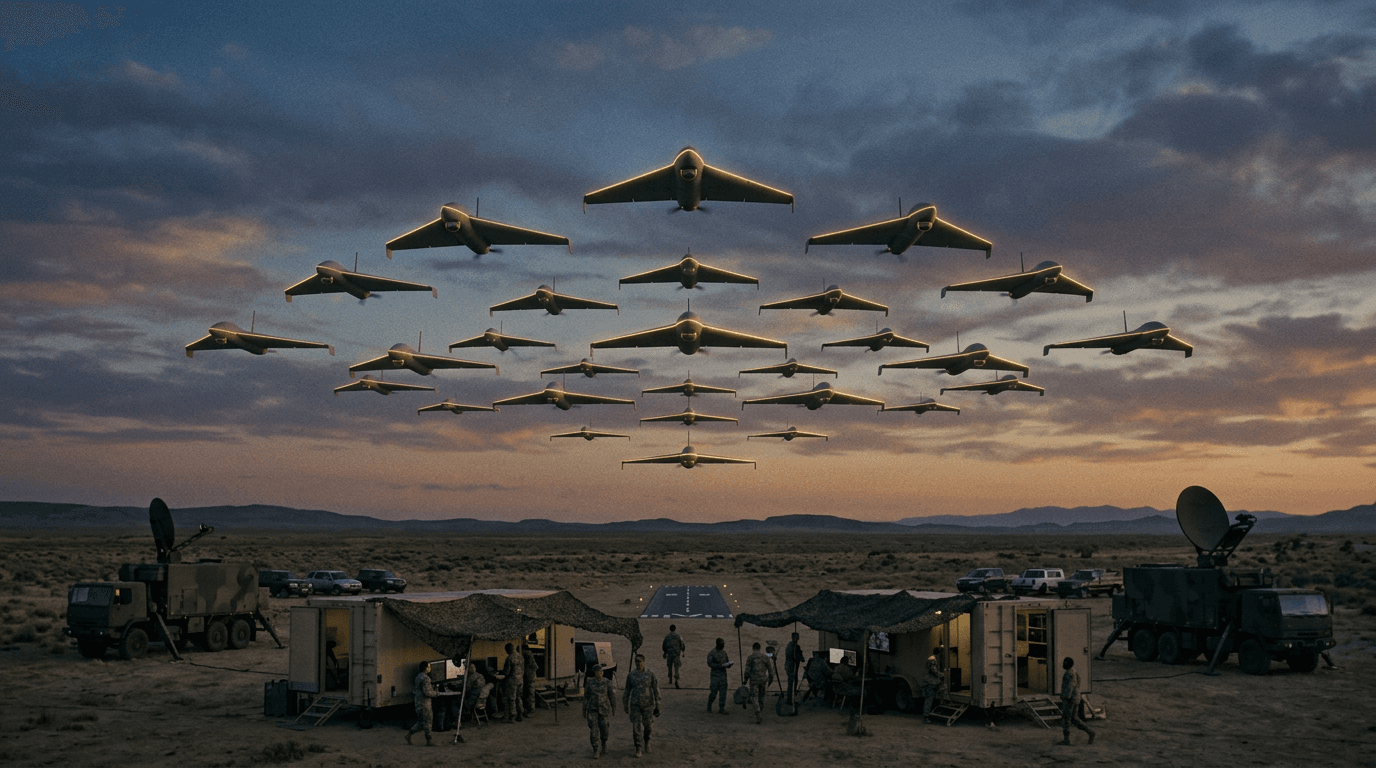
Iran's extensive experience with mass-production drone warfare is evolving toward coordinated swarm operations. While current Shahed-series attacks rely primarily on pre-programmed waypoints and simultaneous launches to saturate defenses, Iranian defense publications and exercises have demonstrated increasingly sophisticated coordination between multiple drone types — using reconnaissance UAVs to designate targets for follow-on attack drones, and launching mixed salvos of different drone variants to complicate defensive responses.
Swarm technology represents the next logical evolution of Iran's drone warfare doctrine. The current approach — launching dozens or hundreds of individual drones on parallel but independent flight paths — already achieves a degree of saturation. True swarm behavior would add real-time coordination: drones communicating to adjust routes around defended areas, concentrate on gaps in air defense coverage, or dynamically retarget based on battlefield feedback. The technical requirements include secure mesh networking, decentralized decision algorithms, and miniaturized computing — areas where Iran's capabilities are less clear.
The strategic implications of mature drone swarm capability would be significant. A coordinated swarm presents qualitatively different defensive challenges than independent drones: it can probe defenses, exploit gaps, and adapt in ways that fixed-waypoint systems cannot. Combined with Iran's existing mass-production capacity and low unit costs, swarm coordination could shift the offense-defense balance further toward the attacker. The technology is being pursued globally by major military powers, and Iran's head start in mass drone warfare operations provides operational data that other programs lack.
Research this in Signals
Signals turns a topic into a sourced research record you can inspect and rerun. Your first scan is free, and this one starts with Drone Swarm and Autonomous Coordination Technology already loaded, so edit it or scan as is.