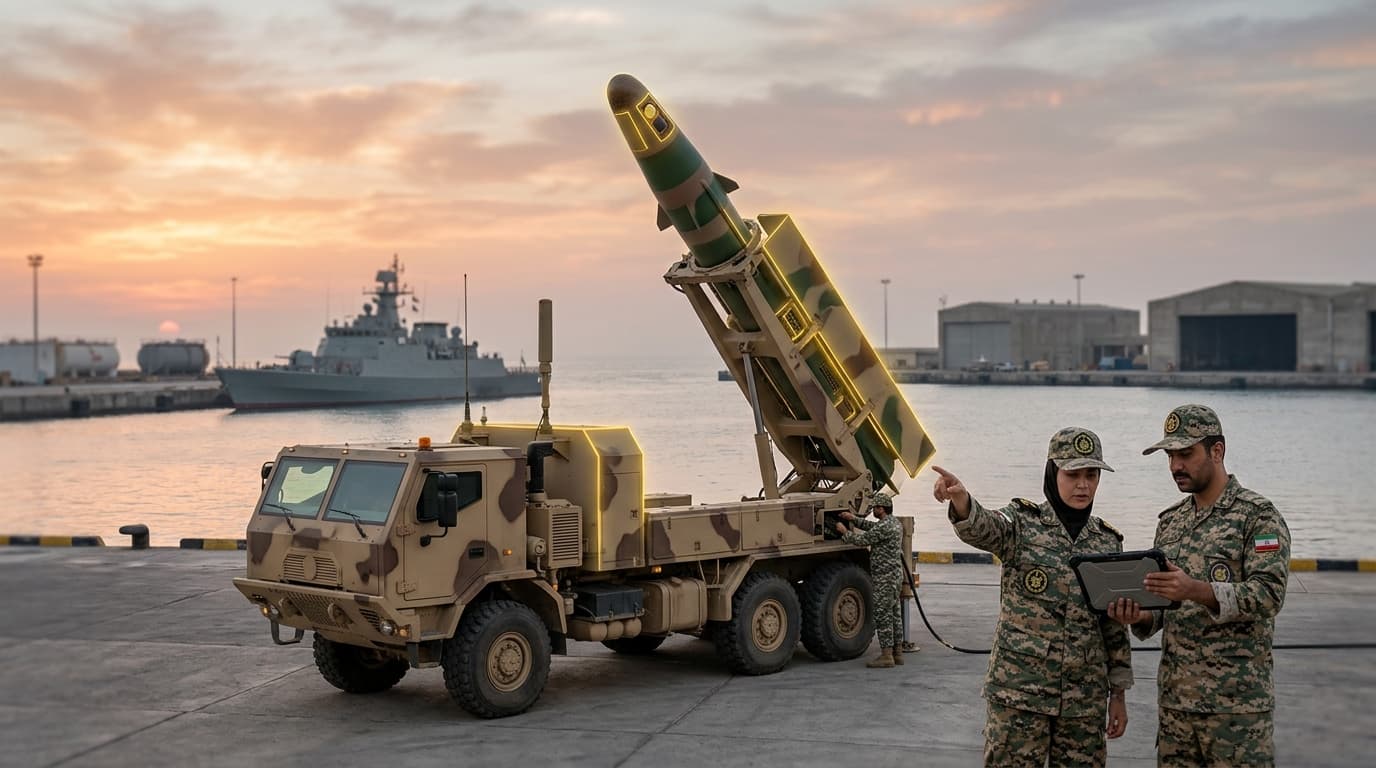
Anti-Ship Ballistic Missile Technology
Geography: Emea · Middle East · Iran
The Khalij Fars (Persian Gulf) missile represents Iran's entry into the exclusive category of anti-ship ballistic missiles (ASBMs), a class of weapons previously associated only with China's DF-21D. Based on the solid-fuel Fateh-110, the Khalij Fars features a 300 km range, Mach 3 terminal velocity, and an electro-optical seeker for terminal guidance against moving naval targets. It employs vertical terminal maneuvers designed to complicate shipboard missile defense intercepts.
The ASBM capability addresses Iran's core strategic challenge: deterring carrier strike groups and other large naval formations in the Persian Gulf and Strait of Hormuz. Combined with anti-ship cruise missiles, fast attack boats, and naval mines, ASBMs create a layered anti-access/area-denial (A2/AD) threat that raises the cost and risk of naval operations near Iranian waters. The system's guidance approach — using electro-optical terminal homing against moving targets — is technically demanding, and independent verification of its effectiveness against defended, maneuvering warships remains limited.
The strategic significance extends beyond the immediate military domain. The existence of credible ASBM capability influences maritime insurance rates, shipping patterns, and crisis decision-making throughout the Persian Gulf. Iran has demonstrated willingness to use this implied threat as diplomatic leverage, and the capability has prompted US Navy investments in counter-ASBM defenses and concept-of-operations adjustments.
Research this in Signals
Signals turns a topic into a sourced research record you can inspect and rerun. Your first scan is free, and this one starts with Anti-Ship Ballistic Missile Technology already loaded, so edit it or scan as is.