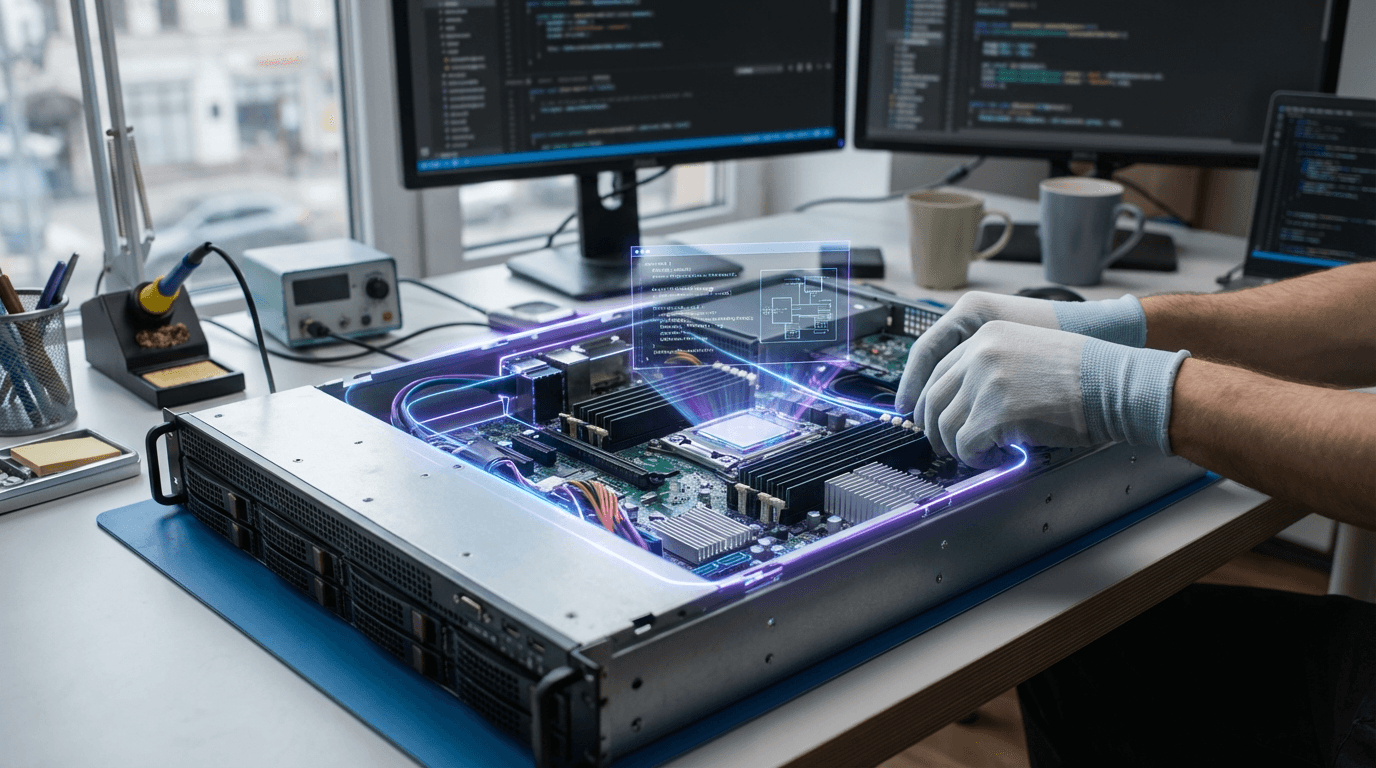
Code-Native Foundation Models
Code-native foundation models are large language models trained extensively on code repositories, software documentation, execution traces, and programming knowledge, giving them deep understanding of software structure, logic, and best practices. These models can generate, understand, debug, refactor, and verify code with high accuracy, acting as AI pair programmers, code reviewers, and software engineers.
This innovation addresses the software development bottleneck, where writing, maintaining, and debugging code is time-intensive and requires significant expertise. By understanding code deeply, these models can assist developers, automate routine programming tasks, and even generate complete software systems from specifications. Models like GitHub Copilot, CodeLlama, and various code-specialized models are already transforming software development, with developers reporting significant productivity gains.
The technology is fundamentally changing software development, enabling developers to work at higher levels of abstraction and focus on design and problem-solving rather than low-level implementation. As these models improve, they could enable new paradigms of software development where humans specify what they want and AI handles much of the implementation. However, the technology raises questions about code quality, security, intellectual property, and the future role of human developers. Ensuring generated code is correct, secure, and maintainable remains an active challenge.
Related Organizations

The world's leading software development platform, creator of GitHub Copilot.
United States · Open Source
An open scientific collaboration working on the responsible development of LLMs for code (StarCoder).

Creators of Devin, the first fully autonomous AI software engineer capable of planning and executing complex engineering tasks.
United States · Startup
Developing an AI software engineer with an ultra-large context window to understand entire codebases.
France · Startup
AI startup building foundation models for software development, which relocated its HQ from the US to Paris.

Online IDE that integrates 'Ghostwriter' (now Replit AI), an AI pair programmer that can generate, explain, and debug code.
United States · Startup
An AI coding assistant startup backed by heavyweights like Eric Schmidt.
Provides a free AI code acceleration toolkit built on their own proprietary LLMs.
France · Startup
Paris-based champion of open-weight models (Mistral 7B, Mixtral 8x7B) challenging US dominance.

An AI code completion tool that pioneered the space before Copilot.

Code search and intelligence platform, creators of Cody.
Supporting Evidence
Research this in Signals
Signals turns a topic into a sourced research record you can inspect and rerun. Your first scan is free, and this one starts with Code-Native Foundation Models already loaded, so edit it or scan as is.