Automated Convenience Retail
Geography: Emea · Europe · Europe
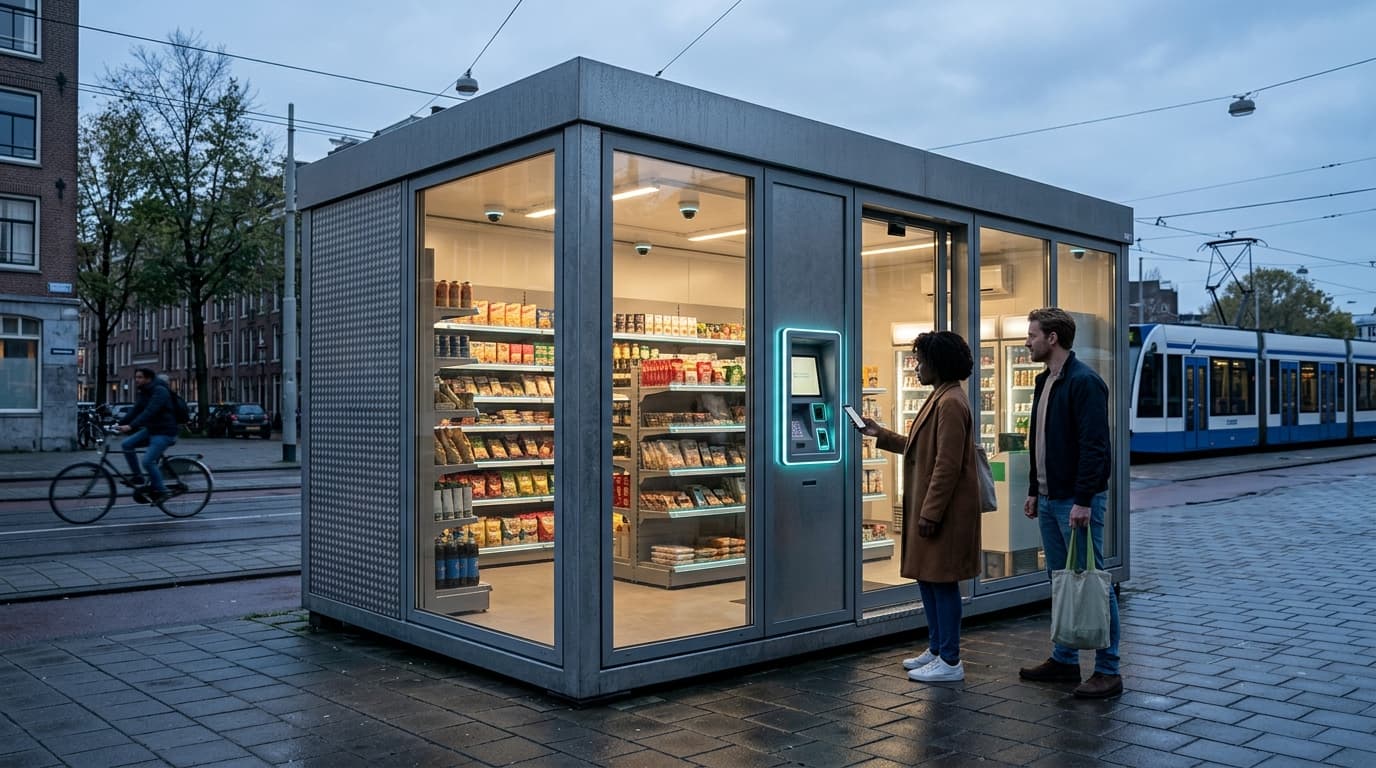
Żabka (Poland) operates multiple fully automated Nano stores that provide 24/7 access to food and convenience items with no staff. Customers enter using an app or payment card, pick items from shelves, and are automatically charged through computer vision and sensor fusion. Similar concepts operate in Czech Republic (COOP automated), Sweden (24Sju), and other European markets.
The technology combines computer vision (tracking which items are picked up), weight sensors on shelves, and payment systems into a cashier-free experience. Unlike Amazon Go (which largely retreated from the concept in the US), European automated stores are succeeding in dense urban environments where small-format convenience stores serve high foot traffic.
The success reflects European retail conditions: high labor costs, strong convenience culture, dense urban housing with limited space for large supermarkets, and consumer comfort with digital payments. The technology is being refined in European markets before potential global expansion, following the pattern of European retail innovations (IKEA flat-pack, ALDI discount model) that eventually went worldwide.
Research this in Signals
Signals turns a topic into a sourced research record you can inspect and rerun. Your first scan is free, and this one starts with Automated Convenience Retail already loaded, so edit it or scan as is.