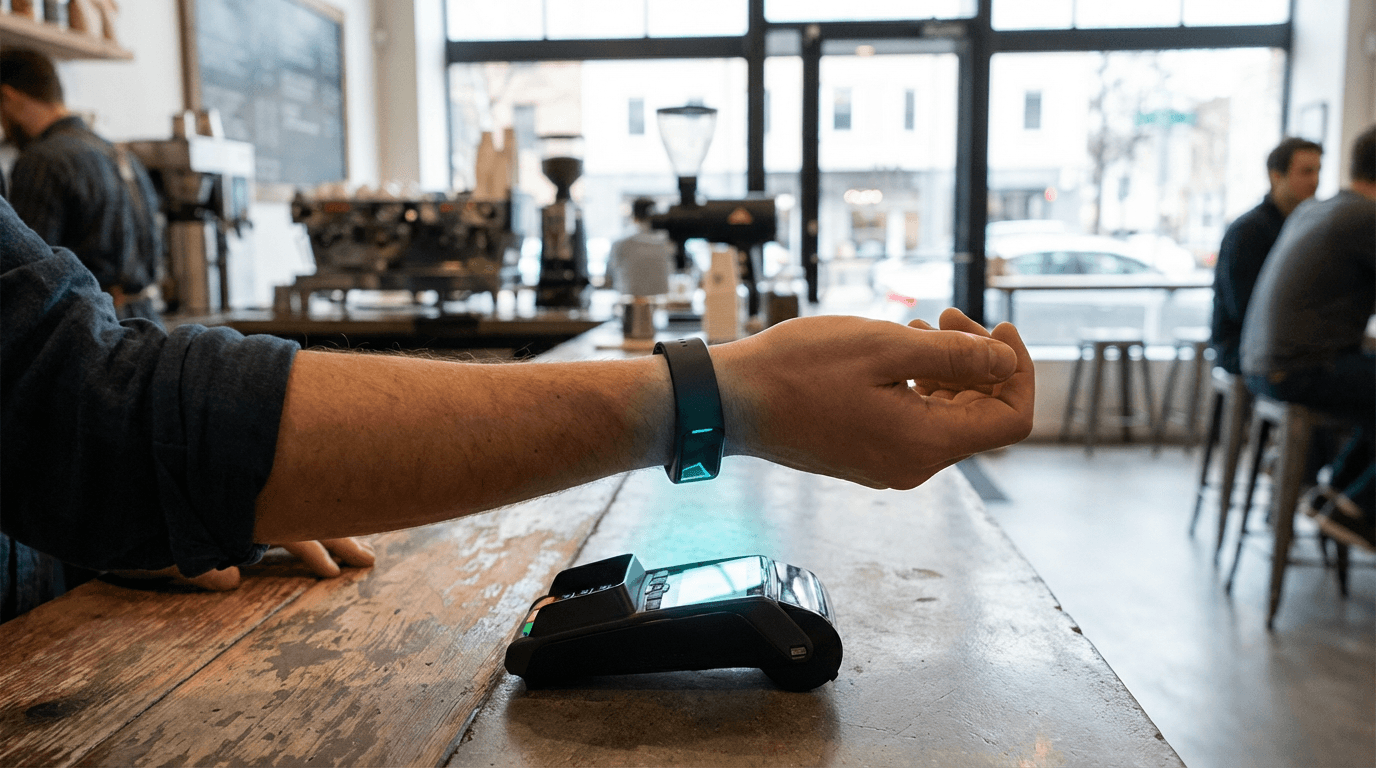
Biometric Payment Wearables
Biometric payment wearables represent a convergence of biometric authentication technology and contactless payment systems, embedded within everyday accessories such as rings, watches, and wristbands. Unlike traditional payment methods that rely on cards or smartphones, these devices integrate advanced sensors capable of reading unique physiological markers—including vein patterns beneath the skin, cardiac rhythms, or combinations of multiple biometric signals. The technology works by capturing these biological signatures through optical sensors or electrodes embedded in the wearable, converting them into encrypted digital credentials that authenticate the user's identity. Some implementations utilize near-field communication (NFC) or radio-frequency identification (RFID) protocols to transmit payment authorization to point-of-sale terminals, while more advanced systems incorporate secure elements—dedicated chips that store encrypted payment credentials locally on the device. The most sophisticated variants employ biometric fusion, combining multiple physiological markers to create authentication systems that are exponentially more difficult to spoof than single-factor methods.
The financial services industry faces persistent challenges around payment security, fraud prevention, and the friction inherent in traditional authentication methods. Passwords can be stolen, cards can be cloned, and even smartphone-based systems require users to carry additional devices and navigate multiple steps to complete transactions. Biometric payment wearables address these vulnerabilities by tying authentication directly to immutable physiological characteristics that cannot be easily replicated or transferred. This approach significantly reduces the attack surface for payment fraud while simultaneously streamlining the user experience—a transaction can be completed with a simple gesture rather than fumbling for a wallet or phone. For financial institutions, these devices offer the potential to reduce chargebacks and fraud-related losses while improving customer satisfaction through faster, more convenient payment experiences. The technology also enables new use cases in environments where carrying traditional payment instruments is impractical, such as fitness facilities, swimming pools, or outdoor recreational activities.
Early deployments of biometric payment wearables have emerged primarily in markets with high contactless payment adoption, with pilot programs testing various form factors and authentication methods. Payment networks and financial institutions have begun partnering with wearable manufacturers to integrate payment credentials into fitness trackers and smartwatches, while specialized payment ring manufacturers have introduced devices specifically designed for transaction authentication. Research in biocompatible implants suggests future iterations may move beyond external wearables entirely, though such implementations currently remain in experimental phases. The technology aligns with broader industry trends toward passwordless authentication and ambient computing, where technology recedes into the background of daily life. As biometric sensors become more miniaturized and energy-efficient, and as regulatory frameworks evolve to address privacy and data protection concerns, these wearables are positioned to become increasingly prevalent in the payments ecosystem, potentially reshaping consumer expectations around transaction security and convenience in the coming years.
Related Organizations
Zwipe
Norway · Company
Pioneers biometric payment and access cards with integrated fingerprint sensors.

Develops and produces biometric systems (sensors, algorithms, software) for payments.

Specializes in fingerprint imaging and recognition technology for payment cards and devices.



Connects contactless services like payment and transit to wearables.

A major semiconductor manufacturer developing secure chips with hardware support for PQC algorithms.

Global payments technology company offering the 'Tourism Insights' platform.

Creates the Nymi Band, a workplace wearable for persistent biometric authentication.

Multinational technology company known for GPS and wearable technology.
Supporting Evidence
Research this in Signals
Signals turns a topic into a sourced research record you can inspect and rerun. Your first scan is free, and this one starts with Biometric Payment Wearables already loaded, so edit it or scan as is.